94 Presidents Extended Their Terms. 78% Succeeded. Nobody Will Show You This Data. I Will
complete list countries removed term limits president outcome aftermath

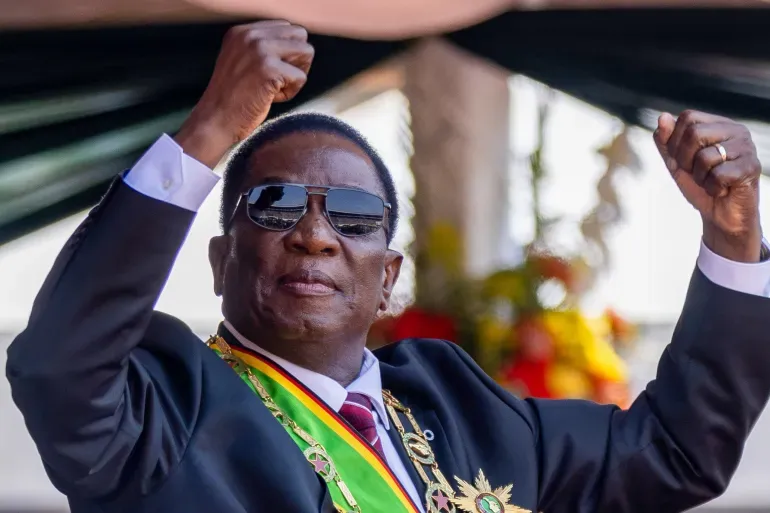
They did it in Russia. In Rwanda. In China. In Egypt. In Turkey. In El Salvador. In Brazil. In Argentina. In France — yes, France. They did it across Latin America so many times that political scientists invented a word for it: continuismo.
And now Zimbabwe is doing it.
And somehow, we are supposed to believe this is the end of democracy. It is not. It is a global pattern as old as constitutions themselves. And if you are going to have an opinion about it, you should at least have the data first.
This is not propaganda. This is the map. Every country that extended a sitting president, what happened, what worked, what collapsed, and what it means for Zimbabwe. By the end of this, you will know more about this subject than 99% of the people screaming about it online.
Part 1: The Number Nobody Wants You To Know
Between 1945 and 2024, at least 94 presidents across the world successfully extended their time in office through constitutional changes. That is not a claim from a blog or a tweet. That is from Alexander Baturo, published by Oxford University Press — one of the most cited scholars on presidential tenure alive.
Here is what else the research says.
Kristin McKie of the University of Texas studied 221 presidents who reached their term limits between 1975 and 2018. Nearly one in three attempted to stay. Of those who tried, 78% succeeded.
Seventy-eight percent.
A separate Columbia Law Review study found the same pattern. One in three incumbents try. Two out of three succeed.
This is not a Zimbabwean phenomenon. This is a human phenomenon. The question was never whether it happens. The question is what separates the countries that survived it from the countries that did not.
Part 2: The Scoreboard
Let the record speak.
STILL STANDING
Rwanda — Kagame held a referendum in 2015. Won with 98% approval. Can now serve until 2034. GDP per capita has tripled under his watch. El Salvador — Bukele abolished term limits in 2025. Won re-election with 85% of the vote. The most popular president in the Western Hemisphere. Russia — Putin buried a term-counter reset inside 200 popular amendments in 2020. Can serve until 2036. China — Xi removed the two-term limit in 2018 by a vote of 2,958 to 2. Not a typo. Uganda, Cameroon, Djibouti, Egypt, Turkey, Azerbaijan — all extended their presidents. All still standing.
CATASTROPHE
Guinea — Conde reset the clock with a new constitution in 2020. Overthrown by military coup eighteen months later. The coup was directly triggered by the manoeuvre. Gabon — The Bongo family ruled for 56 years after removing limits. Ali Bongo was dragged from power by his own soldiers in 2023. Burkina Faso — Compaore tried to amend the constitution in 2014. Citizens stormed the National Assembly and burned it. He fled the country. He never came back. Chad — Deby rewrote the constitution in 2018 and won a sixth term. He was killed in battle the day after his re-election was announced. Honduras — Hernandez secured a court ruling in 2015 and won re-election. Then he was extradited to the United States and sentenced to 45 years in prison for drug trafficking. Venezuela — Chavez eliminated all limits in 2009. What followed was the worst economic collapse in Latin American history. Seven million refugees and counting.
The difference between these two columns is not the decision to extend. Every country on both lists made that decision. The difference is how they made it.
Part 3: Three Patterns That Predict Everything
Pattern One — Method matters. The Columbia Law Review analysed every technique leaders use: constitutional amendments, new constitutions, court rulings, referendums, placeholder successors, and decrees. The results are not equal. Writing a new constitution and arguing that previous terms no longer count — the clock reset — has a 100% legal success rate. Every leader who used it succeeded. Constitutional amendments work about 60% of the time. Installing a loyal successor and returning later fails two-thirds of the time. Nazarbayev's handpicked successor stripped him of all power. Correa's successor turned on him. Uribe's successor became his political enemy.
Pattern Two — Courts do not stop this. People do. The study found that judges are almost universally ineffective at blocking term extensions. The only court in the world that successfully stopped one was Colombia's Constitutional Court in 2010. The only case. In every other instance, the real check on power was the street. Nigeria's Senate killed Obasanjo's third-term bid in 2006 after citizens made it politically impossible. Burkina Faso's people burned their parliament. Paraguay's citizens set their Congress on fire.
Pattern Three — Process predicts outcome. This is the finding that matters most. Countries where the extension was rushed, opaque, or forced — Guinea, Burundi, Burkina Faso — experienced coups, civil conflict, and mass displacement within years. Countries where the process carried institutional credibility and genuine public engagement — Rwanda, Brazil, Argentina — maintained stability and continued governing.
How you do it determines what comes after. That is not an opinion. That is the data.
Part 4: What This Means For Zimbabwe
Zimbabwe's extension of President Mnangagwa's term is not an aberration. Thirty-eight countries have walked this road before us. The research does not say it should not happen. It says the execution will determine whether it succeeds or destroys.
The data issues three warnings.
First — Legitimacy is not optional. Seventy-five percent of Africans support term limits. That number comes from Afrobarometer, the continent's most respected public opinion survey, drawn from 51,600 citizens across 34 countries. Extending a president against that current requires an extraordinary argument. And that argument cannot be about the man. It must be about the mission. The unfinished IMF Staff-Monitored Programme. The ZiG currency stabilisation. NDS2 delivery. The economic reform pipeline that a forced transition would interrupt. These arguments carry weight because they are measurable. Personal loyalty is not an argument. It is a liability.
Second — Process predicts outcome. Every catastrophe in the dataset was preceded by a process the public perceived as illegitimate. Every stable outcome was preceded by genuine parliamentary debate, transparent legal process, and space for dissent. Zimbabwe's Parliament must be seen to deliberate — not rubber stamp. The courts must be perceived as independent. Not because the West demands it. Because the data demands it. Skip the process, inherit the consequences.
Third — Plan the after. Here is the statistic that should concern every decision-maker in Harare. Of all the leaders who successfully extended their terms, the ones who ended in coups, exile, imprisonment, or death had one thing in common: they extended without building a succession framework. The extension solves the problem of today. Without a plan, it manufactures the crisis of tomorrow. Countries that used the extra years to build institutions — Singapore, Rwanda, Turkey before 2016 — thrived. Countries that used them to entrench one man — Venezuela, Nicaragua, Guinea — collapsed. Zimbabwe has an advantage. ZANU-PF is one of the most institutionalised ruling parties in Africa. The question is whether the next five years strengthen those institutions or hollow them out. The data is merciless on this point.
Part 5: The Verdict
The opposition will never tell you that 94 presidents did this before Mnangagwa. They will never tell you the success rate is 78%. They will never mention that El Salvador — the most popular democracy in the Americas — did the same thing three months ago. They will never show you the data because the data does not support their narrative.
But here is what the data also says, and this is where honesty demands courage.
How you do it matters infinitely more than whether you do it. Legitimacy is not a luxury. It is load-bearing. The countries that treated it as optional paid with blood, with refugees, with coups, and with decades of economic ruin. And the extension itself is never the destination. It is the instrument. What you build with the extra time is the only thing history will remember.
Zimbabwe is not breaking new ground. We are walking a road that 38 countries have walked before us. Some arrived at transformation. Some arrived at catastrophe. The difference was never the decision to extend.
The difference was always the execution.
Thirty-eight countries. Ninety-four presidents. One lesson.
Execution is everything.
Until next time. Head Bowed