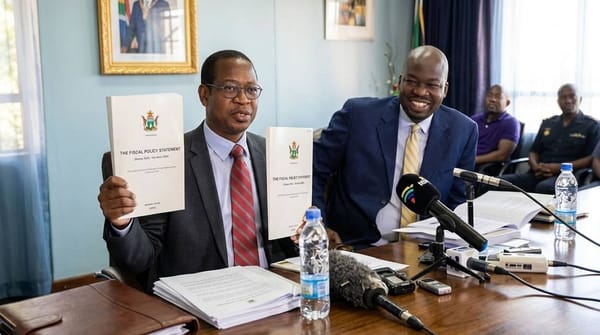
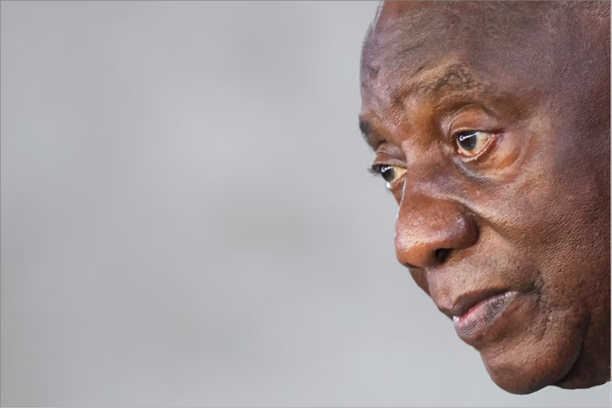
How Prof. Mthuli Ncube Engineered Zimbabwe's Fastest Economic Growth in 14 Years
Everyone has an opinion about Zimbabwe's economy. Almost nobody examines the actual fiscal data. We did. The numbers are surprising — and the men behind them is Prof.Mhtuli Ncube and George Guvamatanga

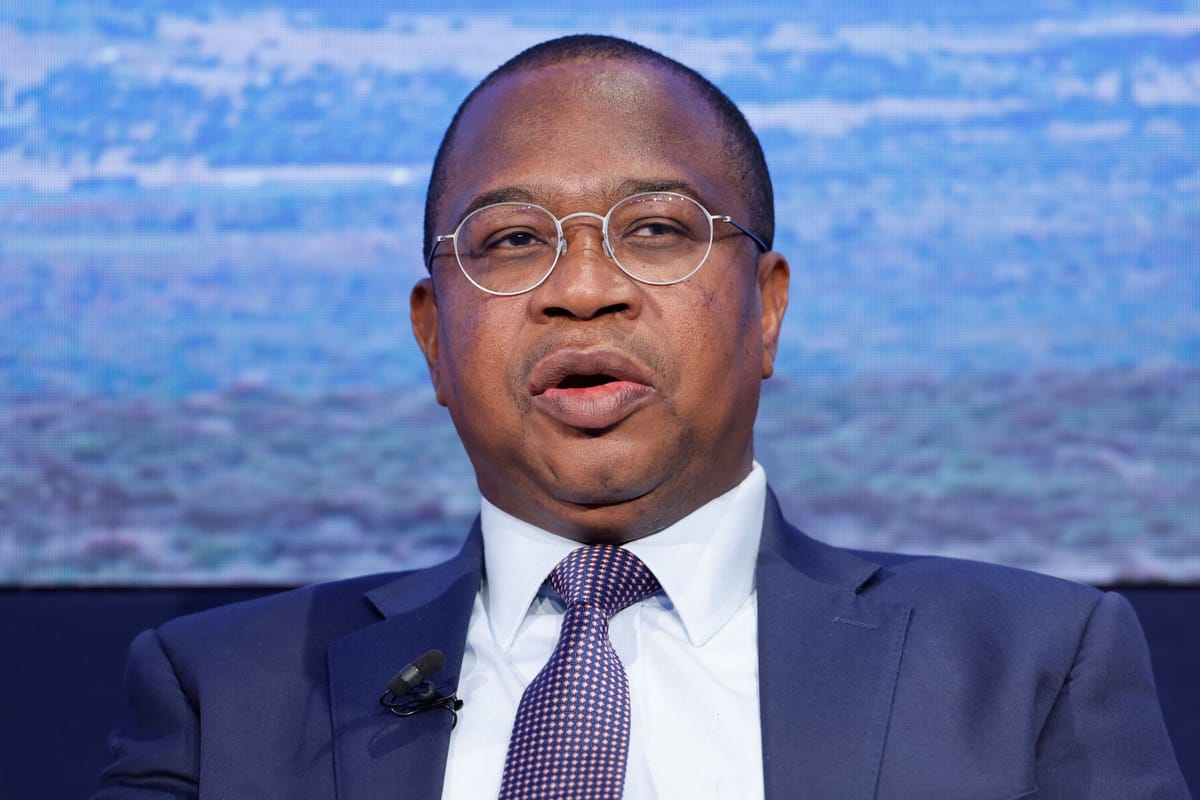
Mthuli Ncube, Zimbabwe's Minister of Finance, Investment and Economic Development, has quietly assembled the fiscal conditions for what the Ministry now projects as 8.5% GDP growth in 2026 — the country's fastest expansion since 2012 and a performance that would outpace every economy in the SADC region.
The significance extends beyond headline numbers. Inflation has fallen below 10% for the first time since 1997. Foreign exchange reserves backing the gold-anchored ZiG currency have crossed $1.2 billion. The budget deficit has been compressed from elevated levels to 1.2% of GDP in 2024 — tighter than Kenya's 5.7%, Ghana's 4.8%, and Nigeria's 4.3% in the same period. The IMF has responded with a Staff-Monitored Programme, the clearest signal in over two decades that multilateral re-engagement is advancing.
For treasuries across the continent watching Zimbabwe's stabilisation in real time, the architecture behind these numbers deserves closer examination than it has received.
THE STAKE
The winners are clear. The Ministry targets ZiG288 billion in revenue collection for 2026, approximately $9.4 billion, premised on improved tax compliance and administrative efficiency. ZIMRA exceeded its revenue targets by 10.26% in 2024, with real revenue growth of 47.65%. Formal sector businesses operating in ZiG benefit from the collapsing yield curve — annual inflation decelerated from 95.8% in July 2025 to 32.7% by October, with single-digit levels projected for Q1 2026.
The losers are equally identifiable. The civil service faces a recruitment freeze across all non-critical sectors in 2026. Zimbabwe's 330,000 government employees absorb 56% of the ZiG276.4 billion national budget, a ratio the IMF has flagged as one of the country's most pressing fiscal constraints. The freeze protects health, education, and security — but every other ministry must hold the line.
THE SEEN
The official architecture rests on three pillars that Ncube has enforced since his appointment in September 2018, with his Permanent Secretary George Guvamatanga executing the technical machinery of Treasury.
First, cash budgeting with no central bank financing. The 2026 National Budget states this explicitly: the fiscal policy stance is built on living within means. The budget deficit target of ZiG3.2 billion will be financed entirely through domestic securities issuance of ZiG12.7 billion and external loan disbursements of ZiG2.1 billion — with zero recourse to the Reserve Bank's printing press. This is the single most important technical commitment in the entire budget framework.
Second, expenditure alignment. Government bids from ministries, departments, and agencies totalled ZiG828.5 billion — 3.3 times the available capacity of ZiG253 billion. The Ministry's job is to say no. Ncube's insistence on fiscal gatekeeping — the posture that draws accusations of holding the purse too tight from MPs and suppliers alike — is not a political liability. It is the mechanism through which discipline is maintained. Guvamatanga, as the administrative head of Treasury, enforces these ceilings line by line across every ministry, department, and agency.
Third, debt transparency. The World Bank's Debt Reporting Heatmap shows Zimbabwe has moved from four red flags out of nine reporting indicators in 2020 to zero red flags in 2024. The number of green-rated indicators rose from two to five over the same period. External debt service payments of $220.3 million were made between January and September 2025, with an additional $86.6 million expected before year-end.
THE UNSEEN
The fiscal machine works because of a structural reform that receives almost no media attention: the Mutapa Investment Fund.
Ncube designed the policy framework and secured Presidential sign-off for the transfer of approximately 20 state-owned entities across mining, transport, power, and other strategic sectors into a single sovereign wealth vehicle. The Presidential Powers instrument bypassed lengthy legislative procedures — drawing criticism from opposition lawmakers — but the commercial results are measurable. As of September 2025, over $100 million had been deployed to entities under the Fund's management, transforming 53% of them into profitable operations. The Fund joined the African Sovereign Investors Forum in June 2025 as the 17th member, opening channels to long-term sovereign capital.
The mechanism connecting fiscal discipline to growth is not abstract. Tight fiscal management has collapsed inflation expectations, which allows the Reserve Bank to ease monetary policy, which lowers borrowing costs, which stimulates private investment. The yield curve is now adjusting to reflect low and stable inflation for the first time in over a decade. Separate USD and ZiG yield curves will be generated from Treasury instrument auctions beginning in 2026 — a technical milestone that creates the pricing infrastructure institutional investors need to enter the market.
THE DATA ANCHOR
The comparative picture puts Zimbabwe's fiscal position in sharper relief.
Zimbabwe's 2024 budget deficit of 1.2% of GDP compares with Kenya at 5.7%, Ghana at 4.8%, Nigeria at 4.3%, and the Sub-Saharan African average of approximately 4.0%. The projected 2026 growth rate of 8.5% would exceed the SADC regional average of 3.0%, the Sub-Saharan average of 4.4%, and the global average of 3.1% as estimated by the IMF's October 2025 World Economic Outlook. Rwanda, Africa's growth benchmark, is projected at 7.5% for the same period.
Globally, the only major economies projected above 8% in 2026 are India and a handful of post-conflict reconstruction cases. Zimbabwe achieving this rate — in the context of $17 billion in external debt arrears, limited multilateral financing, and ongoing currency transition — represents a fiscal management case study that the continent's treasuries should be examining.
THE REFLEXIVITY MOMENT
Ncube's record is not without legitimate tension. The same fiscal tightness that produces macro stability creates real pain in expenditure arrears. Domestic debt stock increased 12.6% to ZiG261.1 billion by September 2025, with domestic arrears to service providers reaching ZiG34.1 billion. Suppliers who deliver goods and services to government agencies wait months — sometimes years — for payment. A validation process is ongoing, and the 2026 Budget includes an Expenditure Arrears Clearance Strategy, but the human cost of fiscal discipline is measured in businesses that survive the wait and those that do not.
The question is whether the macro stability Ncube has engineered creates enough growth momentum to absorb these transitional costs — or whether the arrears themselves become a drag that undermines the growth trajectory they were meant to protect.
THE SIGNAL
Kenneth Rogoff, the Harvard economist cited in the 2026 Budget Speech itself, put it plainly: sound fiscal management is the foundation for economic resilience and transformation. Zimbabwe's fiscal data now confirms that statement with African evidence.
For finance ministers across the continent managing similar constraints — high wage bills, limited multilateral access, commodity-dependent revenue, and currency volatility — the signal from Harare is operationally relevant. Fiscal consolidation, when sustained over multiple budget cycles with no central bank financing, produces measurable stabilisation outcomes even in the most constrained environments. The growth forecast is the dividend.
The smart question for the region is not whether Zimbabwe's 8.5% number holds exactly. It is whether the fiscal architecture Ncube has built — cash budgeting, expenditure alignment, debt transparency, and SOE commercialisation through a sovereign fund — can be adapted by treasuries facing the same structural pressures with fewer mineral endowments.