Level the Playing Field: Why Zimbabwe Must Extend the Sugar Tax to Imported Beverages
A PowerList.Africa Feature | March 2026

The Inconvenient Reality on Zimbabwe's Shelves
Walk into any supermarket in Harare or Bulawayo today and you will notice something that should alarm every economic nationalist in this country: imported beverages are crowding out locally made drinks. They are cheaper, not because they are better made, not because their producers are more efficient — but because Zimbabwe's tax system, by design or oversight, lets them into the market without paying their share.
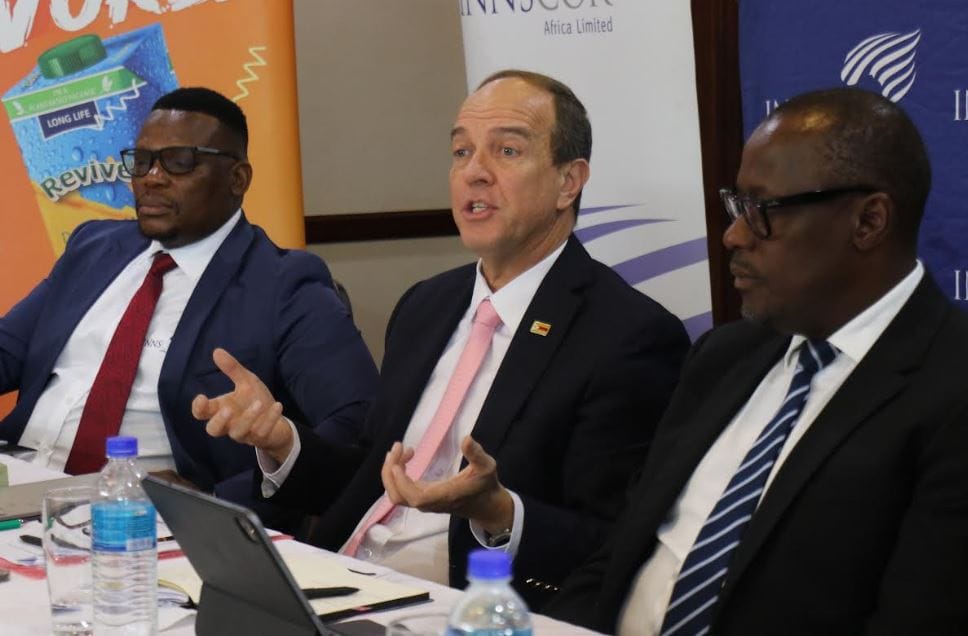
Innscor Africa Limited, one of the country's most consequential industrial groups, is calling time on this distortion. In its half-year financial results for the six months ended 31 December 2025, the conglomerate — the second-largest counter by market capitalisation on the Victoria Falls Stock Exchange (VFEX) — formally called for the Sugar Tax to be extended to imported beverages, arguing that the current framework places local manufacturers at a "distinct price disadvantage" to imported products, which "now dominate local shelves." The language is measured, as befits a blue-chip VFEX-listed company. The underlying crisis is not.
What the Numbers Say
Since the Special Sugar Content Excise Duty was introduced on 1 January 2024, Innscor has remitted a cumulative USD 13.29 million to the fiscus. In the six months ended December 2025 alone, the group paid USD 3.19 million in sugar tax — a figure that shows up directly on the cost line of every bottle, carton, and can produced at its Probottlers operation.
The consequences are visible in the operational numbers. Probottlers, Innscor's carbonated and still beverages unit, saw overall volumes decline 17% during the period under review — a drop that management directly attributed to the "sustained impact of the Sugar Tax on the local beverage sector." Every dollar in sugar tax borne by Probottlers is a dollar that does not flow into job creation, capital expansion, or lower consumer prices. It is, instead, a subsidy gifted to importers who face no equivalent burden.
Zimbabwe's largest beverage manufacturer, Delta Corporation, tells an identical story. Delta paid USD 4.5 million in sugar tax in a single quarter ending June 2025 — nearly half of what some regional competitors pay in an entire year — and reported that the "under-recovery of the sugar tax continues to place pressure on margins and has created an uneven competitive environment as cheaper imports enter the market." Between them, Innscor and Delta represent the backbone of Zimbabwe's formal beverage industry. When both companies are telling the same story, it is not a corporate complaint. It is a structural alarm.
The Architecture of an Unfair Market
To understand why this matters, consider how the Sugar Tax is currently designed. Introduced at US$0.02 per gram of sugar — a rate so steep it threatened to raise the price of a 300ml Coke fivefold — the levy was subsequently revised down to US$0.001 per gram for general beverages and US$0.0005 per gram for cordials. It was meant to simultaneously raise health promotion revenue and discourage high-sugar consumption, two entirely legitimate public policy objectives.
But there is a fatal flaw in its architecture: the tax only applies to formal, locally registered manufacturing entities. Imported beverages — those produced across the border in South Africa, Zambia, Botswana, and beyond — arrive in Zimbabwe carrying none of this burden. They cross the customs post without paying a single cent of sugar excise, then compete directly on price against locally made products that have already had their margins squeezed by the levy.
This is not an accident of fate. It is a policy gap. And it has consequences that reach far beyond the balance sheets of listed companies.
The Confederation of Zimbabwe Industries (CZI), led by CEO Sekai Kuvarika, has been emphatic: the sugar tax is "driving up costs for compliant businesses, fueling a surge in cheaper imports, and putting local producers at a disadvantage compared to regional rivals benefiting from more favourable tax regimes." Zimbabwe's own sugar producers — including Hippo Valley Estates, one of the country's largest agricultural employers — have reported a 10% to 15% decline in offtake from the beverage sector, contributing to a 44% drop in Hippo Valley's revenue to USD 191.59 million for the year ended March 2025. The distortion is cascading up and down the entire value chain.
What Innscor Is Actually Asking For
Chairman Addington Chinake, one of Zimbabwe's most respected corporate voices, has been precise in framing Innscor's position: the group does not oppose the Sugar Tax in principle. It does not dispute the government's right to raise health promotion revenue. What Innscor is asking for — and what basic fairness demands — is that imported beverages be subjected to the same levy at the point of entry into Zimbabwe.
This is not a radical ask. It is standard practice in any jurisdiction that respects the principle of competitive neutrality. When South Africa introduced its Health Promotion Levy in 2018 — making it the first country on the continent to do so — the levy applied uniformly across the market, covering both locally produced and imported beverages. The question Zimbabwe must now answer is why its own framework creates an exemption that rewards foreign producers at the expense of domestic industry.
Extending the sugar tax to imports would achieve three things simultaneously. First, it would level the competitive playing field, restoring price parity between locally made and imported beverages. Second, it would expand the tax base and potentially increase government revenue — currently estimated at over USD 60 million collected by end-2025 — without increasing the burden on any single local producer. Third, it would reinforce the broader industrial policy objective of keeping Zimbabwe's shelves stocked with Zimbabwean-made products.
The Broader Industrial Stakes
To fully appreciate the stakes, one must look at Innscor's footprint beyond the beverage aisle. The group posted revenue of USD 635.78 million for the half year ended December 2025, an 18.7% increase over the prior period, with EBITDA rising 36.6% to USD 80.37 million and net profit up 64% to USD 54.98 million. Across its Mill-Bake, Protein, and Beverage and Light Manufacturing segments, Innscor employs thousands of Zimbabweans, supports hundreds of contract farmers through its Agrowth and PHI programmes, and contributes materially to national food security.
The Beverage segment alone — through Probottlers, Prodairy, and The Buffalo Brewing Company — represents a strategically important pillar of Zimbabwe's consumer economy. TBBC, for instance, grew volumes by 17% in the period and operated at full capacity throughout, reflecting robust domestic demand. Prodairy's "Revive" range drove a 7% volume increase, and the group recently underwrote an USD 8 million rights offer in Tanganda Tea Company, signalling continued commitment to building Zimbabwean beverage brands for the long term.
These are not the actions of a company seeking to avoid tax. Innscor has paid USD 13.29 million in cumulative sugar tax since January 2024 and continues to challenge what it believes are unjust additional ZIMRA assessments of USD 13.14 million in court — tax liabilities it already settled under the prevailing legal framework of the time. Innscor is, by any measure, a model of formal-sector compliance. That compliance deserves a competitive environment in which it is rewarded, not penalised.
The Beverage Makers Association and the Industry Chorus
Innscor is not alone. The Beverage Makers Association (BMA), chaired by Calum Philp, has warned that without relief from the current asymmetric structure, formal beverage producers face the prospect of job cuts, while government risks "losing a substantial portion of tax revenues as the market turns to unregulated imports." Informal imports, by their nature, pay nothing — no sugar tax, no VAT, no customs duties. Every percentage point of market share they gain is a percentage point of fiscal revenue lost.
The BMA has also highlighted how Zimbabwe's framework compares unfavourably to regional peers: in South Africa, the health promotion levy exempts the first four grams per 100ml and is pegged at approximately USD 0.001 per gram of sugar above that threshold; Botswana uses a similar structure. Zimbabwe's current system, while revised down from its initial punishing level, still offers no such baseline exemption and applies to local producers only. The gap between what Zimbabwe's manufacturers pay and what their regional competitors pay represents, in practice, an involuntary transfer from Zimbabwean workers and shareholders to foreign producers.
A Policy Fix That Writes Itself
The solution is neither complex nor politically contentious. Treasury and ZIMRA have the existing administrative infrastructure to collect sugar excise at the border. Customs officials already sample both locally produced and imported beverages for the purposes of applying the surtax — this is enshrined in Statutory Instrument 16 of 2024. The technical capability to extend the levy to imports is already in place.
What is needed is the political will to enforce competitive neutrality — to acknowledge that a tax designed to promote public health and raise revenue should not simultaneously function as a subsidy for imported goods at the expense of local industry.
The CZI has further proposed cutting the rate to USD 0.0005 per gram and exempting the first four grams per 100ml per beverage — a reform that would reduce the burden on all beverage producers while aligning Zimbabwe with regional best practice, maintaining health promotion objectives, and still generating sufficient revenue for the cancer treatment equipment that the levy was designed to fund.
Innscor's position, expressed through its chairman and its audited financial statements, is consistent with this wider industry consensus: reform the levy, extend it uniformly, and let locally made products compete on their merits.
The Bottom Line
Zimbabwe has invested decades in building a formal manufacturing sector. Innscor's iconic brands — from National Foods flour to Colcom bacon to Probottlers beverages — are not merely commercial products. They are the output of Zimbabwean labour, Zimbabwean capital, and Zimbabwean agricultural inputs. They represent the kind of integrated, vertically linked value chain that development economists spend careers trying to build.
A sugar tax that protects public health while undermining the very industry it taxes is a poorly designed instrument. A tax that applies to local producers but exempts their foreign competitors is a structural injustice. Extending the Sugar Tax to imported beverages is not about protecting the bottom line of any single listed company — it is about whether Zimbabwe's industrial policy framework is serious about the country's own producers. The answer to that question should, by now, be obvious.