Mnangagwa's Scorecard: The Winners, The Losers, and What the 2026 Performance Awards Really Reveal
The 2026 Performance Awards: Inside Zimbabwe's 2026 Performance Awards,Every Winner, Every Category, and What It Means for Vision 2030


Part 1 — The Ceremony Nobody Should Ignore
Every year, the Government of Zimbabwe does something almost no African government does. It lines up its own Cabinet ministers, deputy ministers, permanent secretaries, and provincial leaders, measures them against the targets they signed the year before, and then publicly announces who delivered and who did not.
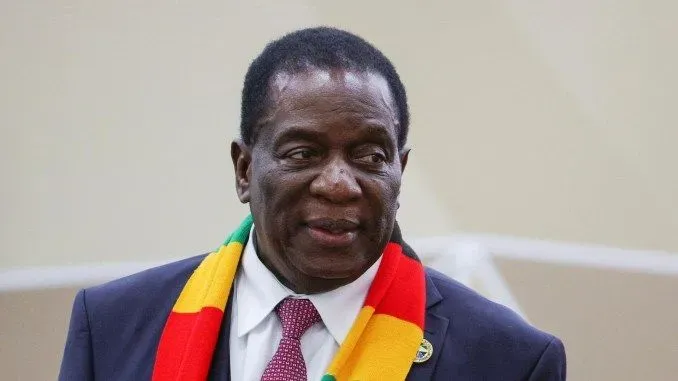
On Monday, President Emmerson Mnangagwa presided over the 2026 Performance Contracts Signing and Awards Ceremony. This is not a photo opportunity. This is the single most important governance accountability mechanism in Zimbabwe's public sector, and arguably on the continent.
What follows is the complete breakdown of every category, every winner, and what the results tell us about where power, competence, and political capital are concentrated in the Second Republic heading into the second half of the decade.
Part 2 — Cabinet Ministers: Barbara Rwodzi Takes the Crown
The Cabinet Ministers category is the heavyweight division. These are the people who sit in the room where the biggest decisions are made.
Winner: Hon. Barbara Rwodzi, Minister of Tourism and Hospitality Industry.
First runner-up: Dr Anxious Masuka, Minister of Lands, Agriculture, Fisheries, Water and Rural Development.
Second runner-up: Hon. Ziyambi Ziyambi, Minister of Justice, Legal and Parliamentary Affairs.
Rwodzi's win is significant. Tourism is one of Zimbabwe's most important forex-generating sectors, and her ministry has been executing against a backdrop of global competition for the Southern African travel dollar. This is not a ministry that runs on autopilot. It requires aggressive international marketing, investor facilitation, and infrastructure coordination across provinces. For Rwodzi to take the top spot means delivery, not just strategy documents.
Dr Masuka in second place continues to confirm what insiders already know. Agriculture is the backbone ministry of the Second Republic, and Masuka has been relentless. From the Pfumvudza programme to livestock restocking to the irrigation rehabilitation drive, this ministry moves weight. That he is runner-up and not winner tells you how competitive this field has become.
Ziyambi Ziyambi in third is the quiet machine. Justice, Legal and Parliamentary Affairs does not generate headlines, but it generates the legislative architecture that everything else runs on. Constitutional amendments, statutory instruments, treaty domestication, and the entire legislative pipeline flow through his office. His presence here is no accident.
Part 3 — Deputy Ministers: Haritatos Leads a Tight Race
Winner: Vangelis Haritatos, Deputy Minister of Agriculture.
First runner-up: Joshua Sacco, Deputy Minister of Transport and Infrastructural Development.
Second runner-up: Norbert Mazungunye, Deputy Minister of Justice.
Haritatos winning this category reinforces the Agriculture ministry's dominance across multiple tiers. When both your minister and your deputy minister are placing in the top three of their respective categories, it tells you the ministry has institutional depth, not just one strong personality at the top. This is a system that delivers.
Sacco in Transport is worth watching. Infrastructure is the most visible sector in the country right now. Roads, bridges, dams, airports. The Beitbridge-Harare-Chirundu corridor. The new terminal at Robert Gabriel Mugabe International Airport. These are the projects that ordinary Zimbabweans see and feel. Sacco's placement says the execution engine is running.
Mazungunye mirrors his principal's performance. Justice placed in both the ministerial and deputy ministerial categories. That is consistency.
Part 4 — Permanent Secretaries: The Engine Room
Winner: Prof. Obert Jiri, Permanent Secretary for Lands, Agriculture, Fisheries, Water and Rural Development.
First runner-up: Vimbai Nyemba, Permanent Secretary for Justice, Legal and Parliamentary Affairs.
Second runner-up: Amb. Albert Chimbindi, Permanent Secretary for Foreign Affairs and International Trade.
This is where the real story lives. Permanent secretaries are the engine room. Ministers set direction. PSs execute. And when you see Agriculture winning again at the PS level, you are looking at a ministry that is firing on all cylinders from top to bottom. Prof. Jiri is running one of the most operationally complex ministries in government, spanning land allocation, agricultural extension, fisheries management, water infrastructure, and rural development across every province. To win this category is a statement.
Vimbai Nyemba's placement confirms Justice as the most consistently high-performing ministry in this awards cycle. Minister, deputy, and PS all placed. That is a clean sweep across three categories. No other ministry achieved this.
Ambassador Chimbindi in Foreign Affairs reflects the diplomatic offensive that the Second Republic has been running. Re-engagement is not just a slogan. It is measured in trade agreements signed, bilateral commissions convened, and international platforms secured. Chimbindi's team has been executing.
Part 5 — Provincial Ministers: Chadzamira Wins Masvingo Again
Winner: Hon. Ezra Chadzamira, Minister of Provincial Affairs and Devolution for Masvingo Province.
First runner-up: Adv. Misheck Mugadza, Manicaland Province.
Second runner-up: Owen Ncube, Midlands Province.
Chadzamira taking Masvingo to the top is becoming a pattern. Masvingo has emerged as one of the most aggressively developing provinces under devolution, with infrastructure projects, irrigation schemes, and industrial development moving at pace. Chadzamira runs his province like a CEO runs a company. Targets, timelines, accountability.
Mugadza in Manicaland and Ncube in Midlands round out a strong showing from provinces that are driving the devolution agenda forward. These are not Harare-centric results. This is the whole country moving.
Part 6 — Regulatory Public Entities: Mushayavanhu's RBZ Takes Top Spot
Winner: Dr John Mushayavanhu, Reserve Bank of Zimbabwe.
First runner-up: Dr Gift Machengete, Postal and Telecommunications Regulatory Authority of Zimbabwe (POTRAZ).
This one matters. Dr Mushayavanhu took over the Reserve Bank at one of the most challenging moments in Zimbabwe's monetary history and has been tasked with stabilising the Zimbabwe Gold currency, rebuilding confidence in the financial system, and executing monetary policy that supports the real economy. For the RBZ to win the regulatory entities category in his tenure says the institution is performing against its targets.
POTRAZ under Machengete continues to regulate one of the fastest-moving sectors in the economy. Telecommunications is the backbone of financial inclusion, digital commerce, and information access. This is infrastructure that touches every Zimbabwean.
Part 7 — Most Improved Ministries: The Signal in the Noise
Seven ministries were recognised as most improved, in no ranking order:
Information, ICT, Postal and Courier Services. Home Affairs and Cultural Heritage. Foreign Affairs and International Trade. Energy and Power Development. Finance, Economic Development and Investment Promotion. Youth Empowerment, Development and Vocational Training. Defence.
Read that list slowly. Energy and Power Development being on the most improved list tells you Zesa and the broader energy sector are moving in the right direction. Finance being on the list under George Guvamatanga's permanent secretary leadership tells you the fiscal machinery is tightening. Defence being recognised tells you the security sector is not exempt from performance measurement.
This is not a government that grades on a curve. Seven ministries improved enough to be publicly recognised. That is institutional momentum.
Part 8 — What the Scoreboard Really Tells You
If you read this article as just an awards ceremony recap, you missed the point.
Performance contracts are the governance technology of the Second Republic. They are the mechanism by which the President holds his own government accountable against measurable, time-bound deliverables. No speeches. No promises. Signed contracts. Public results.
Three things stand out from the 2026 results.
First, Agriculture is the dominant ministry in government. It placed in the Cabinet, Deputy Minister, and Permanent Secretary categories. That is a ministry with depth, discipline, and delivery across all three tiers of leadership. If you want to understand where the Second Republic is putting its weight, start with food security and land productivity.
Second, Justice achieved a clean sweep. Minister, deputy, and PS all placed. This is the quiet ministry that builds the legal infrastructure for everything else. Constitutional reforms, investor protection frameworks, legislative efficiency. Ziyambi's team delivered across the board.
Third, the performance contract system itself is the story. Most governments on this continent do not submit to this level of self-measurement. The fact that Zimbabwe does, and does it publicly, and does it with the President presiding, is a governance signal that deserves more international attention than it gets.
The 2026 ceremony was not just about trophies. It was about a system that works. A government that measures itself. And a President who demands results, not excuses.
That is the scorecard. And the score is clear.