Simbisa Brands Is Winning Everything
— Except The Only Fight That Matters

Somewhere in Nairobi right now, a venture-backed food delivery startup with twelve employees and negative revenue is getting more international media coverage than Simbisa Brands — a company that just posted $306.5 million in revenue, operates 730 stores across nine African countries, and served 61.9 million customers last year. Somewhere in Harare, a competitor with six branches is perceived as more modern, more investable, and more aligned with the national interest than the company that absorbed a $900,000 government tax rather than raise prices on Zimbabwean consumers.
This is not a company with a performance problem. This is a company with a perception catastrophe. And in the political economy of African business, perception is not vanity — it is survival.
Simbisa Brands is one of the most operationally impressive consumer businesses on the continent. It is also one of the worst at telling anyone about it. That gap between execution and narrative is not just a missed marketing opportunity. It is a structural vulnerability that leaves $100 million or more of shareholder value sitting on the table, government relationships under-leveraged, and the company exposed to competitors who perform worse but communicate better.
I wrote this piece because I know what Simbisa's board should be hearing and isn't. And because the company that controls Africa's largest homegrown QSR empire deserves an analyst willing to say what their advisors won't.
Part 1: The Empire Nobody Talks About
The numbers are staggering for a business most people outside Zimbabwe have never heard of.
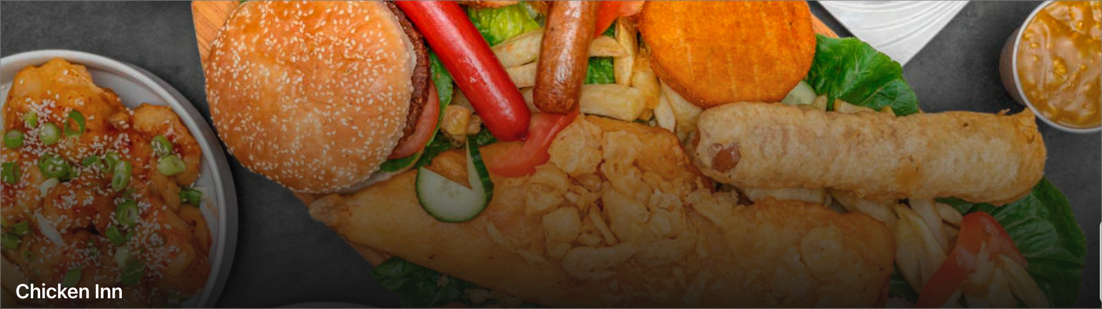
Simbisa was spun off from Innscor Africa in October 2015, inheriting a QSR operation that traces back to the first Chicken Inn outlet in Harare in 1987. The name means "to strengthen" in Shona. In the decade since listing, the company has grown from 388 stores to 730, with another 68 planned for FY2026.
The brand portfolio is uniquely powerful and almost entirely African-owned. Simbisa holds the intellectual property of its core brands — Chicken Inn, Pizza Inn, Bakers Inn, Creamy Inn, and Fish Inn — while running master franchise licenses for South African brands including Nando's, Steers, RocoMamas, Galito's, and Vida E Caffé. This dual model — owned IP plus licensed premium — gives the company both margin control and portfolio depth that no competitor in the region can match.
The operational footprint covers 604 company-owned stores in Zimbabwe (335), Kenya (252), and Eswatini (17), plus 130 franchised locations across the DRC, Zambia, Malawi, Ghana, Mauritius, and Namibia. Zimbabwe dominates, contributing roughly 70% of group operations with 48.7 million customers served in FY2025 alone. Kenya is the designated growth engine, with 252 outlets generating 12% USD revenue growth last year.
In Zimbabwe, Simbisa is not merely dominant — it is effectively the formal QSR market. KFC operates approximately six branches. Six. Simbisa runs 335. That is not competition. That is a monopoly with a competitor for decoration.
And yet.
Search "Africa QSR growth story" and Simbisa does not appear. Search "African food delivery innovation" and Simbisa does not appear. Search "Zimbabwe economic success story" and a company that employs 3,000 Zimbabweans, sources entirely from local supply chains, and serves more customers annually than the population of Kenya does not appear.
The silence is deafening. And in political economy terms, silence is a choice with consequences.
Part 2: The Delivery Revolution Simbisa Is Whispering
The delivery numbers are the most explosive part of the Simbisa story — and the most under-communicated.
In the first half of FY2026, delivery orders grew 74% in Zimbabwe and 60% in Kenya year-over-year. These are not incremental improvements. They represent a structural transformation in how the business operates.
Simbisa built its digital ordering infrastructure in-house through the Dial-a-Delivery app — now at 500,000 downloads with a 4.2-star rating on Google Play. Brand-specific apps exist for Chicken Inn, Pizza Inn, and Galito's. The company also accepts orders via WhatsApp, centralized call centres, USSD ordering in Ghana, and website ordering. In Kenya, 80% of delivery orders are now placed digitally.
The strategic sophistication is underappreciated. Simbisa initially partnered with Glovo, Uber Eats, Bolt Food, and Jumia Foods in Kenya. Then it did something that would make any Silicon Valley product strategist nod in approval: it transitioned Pizza Inn Kenya to exclusive in-house delivery, cutting out aggregators to own the customer relationship. The company now operates Kutuma Kenya Limited — a dedicated delivery subsidiary — handling last-mile delivery even for orders placed through third-party apps. It controls the pricing, the quality, the data, and the customer relationship.
Yet delivery currently contributes just 4% of Zimbabwe revenue and 22% in Kenya. The company itself acknowledges "significant headroom for growth," targeting 15% delivery contribution in Zimbabwe and 30% in Kenya by end of FY2026. Against global benchmarks — Yum China achieves 94% digital order penetration — the runway is enormous.
The company is even expanding an electric bike delivery fleet in Kenya, with Zimbabwe rollout planned. An African-owned QSR operator leading on EV delivery before most competitors have even digitized their menus. And nobody outside their annual report knows about it.
Here is the painful comparison: when Glovo announces a new market in Africa, it makes TechCrunch. When Bolt Food launches grocery delivery in Nairobi, TechCabal writes it up. When Simbisa quietly builds an in-house delivery subsidiary, transitions to owned logistics, and posts 74% order growth — nothing. The aggregators get the narrative. Simbisa gets the revenue. But in the long run, narratives shape regulation, investor appetite, government contracts, and talent pipelines. Revenue without narrative is a business running on one engine.
Part 3: A Restaurant Chain That Accidentally Built a Bank
Perhaps the most remarkable asset in the Simbisa portfolio is InnBucks — a wholly-owned fintech subsidiary that has grown from a loyalty rewards app launched in 2021 to a licensed deposit-taking microfinance institution with 3 million users. It is now Zimbabwe's most downloaded free financial-sector app on Google Play.
The platform offers mobile wallets, savings accounts, microloans, person-to-person transfers, merchant payments, airtime purchases, cross-border remittances from South Africa, and insurance products. Its pricing model is disruptive: a flat $1 per month subscription versus the per-transaction fees charged by EcoCash, which holds approximately 86% of Zimbabwe's mobile money market.
In May 2025, InnBucks selected Mambu — a cloud-native banking platform — and Amazon Web Services to power its transformation from digital wallet into a full digital bank. Baldwin Guchu, Simbisa's former Group Finance Director, left in January 2025 to become CEO of InnBucks. When a company moves its CFO to run a subsidiary, it is telling you where the future revenue lives.
The strategic flywheel is elegant. Simbisa's 300-plus Zimbabwe outlets serve as physical access points for InnBucks, supplemented by partnerships with TM Pick n Pay and SPAR stores. Every QSR customer is a potential fintech user. Every fintech user is a potential QSR customer. No major global QSR operator has replicated this food-to-finance ecosystem. Not McDonald's. Not Yum Brands. Not Restaurant Brands International.
And yet — when was the last time you saw a headline about InnBucks in any publication that wasn't a Zimbabwean business weekly? This is a 3-million-user fintech built on top of an 730-store restaurant network, challenging EcoCash's dominance, and expanding into digital banking — and the international fintech press has almost no idea it exists.
The regulatory journey has been instructive. The Reserve Bank of Zimbabwe suspended InnBucks in April 2022 for operating without a license — reinstating it in August 2022 after the company obtained a deposit-taking microfinance license under Ndoro Microfinance Bank Limited. That suspension cost the company momentum and trust. A proactive government relations strategy — one that positioned InnBucks as financial inclusion infrastructure aligned with national development goals — might have prevented it entirely.
Part 4: The Financial Case They're Failing to Make
The financial performance tells a story of a company accelerating into a higher gear. H1 FY2026 revenue of $182.75 million represents 16.1% year-over-year growth. Profit before tax surged 76.3% to $20.4 million. Headline earnings per share jumped 77.2%. Cash generation was $36.5 million from operations, with an operating profit-to-cash conversion ratio of 115%.
The return on equity stands at 36%. That is not good. That is exceptional. That is a capital-efficient machine generating returns that most private equity firms would celebrate.
The interim dividend increased 50.6% over the prior year. The company is opening 68 new stores. It is investing in EV delivery infrastructure, digital banking, and app-based ordering. It is doing everything an ambitious, well-managed African consumer company should be doing.
And it trades at a market capitalization of approximately $404 million — implying a valuation of roughly $6.50 per customer served annually. For context, global QSR companies trade at multiples that value each customer relationship at $25 to $50 or more.
The reason is not performance. The reason is visibility.
Simbisa trades on the Victoria Falls Stock Exchange with monthly liquidity of just $1.83 million. No international analyst covers the stock. There are no investor roadshows, no webcasts, no capital markets days. Compare this to Spur Corporation — a similar-sized African restaurant group at roughly $211 million market cap — which trades on the JSE with eight-plus analyst firms providing regular coverage, visible CEO commentary, integrated King IV reporting, and media-attended results presentations.
Spur generates news cycles. Simbisa generates filing notifications. And the market prices them accordingly.
Part 5: The Selectorate Problem — Who Simbisa Really Answers To
Here is where most analysts stop. They diagnose the communications gap, recommend a PR agency, and move on.
But the real question is deeper. And it requires a framework that most Zimbabwean business journalism does not apply.
In political economy, every organization survives by satisfying its winning coalition — the minimum group of people whose support is essential for survival. For a publicly listed company operating in Zimbabwe and Kenya, Simbisa's winning coalition consists of four groups: shareholders who provide capital, government regulators who grant licenses and set tax policy, consumers who provide revenue, and employees whose labour makes the operation function.
Simbisa is currently servicing all four constituencies operationally. It delivers returns to shareholders (36% ROE, rising dividends), complies with government requirements (absorbed the fast food tax, pays local taxes, sources locally), serves consumers (61.9 million annually at affordable prices), and employs a growing workforce (5,500-plus across the group).
But operational service is only half the equation. The other half is narrative service — the ability to make each constituency feel seen, valued, and invested in the company's future. And on narrative service, Simbisa is failing every single member of its coalition.
Shareholders cannot sell their stock because nobody knows the company exists outside Zimbabwe. The $1.83 million monthly trading volume is a liquidity prison. International institutional investors — the kind who could provide capital for a JSE dual listing, an expansion into Nigeria or Ethiopia, or a major InnBucks capital raise — have no entry point. Simbisa's shareholders are trapped in a high-performing asset with no exit.
Government stakeholders are not hearing the story they need. Zimbabwe's Ministry of Finance is actively promoting import substitution, local manufacturing, and economic formalization. Simbisa is the poster child for all three — local supply chain through Innscor's Irvine's and Colcom, formal employment of 3,000 Zimbabweans, and a fintech product extending financial inclusion. But the company is not telling this story to the people who write industrial policy, award government contracts, and shape public procurement.
In Kenya, the same dynamic applies. The government is promoting Buy Kenya Build Kenya, youth employment, and digital economy growth. Simbisa's 252 stores, in-house delivery logistics, and growing digital platform are aligned with every one of these priorities. Yet there is no visible engagement with Kenyan trade and industry stakeholders that positions Simbisa as a strategic national asset rather than just another restaurant chain.
Consumers — 61.9 million of them — have a transactional relationship with the brand. They buy Chicken Inn and Pizza Inn. They do not feel part of a movement, a story, or a national project. There is no content strategy, no brand journalism, no thought leadership that makes Simbisa feel like anything more than the place you order chicken from. Compare this to Nando's — a brand Simbisa actually operates under license — which has built a global identity around humour, social commentary, and cultural relevance. Simbisa owns the IP of Africa's largest fried chicken brand and communicates with the personality of an accounting firm.
Employees — 5,500-plus across the group — are not being positioned as ambassadors, innovators, or participants in an Africa expansion story. There is no employer brand narrative, no visible talent pipeline, no public investment in career development that would attract the best managers, technologists, and operators from across the continent.
The coalition is intact. The coalition is under-served. And in the long run, under-served coalitions defect. Shareholders move capital to JSE-listed competitors with better liquidity. Government stakeholders award strategic contracts to companies that show up with narratives, not just compliance. Consumers develop loyalty to brands that speak to them. Talent goes where the story is exciting.
Part 6: What Simbisa's Competitors Understand That Simbisa Doesn't
The competitive landscape makes this vulnerability urgent, not theoretical.
In Kenya, Java House — despite management instability and ownership changes — maintains higher brand recall among the middle class because it invests in visible thought leadership, design-forward store concepts, and a social media presence that makes the brand feel contemporary. Java House is not operationally superior to Simbisa in Kenya. It is narratively superior. And in a market where Glovo, Uber Eats, and Bolt Food are spending heavily on consumer acquisition, the QSR brand that controls its own narrative controls its own destiny.
Internationally, Spur Corporation operates 681 restaurants — fewer than Simbisa's 730 — across eight countries. Yet Spur's JSE listing, its visible CEO Val Nichas providing quotable forward-looking guidance, its PwC-audited integrated annual report following King IV and the International Integrated Reporting Framework, and its digital strategy narrative around virtual kitchens and loyalty apps make it the reference case for African casual dining in every investment bank research deck. Simbisa should be that reference case. It has better numbers. It just does not have the communications infrastructure.
KFC Zimbabwe operates six branches. It sometimes closes temporarily when hard currency shortages disrupt imported input supply. It is, by any operational measure, an irrelevant competitor. Yet the KFC brand benefits from Yum Brands' global communications machine — SEC-filed quarterly earnings, regional breakdowns, analyst calls, Bloomberg terminals. Six KFC outlets in Harare generate more international investor awareness than Simbisa's 335.
This is the asymmetry that should keep Simbisa's board awake at night. Operational dominance without narrative dominance is dominance on borrowed time.
Part 7: The Leadership Visibility Deficit
CEO Basil Dionisio is by all accounts an operationally excellent leader — a founding shareholder with 38 years of experience who navigated hyperinflation, currency changes, sanctions, and a pandemic while growing from 388 to 730 stores. He communicates primarily through financial results statements. He has no LinkedIn profile, no X/Twitter presence, and no detectable social media activity. He does not appear at major industry conferences.
Chairman Addington Chinake is a Chambers and Partners Band 1-ranked commercial lawyer who simultaneously chairs both Simbisa and Innscor Africa. He advises the Judicial Service Commission and the Reserve Bank of Zimbabwe. He has government access that the company does not appear to leverage for strategic communications positioning.
The contrast with peers is instructive. Econet's Strive Masiyiwa has built a global media presence that functions as a one-man investor relations machine. Every African business leader with continental ambitions understands that visibility is not ego — it is infrastructure.
Simbisa's leadership is operating at a visibility level several tiers below what a $300 million, nine-country, dual-listed consumer brand requires. This is not a criticism of capability. It is a diagnosis of a structural gap between operational excellence and strategic communications.
Part 8: What Full-Spectrum Repositioning Looks Like
Simbisa does not need better operations. The operations are delivering 36% ROE and 74% delivery growth. What Simbisa needs is a communications, government relations, and investor narrative architecture that matches the quality of the underlying business. Three pillars.
First, investor narrative infrastructure. A secondary JSE listing would immediately unlock institutional investor access, analyst coverage, and media attention. An integrated annual report following King IV and the International Integrated Reporting Framework would position Simbisa alongside the best-governed African companies. A capital markets day — even once a year — would give fund managers a reason to engage. The current VFEX-only listing is a self-imposed ceiling on the company's ability to raise capital, attract institutional shareholders, and be taken seriously by the global investment community.
Second, a proactive government relations program. In Zimbabwe, Simbisa should be positioned as the flagship example of import substitution, local supply chain development, formal employment, and financial inclusion through InnBucks. The company absorbed a $900,000 fast food tax. It employs 3,000 Zimbabweans. It sources chicken from Irvine's, meats from Colcom, and bread from its own central plants. It serves 48.7 million Zimbabwean customers at affordable prices. This is not a restaurant company — this is economic infrastructure. And it should be communicated as such to the Ministry of Finance, the Ministry of Industry and Commerce, and the Office of the President.
Third, brand storytelling at scale. The InnBucks fintech story alone — a QSR operator that built a 3-million-user digital bank challenging EcoCash's dominance — would generate coverage in every major African business publication and several global ones if properly packaged and pitched. The delivery revolution story — 74% order growth, in-house logistics, EV fleet — positions Simbisa as a tech-enabled consumer company, not a traditional restaurant chain. The Africa expansion story — nine countries, owned IP, franchise model — is an investor narrative that writes itself.
None of this requires Simbisa to change what it does. It requires Simbisa to change how the world understands what it does. The gap between the two is worth, conservatively, $100 million in market capitalization. More importantly, it is worth the political capital, regulatory goodwill, and talent pipeline that come from being recognized for what you have built.
Conclusion: The Company That Forgot to Tell the World
Simbisa Brands serves 61.9 million customers per year — more than the entire population of Kenya. It has built a food-to-finance ecosystem through InnBucks that no global QSR operator has replicated. It owns the intellectual property of Africa's most widespread fried chicken and pizza brands. It is posting 36% returns on equity, 77% earnings growth, and 74% delivery volume expansion in its fastest-growing channel.
And its market capitalization values it at $6.50 per customer served — a fraction of what comparable customer relationships command in markets with better visibility.
The gap between what Simbisa is and what the market thinks Simbisa is represents both the company's greatest vulnerability and its greatest commercial opportunity. Closing it requires not operational improvement — the operations are already world-class — but communications, narrative-building, and strategic positioning at a level the company has never attempted.
Every business has a story. Simbisa's story is extraordinary. The question is who will tell it — and whether the company will still have the chance to choose when someone else decides to tell it first.
Acie Lumumba is the Explainer-in-Chief at The Lumumba Files, Africa's sharpest political and economic analysis desk. He specializes in the intersection of power, capital, and narrative across the continent. For strategic communications inquiries, contact TLF Productions.