The Accountant in the Nightclub
Why Zimbabwe's CFO George Guvamatanga Keeps Saying No—And Nobody Wants to Hear It

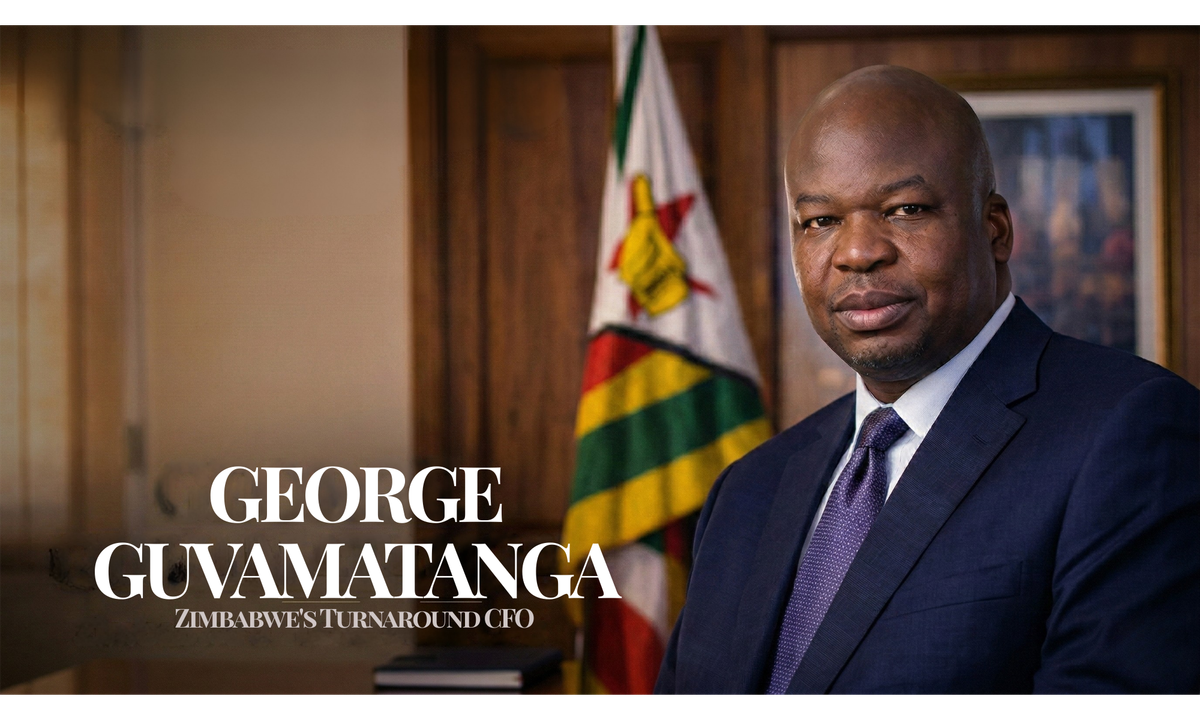
There's a man in Harare who everyone invites to the party but nobody wants to listen to.
He arrives early. He's read the menu. He knows exactly how much is in the account. And every time someone orders another bottle, he's the one doing the math in his head, watching the bill climb past what anyone at this table can actually afford.
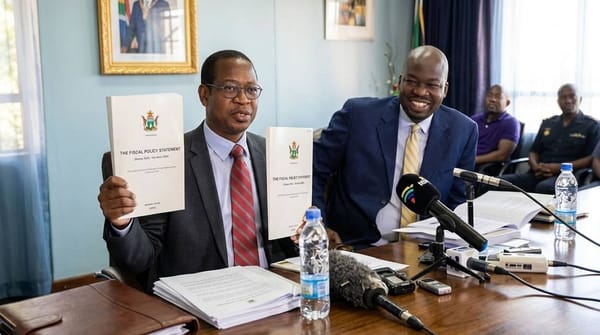
His name is George Guvamatanga. His job title is Secretary for Finance and Economic Development. But his real job—the one nobody thanks him for—is being the designated driver at a party where everyone else is drunk on other people's money.
I. The Rich Friend's Dilemma
You know him. Maybe you are him.
The guy who raised capital from investors for a project—a real project, with timelines and deliverables and people waiting on the other end. He promised returns. He signed agreements. He has a reputation on the line.
Then his friends arrived.
One needed a "small loan" for an emergency. Another had an opportunity that couldn't wait. A third reminded him of the time they helped him out back when he had nothing. The project money became friendship money. The investor calls went to voicemail. The deliverables slipped. The reputation that took fifteen years to build started bleeding out in eighteen months.
His friends don't hate him. They love him. They toast to him. They call him "boss" and "mukoma" and tell everyone how generous he is. They post pictures with him at funerals and weddings and political gatherings.
What they don't mention is that his investors are now calling lawyers.
This is Zimbabwe's budget cycle. Not in metaphor. In mathematics.
Every year, Treasury produces a document of genuine technical sophistication—a fiscal framework that accounts for revenue constraints, debt obligations, development priorities, and macroeconomic stabilization. The 2026 Budget is 247 pages of sober, sequenced planning. It assumes discipline. It requires coordination. It demands that every arm of government operate within its allocated envelope.
And every year, that document meets reality.
The phone calls come. Not requests—demands wrapped in political vocabulary. The rally needs catering. The constituency needs T-shirts. The youth programme needs buses. And behind every demand is the same implicit threat: if this doesn't happen, the President will hear that you are the reason it didn't happen. The President will consider it sabotage. The President will remember who his real friends are.
Treasury allocates for infrastructure. Treasury receives invoices for loyalty.
II. The Anatomy of "The President Approved It"
Let me tell you how national budgets die.
It starts with a comment. The President, in a meeting or a speech, says something like: "We must support our people in the mining sector." Or: "Let's see how we can speed up payments to our partners." Or: "This project is important for the province."
A principle. A direction. An intention.
By the time that comment reaches Treasury, it has transformed. It is no longer a principle—it is an instruction. It is no longer a direction—it is an ultimatum. Someone with a title, or someone who claims proximity to someone with a title, now stands in George Guvamatanga's office with absolute certainty about what the President "meant."
"The President approved this."
"The President wants this done by Friday."
"The President said in principle we should proceed, so we proceeded, and now we need the money."
The President said no such thing. The President approved no such expenditure. The President, in most cases, has no idea this conversation is happening. But his name is the currency, and it spends faster than ZiG ever will.
This is the weapon. The invocation of proximity. The suggestion that any delay is disloyalty. The implication that the accountant who asks questions is the enemy of the President's agenda.
And so Treasury is presented with a choice: release funds that were allocated for schools to cover rally expenses that were never budgeted, or become the person who "blocked the President's programme."
The funds are released. The schools wait. The pattern repeats.
III. What the President Knows, Understands, and Decides
Let me be blunt about something that polite commentary avoids.
President Mnangagwa is not stupid. He is not senile. He is not a puppet. He is a man who survived Gukurahundi politics, exile, poisoning, imprisonment, and a succession battle against the most entrenched liberation aristocracy in Southern Africa. You do not survive that by being naive.
But survival skills and management visibility are different competencies.
The President knows the economy is struggling. He understands, in broad terms, that expenditure exceeds revenue. He decides, based on the information presented to him, what trade-offs to make.
The question is: what information reaches him?
When his Minister tells him a project is "on track," does he see the contractor invoices that have tripled since tender? When his advisor tells him a parastatal is "restructuring," does he see the board minutes where restructuring means new vehicles for executives? When his trusted ally tells him an empowerment initiative is "creating jobs," does he see the customs data showing raw ore leaving the country while processing facilities sit empty?
The President makes decisions. But decisions are only as good as the information that precedes them. And the people controlling the information have every incentive to control the narrative.
This is not unique to Zimbabwe. This is the architecture of power everywhere.
Mobutu did not wake up one morning and decide to bankrupt Zaire. He trusted his circle. His circle told him what he wanted to hear. By the time he understood the scale of the plunder, he was the plunder—a man whose name became synonymous with the very theft he thought he was managing.
Mugabe did not intend to end his tenure fleeing his own generals. He trusted his circle. His circle factionalized. By the time he understood Grace was not his asset but his liability, the army was in the streets and his own party was voting for his removal.
This is the pattern. Not evil intentions at the top—but a system where good intentions become signals for manipulation at every level below.
IV. What Treasury Actually Does
Let me tell you what George Guvamatanga's week looks like—because nobody else will.
Monday: Debt restructuring negotiations with creditors who remember every missed payment since 1999. These are people with spreadsheets going back three decades. They know exactly what Zimbabwe promised and exactly what Zimbabwe delivered. Guvamatanga sits across from them with the same numbers and tries to negotiate space for a country that has broken its word more times than most nations have existed.
Tuesday: ZiG stabilization meetings where he explains, for the forty-seventh time, that you cannot print confidence. The currency holds or collapses based on whether markets believe the fiscal framework is real. Every unbudgeted expenditure is a vote against that belief. Every "emergency allocation" is a signal that the numbers are fiction.
Wednesday: A line ministry has blown through its Q1 allocation in six weeks. They need a "supplementary." They always need a supplementary. The supplementary is not for service delivery—it is for the gap between what was budgeted and what was politically convenient.
Thursday: A parastatal CEO explains why losses are actually "strategic investments in future capacity." The losses have been strategic for eleven consecutive years. The future capacity remains permanently future.
Friday: Someone with a title and a tenderpreneurial cousin wants to discuss a "public-private partnership" that privatizes the profits and socializes the losses. The PowerPoint has pictures of Dubai.
This is the job. Not the ribbon-cutting. Not the press conference. The job is holding a line that everyone with political weight wants to cross, and then being blamed when the consequences of crossing it arrive on schedule.
And let me be clear about something else: George Guvamatanga did not create the concessions that haemorrhage this economy. He inherited them. The exclusive export licenses, the special economic zone exemptions, the contracts signed before his signature was required—these were decisions made above his pay grade, often before he arrived.
He is not responsible for the architecture of extraction. He is responsible for making the numbers work despite it.
V. The Bad Friends
Let's talk about the entourage. Not by name—names create lawsuits, and this isn't about individuals. This is about patterns so consistent they've become infrastructure.
The Empowerment Vulture
He got a mining concession in 2018. Indigenous ownership, they called it. Sovereignty reclaimed.
Five years later, the ore leaves the country raw. No beneficiation. No jobs beyond the extraction site. No tax revenue beyond the permit fee. The "empowerment" empowered one family to sell Zimbabwe's minerals at a discount to the same foreign buyers we were supposedly liberating ourselves from.
Treasury budgets for mining royalties. Treasury receives a fraction. The difference isn't stolen—that would be illegal. The difference is "incentivized" through exemptions, transfer pricing, and contracts signed before anyone at Treasury saw the terms.
The Parastatal Prince
His entity loses money. It has always lost money. It will continue to lose money. But it cannot be reformed, merged, or privatized because it employs six thousand voters in a marginal constituency and its board includes three people whose phone calls get answered on the first ring.
So Treasury includes a "subvention" in the budget. A bailout with a bureaucratic name. And next year, the subvention is larger, because losses—like loyalty—compound over time.
The Procurement Magician
The going rate for a government laptop is three times retail. The going rate for a government vehicle is whatever the minister's brother-in-law invoices. The going rate for construction is the original tender plus variations, plus delays, plus "unforeseen circumstances" that were foreseen by everyone except the people signing cheques.
Treasury allocates for infrastructure. Treasury pays for margins.
The Exclusive Beneficiary
This one deserves special attention.
Consider, for a moment, the gold sector. Zimbabwe produces billions in gold annually. It is one of our most valuable exports, a genuine competitive advantage in a world hungry for hard assets.
Now consider that the exclusive license to purchase and export that gold—the entire national output—belongs to a small circle of individuals. Not because they built infrastructure. Not because they developed technology. Not because they out-competed alternatives in an open tender. Because they received a license.
That's it. That's the entire business model. A piece of paper that says only they can do what others are prohibited from doing.
We then confuse proximity to a lucrative concession with commercial genius. We celebrate the beneficiary's lifestyle as evidence of entrepreneurial success. Magazine covers. Social media followings. The lifestyle branding of people whose only skill is knowing whose door to knock on.
Ask yourself: if you removed these individuals tomorrow and replaced them with competent operators—people who had to pass due diligence, who had to demonstrate technical capacity, who had to prove value-add the way a startup proves itself to venture capitalists—what would happen?
I'll tell you what would happen. Zimbabwe would ten-times its return from the same resources.
The gold is excellent. The terms are a scandal.
Scott Sakupwanya is not a gold dealer in any meaningful commercial sense. He is a license holder. The license does the dealing. He does the holding. And the holding—in a nation where others are prohibited from competing—is worth whatever he decides it's worth.
Imagine, for a moment, that Zimbabwe conditioned these exclusive arrangements on actual performance metrics. Imagine beneficiaries had to present quarterly results to an independent board, the way startup founders present to investors. Imagine licenses were renewable based on value creation, not political proximity.
This isn't radical. This is how Singapore manages its strategic assets. This is how Botswana manages diamonds. This is how every serious developmental state separates political loyalty from commercial performance.
We do the opposite. We grant exclusivity to loyalty and then wonder why competence leaves the country.
VI. The Universal Tragedy of Misplaced Trust
This is not a Zimbabwean problem. This is a human problem. And understanding it requires stepping outside national politics into patterns that repeat across every domain where trust is required.
Economies collapse this way.
Venezuela did not become an economic disaster because Hugo Chávez hated prosperity. Chávez trusted his circle. His circle told him the petrodollars were infinite. They told him the price of oil was a floor, not a ceiling. They told him the expropriations would attract investment because sovereignty itself was the value proposition.
By the time the price of oil collapsed, the institutions that could have adjusted were already hollowed out. The people with the expertise to navigate the crisis were in Miami. The people who remained were the loyalists—committed, passionate, and catastrophically wrong.
Presidencies end this way.
Jacob Zuma did not intend to leave office as a synonym for state capture. He trusted his circle. His circle happened to include the Gupta brothers. The Guptas told him they were investors. They told him they were partners in transformation. They told him the contracts were standard, the payments were normal, the arrangements were how business worked everywhere.
By the time Zuma understood he was the product being sold, not the partner sharing profits, the Commission of Inquiry had 800 days of testimony and his own party was negotiating his exit.
Parents lose children this way.
A father wants to help his son succeed. He provides capital. He opens doors. He defends the son against critics. The son's friends tell the father the business is growing. The friends tell him the delays are normal. The friends tell him the lifestyle is what success looks like in this industry.
The father discovers, too late, that the capital became consumption, the doors opened to obligations, and the friends were spending the inheritance before the father was buried.
And yes—you lose this way too.
Think about your own circles. Think about the people who tell you what you want to hear. Think about the ones who frame every failure as external and every success as your genius. Think about how rarely anyone with something to gain from you tells you that you are wrong.
Now multiply that dynamic by presidential power, by state resources, by a system where disagreement is disloyalty and loyalty is the only currency that never devalues.
This is why good leaders fail. Not because they are bad people. Because they are surrounded by people whose survival depends on the leader never seeing the truth until the truth is all that remains.
VII. The President's Dilemma Is Real
I want to be honest about something that critics avoid.
Running Zimbabwe is not a thought experiment. It is not an op-ed. It is a daily negotiation between impossible demands and insufficient resources, between legitimate grievances and manufactured crises, between the nation's needs and the needs of the coalition that keeps you in power.
President Mnangagwa cannot govern alone. He requires allies. Allies require incentives. Incentives require resources. And in a system where formal institutions are weak, resources flow through personal relationships.
This is not corruption. This is political economy. Every leader in history has faced some version of this trade-off: how much loyalty can you purchase with patronage before the patronage itself becomes the problem?
The President's intentions—development, investment, normalization of relations, economic growth—are not in question. He has stated them repeatedly. He has committed to them publicly. There is no evidence that Emmerson Mnangagwa wants Zimbabwe to fail.
But here is the tragedy of good intentions at the top of a system optimized for extraction at every level below:
Every time the President signals that he wants to help the mining sector, someone with a license starts calculating how to widen their margins.
Every time the President signals that he values loyalty, someone with proximity starts calculating how to monetize it.
Every time the President signals that he is results-oriented and impatient with delay, someone with an invoice starts calculating how to present their private interest as national urgency.
The signal is genuine. The interpretation is predatory. And the President, who cannot attend every meeting or review every contract or verify every claim made in his name, must trust.
The question is not whether the President should trust. He must. The question is whether the system provides any correction when trust is betrayed.
Right now, it does not.
VIII. What Happens to Rich Friends
Let me finish where I started. With the man who raised capital and spent it on loyalty.
His project is now eighteen months behind schedule. His investors have stopped taking calls and started sending lawyers. His reputation—the thing that took fifteen years to build—is being discussed in past tense.
His friends still come around. They still call him "boss." They still remember his generosity. But the invitations have shifted. They now come to reminisce, not to plan. They come to confirm that he is still their friend, not to ask what they can do for his project.
And one day, when the last asset is liquidated and the last investor has sued, they will express shock. They will wonder what happened. They will tell people what a good man he was, and how unfortunate that circumstances beyond anyone's control conspired against him.
They will not mention the catering. They will not mention the T-shirts. They will not mention the "emergency" that was really consumption, the "loan" that was really a gift, the "opportunity" that was really their retirement funded by his capital.
They will leave. They always leave.
Zimbabwe is not a poor country.
Zimbabwe has platinum. Zimbabwe has lithium. Zimbabwe has gold, chrome, diamonds, and some of the most fertile agricultural land on the continent. Zimbabwe has a 90% literacy rate and a diaspora so skilled that other countries' hospitals and universities run on Zimbabwean professionals.
Zimbabwe's problem is not resources. Zimbabwe's problem is that the resources keep funding lifestyles for people who will not be there when the bill comes due.
The 2026 Budget projects revenues of ZWG 78.6 billion. That is not nothing. That is a country with money.
The question—the only question that matters—is whether that money will build schools and clinics and roads and water systems, or whether it will continue to subsidize exclusivity arrangements for people whose only qualification is knowing which door to knock on.
IX. Is There No Conscience?
Maybe there is no silver bullet.
Maybe the dynamics are too entrenched, the incentives too misaligned, the political costs of reform too high. Maybe every developing country with natural resources faces some version of this trap, and the ones who escape are statistical anomalies, not replicable models.
But is there also no conscience?
Somewhere in this system, there are people who know exactly what they are doing. They know the invoice is inflated. They know the concession is unjustified. They know the "in principle" approval was never meant to become a blank cheque.
They know. And they do it anyway.
Not because they are evil. Because the system does not punish them. Because everyone around them is doing the same. Because the alternative—operating with integrity in a system that rewards extraction—looks like professional suicide.
This is the tragedy. Not that Zimbabwe lacks good people, but that good people have learned to survive by participating in what they know is wrong.
George Guvamatanga cannot fix this alone. He can only count what remains and try to make it last longer than the forces working to spend it.
But someone, somewhere, has to decide that the numbers matter more than the relationships. That the project matters more than the rally. That the investor waiting for a return matters more than the friend waiting for a favour.
Someone has to decide that Zimbabwe deserves better than a permanent state of promising and spending, spending and promising, until the promises are exhausted and the spending is all that remains.
X. The Accountant's Vindication
George Guvamatanga doesn't give speeches about how great he is. He doesn't tweet. He doesn't have a PR team planting stories about his genius. He shows up before dawn, he leaves after dark, and in between, he tries to keep a country solvent while people with louder voices and better connections spend what he saves.
One day—probably not soon, but eventually—Zimbabwe will have to choose between the accountant and the entourage.
The entourage is fun. The entourage is loyal. The entourage shows up at funerals and weddings and political rallies with T-shirts that somebody else paid for.
The accountant is just right.
And being right, in this country, is the loneliest job there is.
George Guvamatanga's job isn't to make friends. His job is to make sure Zimbabwe still has money when the friends leave.
And they always leave.