The Truth About Tino Machakaire's Money
He started as a carpenter at 17. Drove someone else's truck in South Africa. Built a fleet from one vehicle. The banks backed him. The courts proved his critics wrong. So why does Zimbabwe treat his success like a crime scene?

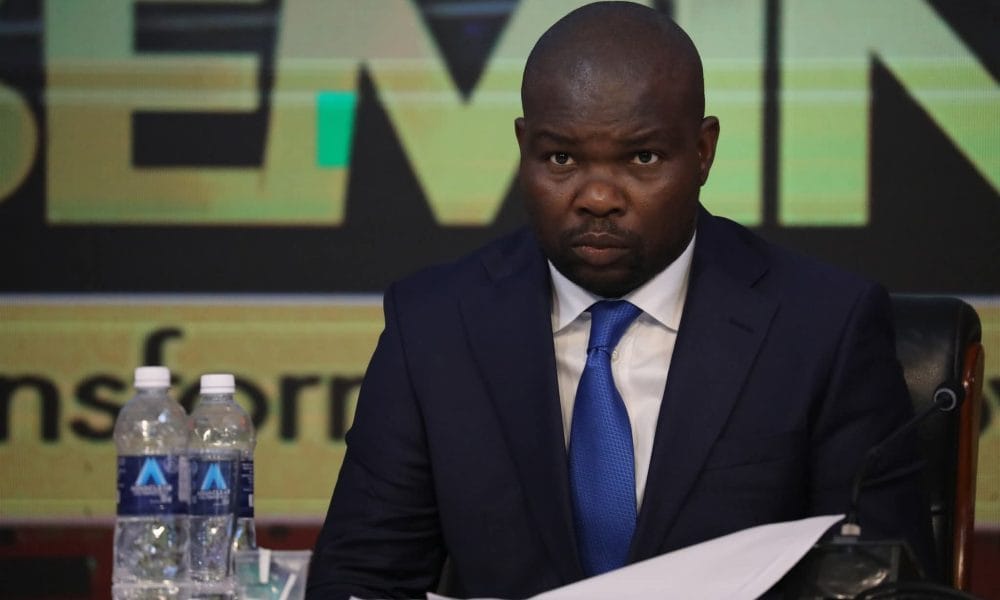
Yesterday I posted something about Minister Hon Minister Tino Machakaire that caused a stir. The comments were wild. Some of you praised him. Some of you attacked him. And a few of you did what Zimbabweans do best. You questioned how a black man from Wedza could possibly be wealthy without stealing.
So I went deeper. I spent 24 hours pulling apart every thread of his business story. And what I found did not just impress me. It convicted me. Because the story of Tino Machakaire is not really about Tino Machakaire. It is about us. It is about what we celebrate and what we destroy. And who we choose to crucify while the people who actually bleed this country get standing ovations from the very same mouths.
Let me ask you something?
When Unifreight has moved goods across this country since colonial Rhodesia and still dominates logistics in 2026, do you question their credentials? When Swift Transport and all the legacy operators that trace their origins back to a time when black people were not allowed to own trucks run billion-dollar operations do you demand to see tender documents? When a white-owned logistics company with a fleet older than our independence wins a government contract do you go on Facebook and type "where did they get the money?"
You do not. You apply for a job there. Your mother brags that you work there. You put it on your LinkedIn and feel proud.
Now let me ask you about the Chinese. The masters of the hit and run, rova uchienda. They cannot pronounce the name of a single city they operate in. They cannot tell you the difference between Mutare and Masvingo. They land with no understanding of our people, no history in our country, no relationships with our communities and no interest in building any. They collect and they go- rova uchienda. They bring their own drivers. They bring their own mechanics. And not a single one of you has ever typed a Facebook post questioning their credentials.
But let a black boy from Wedza build a trucking company from one vehicle to one of the largest private fleets in Zimbabwe and suddenly everyone is an auditor. Suddenly everyone has questions. Suddenly it must be corruption because there is no other explanation for a young black Zimbabwean owning things. Tobva tasvinura paye, kunge matemba.
That is self-hatred in a costume.
Tino Machakaire did not start with connections. He started with a hammer. At 17 years old he was a carpenter in Harare. Not a connected carpenter. A broke teenager making furniture to survive. When that collapsed he went to ZESA in Rusape on a contract that ended before it started. When that collapsed he crossed the border to South Africa and became a truck driver. Someone else's truck. Someone else's route. Someone else's profit.
Machakaire did not just drive that truck. He studied it. His education was meticulous observation of everything around him. He sat in that cab and watched how logistics actually works. He watched how loads are managed. How routes are planned. How margins are made and how margins are lost. He watched the blind spots that workers create for owners. The fuel skimming. The route padding. The phantom breakdowns. The kickbacks. The slow leaks that drain a logistics company from the inside while the owner sleeps.
Most drivers see those blind spots and join in. Machakaire saw them and took notes. He was planning to be the owner who could not be cheated.
He learnt from his bosses' clients. Every delivery he made he studied the business on the other end. He watched how warehouses operated. He watched how supply chains connected. He understood that the real money in logistics is not in owning trucks. It is in understanding what the truck carries, why it matters and who needs it delivered yesterday. He learned the entire value chain from the cab of a vehicle that was not his.
When he came back to Zimbabwe he did not come back with a degree from Harvard. He did not come back with an MBA. And honestly if success required qualifications billionaires would not exist. Strive Masiyiwa did not build Econet because a university gave him permission. The greatest entrepreneurs on this continent share one trait. It is not education. It is not connections. It is the willingness to leave everything on the floor. Every single day. For years. When nobody is watching and nobody is clapping.
He registered a company with one truck. One truck that he drove himself on routes he had memorised while working for someone else. His competitive advantage was simple. He knew every blind spot that kills a logistics business because he had watched them happen from the inside. So he closed them. He ran tighter routes. He managed fuel better. He maintained his vehicle obsessively. He delivered on time every time. And he charged less than the legacy operators who were fat and lazy because they had never faced competition from someone who actually understood the game from the ground up.
One truck became 5. Five became 15. Fifteen became 34. And the banks started paying attention.
In 2014 and 2015 the banks finally saw what the streets already knew. Ecobank under Moses Kurenjekwa looked at this young operator running the tightest fleet in Manicaland with a clean repayment record and made a commercial decision to finance 75 buses from China, he took a chance on Hon Minister Tino Machakaire. CBZ under then Managing Director Zimunya made the same assessment and offered 25 trucks. That is 100 vehicles financed not by politicians but by bankers who ran their own credit checks, did their own due diligence and bet their own balance sheets on Machakaire's track record.
When a colonial-era logistics company gets a hundred million dollar facility from a bank we call it growth. When a black-owned company gets the same we call it looting. When Swift or Unifreight or any white-owned operator expands nobody asks who their grandfather was. But when a black man from Wedza gets bus finance from Ecobank it must be political. It must be corrupt. It must be stolen. Because in our minds black people are not supposed to have things.
Now let me address the favourite attack. Command Agriculture.
Every time Machakaire's name comes up someone types Command Agriculture like it is a signed confession. Let me educate you. Do you know how many companies supplied Command Agriculture? Hundreds. Every logistics company in Zimbabwe that had a truck and a tax clearance was part of that programme. Seed companies. Fertiliser companies. Fuel distributors. Equipment suppliers. White-owned agricultural companies. Chinese-owned suppliers. Literally hundreds of private sector operators participated because that is what a national agricultural input programme requires.
Nobody questions the seed companies. Nobody questions the white-owned agricultural suppliers. Nobody questions the Chinese equipment dealers. Only the young black man with trucks.
You want to know what Machakaire does that his critics never mention?
He pays his drivers more than any other logistics company in Zimbabwe. Not close. More. His drivers earn above industry rates because he remembers being a driver. He remembers what it feels like to generate profit for an owner and take home nothing. He is directly responsible for thousands of families. Not hundreds. Thousands. Drivers. Mechanics. Dispatchers. Administrators. Fuel attendants. And that is before you count the indirect jobs. The food vendors at truck stops. The tyre dealers. The parts suppliers. The families in rural Manicaland whose entire household income comes from one family member who works at TinMac.
But nobody writes about that. Nobody posts about the families his company feeds. It is easier to type corruption in a Facebook comment.
Ndimbobata his loudest critic because this part needs to be said and nobody else will say it. She is supported by women ne ngito.
Fadzayi Mahere has made attacking Sir Wicknell and Hon Minister Tino Machakaire a personal sport. She questions their wealth. She questions thier integrity. She questions vehicles. She posts about them with the confidence of someone who has never built or employed a single human being in her life (ndosaka...I digress)
Fadzayi Mahere is the daughter of privilege. She grew up in the kind of comfort that Machakaire could not spell at her age. She attended the finest schools. She had every door opened before she knelt. She benefited directly from an era of government-adjacent wealth accumulation that she now pretends never happened. Her entire platform is built on pointing fingers at people who had to fight for everything she was handed.
And when Machakaire took her to court for defamation, she lost. Not on a technicality. The court ordered her to pay 33,000 US dollars in legal costs. Thirty-three thousand. For a case she started by running her mouth on social media about a man she has never sat across a table from. She accused. He responded with lawyers, and she lost.
What bothers me most about the Mahere type of critic. She has never questioned how a colonial-era law firm accumulated its wealth. She has never questioned how white-owned logistics companies have held monopolies for 60 years without a single audit. She has never questioned how Chinese operators strip-mine our contracts and send the money to Shanghai. Her outrage is exclusively reserved for black Zimbabwean men who have the audacity to be successful without her permission.
That tells you everything you need to know about who she actually serves.
What Machakaire's enemies truly cannot stand.
He does not talk about his success. Every time he speaks publicly he talks about failure. The false starts. The dead ends. The businesses that collapsed. The months he did not know how next week would look. He talks about God's grace like a man who genuinely cannot understand why he was chosen. There is no arrogance. There is no chest-beating. There is a man who remembers driving someone else's truck and cannot believe he now owns a fleet.
His superpower is stupid and simple. He just keeps working. When a door closes he finds a wall and goes through it. When the entire internet decides he is the villain of the week he wakes up at 5am and goes to work anyway. That is not a government skill. That is a survival skill. And most of the people attacking him online have never survived anything harder than a Wi-Fi outage.
Every time Machakaire is with President Mnangagwa the conversation is not about himself. The President is obsessed with one question. How do we create the most millionaires in Africa? And Machakaire took that as a personal assignment. His entire focus as Youth Minister is financial inclusion. Making sure the young black Zimbabwean who walks into a bank today and gets told no, the way he was told no, has a different outcome tomorrow.
He understands the pain of capital exclusion because he lived it. He knows what it means to need 10 times the proof to get half the facility that a white-owned company gets on a handshake. He knows that the financial system was not built for people who look like him and he is trying to tear it open from the inside.
His strategy was always simple. When nobody will lend you money you have to be so good that refusing you becomes more expensive than funding you. That is exactly what he did. He built a track record so clean that Ecobank and CBZ had no rational reason to say no.
That is the blueprint he teaches today. It is simple. It is stupid. And it is almost impossible to copy because it requires a pain threshold that most people do not have. It requires waking up before the sun every single day for years with no guarantee. It requires failing publicly and getting up privately. It requires being 10 times as good to get half the opportunity. And it requires doing all of this while your own people sit in the comments section calling you a thief.
The tragedy of Zimbabwe is not that we lack talent. It is that we destroy our own.
So the next time you see Tino Machakaire's name and your first instinct is to ask how a black man got wealthy I want you to stop and ask yourself a harder question.
Why does his success make you so uncomfortable?
Until Next Time, Head Bowed.