The War on Energy: $110 Oil, $20 Billion in Qatari Damage, and Who Is Getting Rich While Africa Burns
Brent at $110. Zimbabwe fuel up 39%. Who profits from the arbitrage? PowerList names winners, losers and the next move.


The Iran war hit the plumbing of the global energy system this week, with Brent crude breaching $110 a barrel after Israel struck Iran's South Pars gas field and Iran retaliated by attacking energy facilities across Qatar, Saudi Arabia, Kuwait, the UAE and Bahrain. African treasuries that were forecasting oil at $70 to $80 are now staring at a fiscal crisis. But inside the crisis, billions are being made. The question every minister should be asking is not just who is losing, but who is winning, and whether their country is positioned on the right side of the trade.
- Brent crude settled at $108.65 on Thursday after briefly touching $119 earlier in the session. WTI climbed above $96. Oil prices are up more than 50% since the war began on 28 February. For every net oil-importing African country, this is the single most dangerous economic variable right now. But for net exporters, this is a windfall cycle. Nigeria's Dangote Refinery, now processing 400,000 barrels per day of domestic crude, is printing money at these margins. Angola's Sonangol is earning roughly $40 more per barrel than budgeted. Equatorial Guinea, Republic of Congo and Gabon are in the same position. The smart trade for any African treasury with oil exposure is to lock in forward contracts now while Brent sits above $100, because the moment the Strait reopens, prices will correct violently.
- Qatar's Ras Laffan LNG complex, the world's largest, has suffered $20 billion in estimated annual lost revenue after Iranian missile strikes damaged 2 of 14 LNG trains. QatarEnergy says repairs will take 3 to 5 years, removing 12.8 million tonnes per year of LNG from global supply. That is 17% of Qatar's export capacity gone. The immediate winner is the United States, now the world's largest LNG exporter with no Gulf competition for European and Asian spot buyers. Mozambique's Coral South FLNG and the stalled TotalEnergies Mozambique LNG project just became the most strategic gas assets in Africa. If Maputo had a functioning investment climate, capital would be flowing in this week. It is not. That gap between strategic value and political risk is where the next billion-dollar play sits.
- The IEA released an emergency oil market report confirming global oil supply will plunge by 8 million barrels per day in March. Gulf countries have already cut total production by at least 10 million barrels per day because storage is full and tankers cannot transit the Strait of Hormuz. IEA member countries released 400 million barrels from emergency reserves on 11 March, but this is a stopgap, not a solution. The traders making the real money are those holding physical oil in non-Gulf storage. Trafigura, Vitol and Gunvor are sitting on inventories bought at $72 and now worth $108. That is a 50% return in 3 weeks. African commodity trading houses should be studying this play.
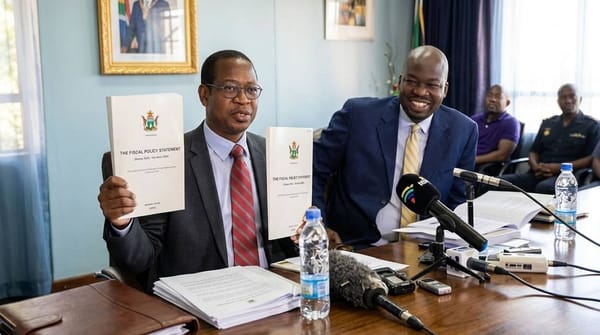
- Zimbabwe posted the steepest fuel price increase in the SADC region, with ZERA raising petrol to $2.17 per litre and diesel to $2.05, effective 18 March. That is a 39% surge since the start of the month. Botswana has not raised prices. South Africa adjusted by 2%. Here is where the arbitrage gap opens. Zimbabwe's pump price is now nearly double that of Botswana and roughly 80% higher than South Africa. Any trucker filling up in Francistown or Musina before crossing into Zimbabwe is capturing an immediate margin. But the bigger arbitrage is structural. Zimbabwe finances fuel imports through letters of credit at 18% dollar interest rates. South Africa finances at 6 to 8%. That financing cost difference alone adds 10 to 12 US cents per litre before a single barrel of crude is priced. The question is not why Zimbabwe's fuel is expensive. The question is who is earning the 18% on those letters of credit and whether that margin is going to commercial banks, politically connected intermediaries, or both. The ZERA price build-up document reveals that without government intervention, diesel would have been $2.20. That 15-cent subsidy is real money from the fiscus. Mthuli Ncube's Treasury must now decide how long it can carry this without blowing a hole in the 2026 Budget.
- Gold is trading at approximately $4,658 per ounce as of 20 March, down from a record high of $5,595 reached in January but still up over $1,500 year on year. Here is the play that no one in Harare is talking about. Zimbabwe is simultaneously a gold producer and a gold-backed currency issuer. At $4,658 per ounce, every ounce produced by Kuvimba, Caledonia Mining, RioZim and the artisanal sector is generating record revenue in ZiG terms. But the ZiG exchange rate is not moving. The rand, the kwacha and the pula all flex with commodity cycles, absorbing import shocks on the way down and exporting competitiveness on the way up. The ZiG sits frozen. This creates a hidden arbitrage: gold revenue enters the Reserve Bank at world prices, but the domestic exchange rate does not reflect that inflow. Someone is capturing the spread between the market value of Zimbabwe's gold reserves and the administered ZiG rate. Treasuries and central banks across the continent that hold gold reserves, including South Africa, Ghana and Tanzania, should be monetising the safe-haven premium right now through gold-backed sovereign bond issuances. At $4,658, the collateral has never been stronger. The best move for the RBZ is to use the gold price surge to issue a short-duration, gold-collateralised instrument that attracts diaspora capital at 8 to 10% rather than financing fuel imports at 18%.
- Urea fertiliser prices have jumped 30% in the past month. Soybean oil hit its highest level in more than 2 years. The Strait of Hormuz blockade is choking not just oil but the nitrogen fertiliser supply chain. The winner here is Morocco's OCP Group, the world's largest phosphate fertiliser exporter, which is capturing a massive pricing premium while its competitors in the Gulf cannot ship. OCP's stock and revenue trajectory this quarter will outperform every forecast. Sub-Saharan Africa's planting season will be hit hardest. Treasuries in Zambia, Malawi, Tanzania and Zimbabwe need to model the second-order food price impact immediately. The smart move for any SADC agriculture minister is to negotiate a bulk fertiliser purchase from OCP this week at a locked price before the next Hormuz escalation pushes urea above $500 per tonne.
- The IEA confirmed that global oil demand growth for 2026 has been slashed by 210,000 barrels per day to 640,000 barrels per day. Flight cancellations across the Middle East have cut global jet fuel demand materially. African airlines that routed through Dubai, Doha and Abu Dhabi are adding hours of flight time and fuel cost on every long-haul route. Ethiopian Airlines, Kenya Airways and South African Airways face margin compression. But Ethiopian Airlines, which has the most diversified route network on the continent, is positioned to capture displaced transit traffic from Emirates, Qatar Airways and Etihad. Addis Ababa Bole Airport should be running at maximum marketing spend right now. The airline that moves fastest to absorb stranded Gulf hub traffic wins a structural market share gain that outlasts the war.
- Algeria is the continental winner from the oil shock, but it is already producing at full capacity and cannot increase output. Nigeria and Angola are capturing revenue windfalls, but both face refining constraints that mean higher domestic pump prices despite being oil producers. The arbitrage here is absurd: Nigeria exports crude at $108 and imports refined petrol at $120 equivalent. The Dangote Refinery is the only African asset that closes this gap at scale, and Aliko Dangote is printing margin on every litre. Morocco benefits from surging phosphate fertiliser prices but will pay more for ammonia imports, netting out much of the gain. The net play across the continent is clear: any country with refining capacity is a winner. Any country importing refined product is a loser. The medium-term policy signal is that every African finance minister should be fast-tracking refinery investment.
- Egypt declared a state of near-emergency. Foreign portfolio investors pulled $6 billion from Egyptian markets on fears of higher import costs, lost Suez Canal revenue and falling Gulf remittances. The central bank allowed the pound to depreciate rather than burn reserves. African finance ministers from Addis to Pretoria are watching Cairo as the template for what happens when an oil shock hits a debt-heavy, import-dependent economy. But here is where the contrarian capital goes. Egypt at distressed asset prices, with a weakened pound and an IMF programme in place, is now the cheapest large-market entry point in Africa. Sovereign wealth funds and DFIs that bought Egyptian pound-denominated T-bills at the previous crisis in 2024 earned returns above 30%. The same trade is setting up again.
- The IEA emergency stock release of 400 million barrels buys time but not safety. If the Strait of Hormuz remains effectively closed for another 2 to 3 weeks, JPMorgan projects Brent could reach $120. US Treasury Secretary Scott Bessent floated the idea of lifting restrictions on Iranian oil already loaded on vessels, signalling Washington knows it has an inflation problem it cannot bomb its way out of. Iran is still exporting oil to China through the Strait using yuan-denominated contracts. That detail matters enormously. The dollar's monopoly on oil pricing is cracking in real time. Any African central bank governor paying attention should be hedging dollar exposure and diversifying reserve currencies toward the yuan and gold.
- South Africa's repo rate stands at 6.75% after a series of cuts, with inflation anchored near the new 3% target. But the oil shock threatens to reverse the disinflation trend across the continent. Any central bank that was planning rate cuts in Q2 needs to pause and model the pass-through. The Reserve Bank of Zimbabwe, Bank of Tanzania, Central Bank of Kenya and South African Reserve Bank are all on watch. The smart monetary policy move is not to hike, but to hold and communicate clearly. Forward guidance matters more than the rate itself right now.
Zimbabwe and SADC angle: The SADC region is uniquely exposed. Zimbabwe pays the highest fuel prices in the bloc. The 39% surge reveals structural weaknesses that go beyond global oil prices: 18% dollar financing costs, an immobile ZiG that cannot absorb shocks, and a fuel import chain where the margin between landed cost and pump price is captured by a narrow group of politically connected intermediaries. Mthuli Ncube's Treasury must now recalculate every fiscal assumption in the 2026 Budget. The fuel subsidy holding diesel at $2.05 instead of $2.20 is costing real money. The best fiscal move is to redirect that subsidy toward a gold-collateralised diaspora bond that brings in cheaper capital to finance fuel imports, cutting the 18% LC cost to 8 to 10% and saving the fiscus hundreds of millions per year.
PowerList verdict: The money in this crisis is being made by physical oil traders holding non-Gulf inventory, gold producers selling at $4,658, the Dangote Refinery closing Nigeria's crude-to-petrol arbitrage, Morocco's OCP riding the fertiliser surge, and whoever is earning 18% on Zimbabwe's fuel import financing. The losers are every landlocked, import-dependent, dollar-indebted treasury that did not hedge. The next best move for African decision-makers: lock in oil forward contracts if you are a producer, issue gold-backed instruments if you hold reserves, negotiate bulk fertiliser purchases from OCP before urea breaks $500, and position your national airline to capture displaced Gulf hub traffic.