Machakaire's Quiet Masterpiece: What the Bona Mugabe Appointment Reveals
Tino Machakaire solved three political problems with a single statutory instrument, and the commentariat missed all three.

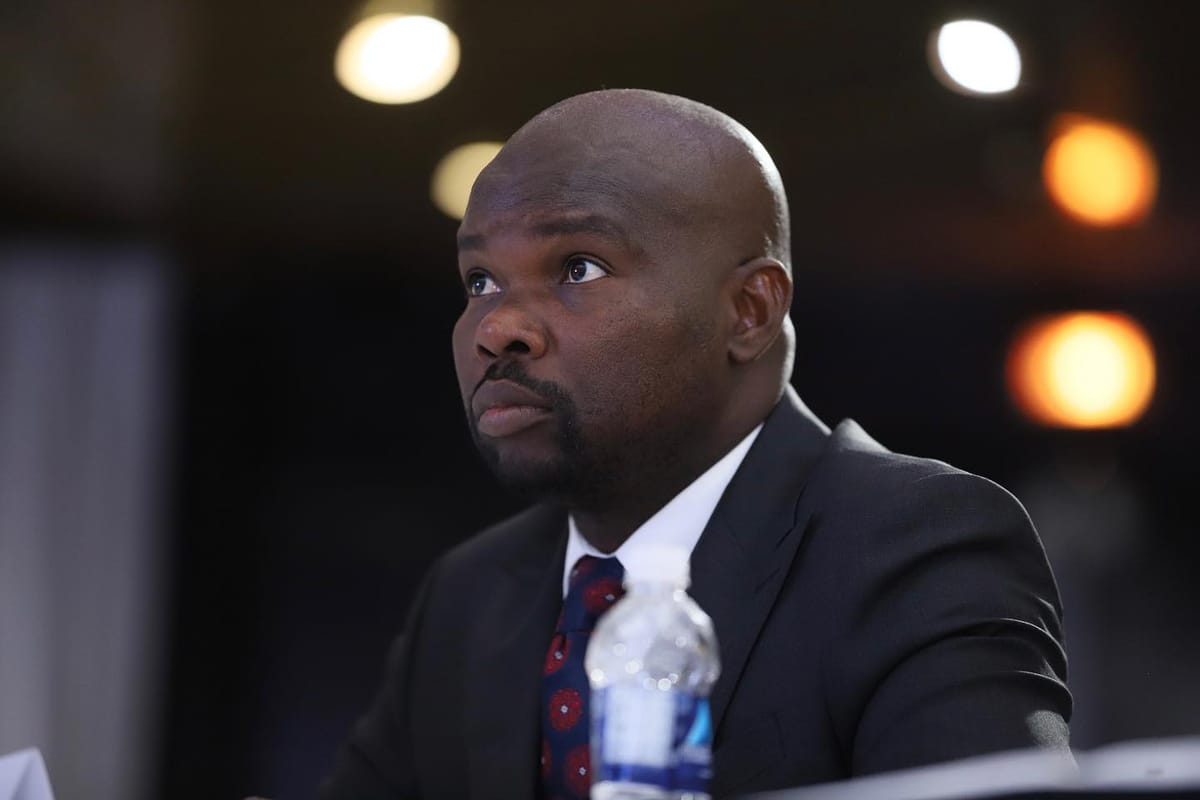
On 6 March 2026, the Minister of Youth Empowerment, Development and Vocational
Training signed Statutory Instrument 132 of 2026, appointing a seven-member board
for EmpowerBank. The board will be chaired by William Chaitezvi. The deputy
chairperson is Bona Mugabe Chikore, only daughter of the late former President
Robert Mugabe. Other members include Margaret Mupfiga, Patience Matshe, Ebrahim
Ali Makunganya, Marcos Nyaruwanga, and Peter Makotsi. The appointments run for
four years under the Public Entities and Corporate Governance Act.
The response on social media was predictable. Nepotism. Patronage. The Mugabe name
deployed as provocation.
The response was also wrong.
To understand what Machakaire actually did requires examining three concurrent
developments that share the same architect but are being treated as unrelated
stories.
THE COALITION MAP AS IT STANDS
Between late February and early March 2026, the following personnel movements
occurred within a 10-day window.
Vice President Constantino Chiwenga was dispatched to Kwekwe to inspect industrial
revival projects at Sable Chemicals and Zimchem. Observers within the party
characterise these tours as ceremonial assignments that distance Chiwenga from the
political centre while Harare reshapes the governing architecture around him.
Chiwenga skipped the Politburo seminar in February. Two Cabinet ministers,
speaking to journalist Hopewell Chin'ono on condition of anonymity, reported a
confrontation between Chiwenga and President Mnangagwa during Cabinet
deliberations on Constitutional Amendment No. 3.
The Zimbabwe Defence Forces confirmed the reassignment of Minnie Baloyi,
Chiwenga's wife, from a military intelligence posting she held for approximately
six years. The ZDF issued a public explanation, which signals the sensitivity of
the move. Separately, reports indicate restructuring within the military command
that aligns with a broader consolidation of security appointments around the
Presidency.Constitutional Amendment No. 3 was gazetted on 16 February 2026. Its provisions
extend presidential and parliamentary terms from five to seven years, apply the
extension to the incumbent, and propose the removal of direct presidential
elections in favour of parliamentary selection.
In this environment, the Bona Mugabe appointment is neither sentimental nor
accidental. It is a coalition deposit.
THREE PROBLEMS, ONE INSTRUMENT
Problem one: the revenge narrative. Since November 2017, the opposition has
maintained that Mnangagwa's presidency was born of a military intervention that
punished the Mugabe family and dismantled their political base. The placement of
Bona Mugabe inside a government institution, under a statutory instrument signed
in the name of the republic, neutralises this line of attack more effectively than
any speech or press conference could. The narrative of victimisation cannot
survive the visible reality of institutional inclusion.
Problem two: the Mugabe constituency. The Mugabe name retains residual loyalty in
pockets of Mashonaland Central and Harare South. This is not organised political
power. It is dormant sentiment. In a coalition calculus where every silent faction
reduces the probability of internal resistance to the 2030 agenda, dormant
sentiment has value precisely because absorbing it costs very little. A board
appointment at a micro-finance institution is a low-cost, high-signal transaction.
Problem three: the youth mandate. EmpowerBank is a state-owned financial
institution tasked with delivering loans and financial services to young
entrepreneurs. Youth unemployment remains one of the most politically volatile
variables in Zimbabwe's domestic equation. Machakaire's portfolio demands a board
that can deliver measurable outcomes. Bona Mugabe holds a Bachelor of Accounting
from the University of Hong Kong, earned between 2011 and 2014. She served on the
EmpowerBank board when it was first approved by the Reserve Bank in May 2017. She
has the qualification and the institutional memory. The appointment has defensible
professional grounds regardless of its political utility.
This is the distinction between patronage and political engineering. Patronage
places people where they cannot be measured. Political engineering places them
where their presence sends a signal and their performance can be assessed.
THE HISTORICAL PARALLEL
Robert Mugabe's coalition management in his final decade was characterised by
progressive narrowing. The expulsion of Joice Mujuru in 2014, the marginalisation
of the Mnangagwa faction, the elevation of the G40 under Grace Mugabe and JonathanMoyo, and the systematic alienation of the security establishment created a
presidency that rested on an ever-shrinking base. When Chiwenga moved in November
2017, the coalition had already collapsed. The military did not overthrow a
president. It occupied the vacuum left by a coalition that no longer existed.
The Mnangagwa approach inverts this pattern. Where Mugabe expelled, Mnangagwa
absorbs. Where Mugabe narrowed, Mnangagwa widens. The Tshabangu co-optation of
opposition structures in 2023 and 2024 follows the same logic. The business
coalition — Tagwirei, Chivayo, Sakupwanya — provides financial infrastructure. The
war veteran faction is acknowledged. The Mugabe family is now housed.
The result is a governing coalition so broad that no internal bloc can assemble
sufficient mass to challenge the constitutional agenda. ZANU-PF holds a two-thirds
majority in the lower house and controls the upper house through traditional
leaders. The opposition is fractured between Chamisa's Agenda 2026, Biti's
Constitutional Defenders Forum, and Timba operating independently. There is no
unified counter-bloc.
This is not a failure of opposition strategy. It is a feature of coalition design.
THE MACHAKAIRE FACTOR
The minister's role in this architecture deserves specific attention. Machakaire
controls the Youth Empowerment portfolio, which positions him at the intersection
of patronage distribution and demographic management. The youth vote is the
largest single electoral demographic in Zimbabwe. The minister who credibly
delivers economic access to that demographic accumulates political capital at a
rate that cabinet seniority alone cannot match.
By signing SI 132, Machakaire achieved the rare combination of serving the
coalition's strategic needs while strengthening his own portfolio's delivery
mandate. The appointment is simultaneously a political favour to the Presidency
and a governance decision for the ministry. This duality is the hallmark of
effective political operation: the move that serves two masters at once.
Rwanda provides an instructive comparison. Paul Kagame's post-genocide coalition
absorbed former adversaries into institutional roles — not as gestures of
reconciliation but as instruments of coalition maintenance. The inclusion of
former Hutu officials in government structures served the dual purpose of
neutralising opposition and signalling institutional capacity to international
partners. The mechanism is identical: absorption as consolidation.
In Kenya, Uhuru Kenyatta's 2018 handshake with Raila Odinga followed the same
arithmetic. A rival outside the tent generates resistance. The same rival inside
the tent generates compliance.THE UNRESOLVED QUESTION
The structural question that the Bona Mugabe appointment raises is not about one
woman's qualifications. It is about the conditions under which Constitutional
Amendment No. 3 reaches Parliament.
Mnangagwa now faces a governing coalition in which every potential opposition
vector has been addressed: the military command is being restructured, Chiwenga is
operationally marginalised, the Mugabe legacy is institutionally absorbed, the
business coalition is financially committed, and the parliamentary arithmetic is
settled.
The question for observers is not whether the amendment will pass. The
parliamentary numbers are not in dispute. The question is whether the breadth of
this coalition is sustainable beyond the amendment itself, or whether it is a
temporary alignment of interests that dissolves once the 2030 question is settled.
Coalitions built on inclusion are more durable than coalitions built on expulsion.
But coalitions built on the promise of future rewards are only as durable as the
rewards themselves. EmpowerBank will be measured by whether loans reach young
entrepreneurs. The youth portfolio will be measured by employment numbers. The
2030 presidency will be measured by economic delivery.
The instrument has been signed. The coalition has been assembled. The question
that remains is the one that always remains in Zimbabwe: who pays, and who
collects?