Trump's War, Mnangagwa's Constitution, and the 5 Power Plays Reshaping Africa This Morning
Trump's war exposed. Mnangagwa's constitution advances. Congo's drone war escalates. The 11 power plays reshaping Africa today.


The single most important political development for African power players today is not what happened in the Strait of Hormuz. It is what the Hormuz crisis revealed about who controls the levers and who is being played. The Iran war has entered its third week with no off-ramp in sight. Israel struck Iran's South Pars gas field on Wednesday. Iran retaliated across the entire Gulf. Donald Trump threatened to blow up the world's largest gas reserves if Tehran touches Qatar again. And while every camera on earth points at the Middle East, the real coalition mathematics are shifting quietly across Africa.
- Trump just revealed the limits of American power. The Strait of Hormuz remains effectively closed. Twenty percent of the world's oil is trapped. Trump posted on social media that the US does not need anyone's help to reopen it, but a senior British military official said any reopening is a long way off because of mines, drones and attack boats. Iran is still exporting oil to China through the same Strait it has closed to everyone else, using yuan-denominated contracts. The winning coalition here is Beijing and Tehran. The losing coalition is every US-aligned economy paying $110 for oil while China buys Iranian crude at a discount. African leaders aligned with Washington should be asking themselves what that alignment is actually delivering right now.
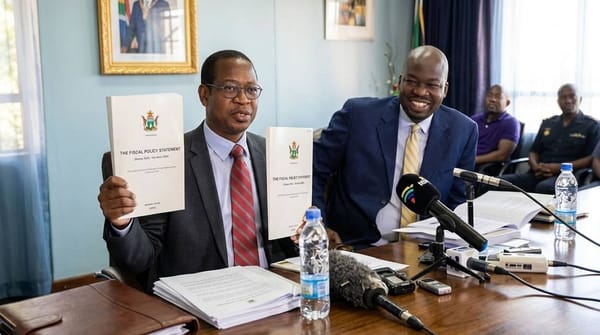
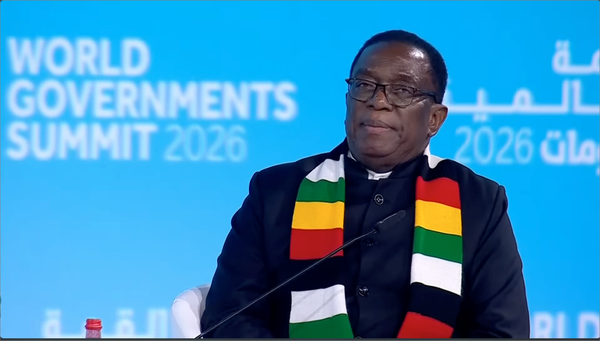
- Zimbabwe's Constitutional Amendment Bill No. 3 enters its most dangerous phase. Parliament announced public hearings from 30 March to 2 April. The Bill proposes replacing direct presidential elections with a parliamentary selection process, extending terms from 5 to 7 years, and transferring the voters' roll from ZEC to the Registrar-General. Published yesterday on ConstitutionNet, constitutional scholar D. Tinashe Hofisi called it executive consolidation through constitutional disruption. The Selectorate mathematics are blunt. ZANU-PF holds a supermajority in the National Assembly after opposition recalls. Traditional chiefs in the Senate vote with the ruling party. The Bill needs roughly 3 Senate defections to pass. It will pass. The real question is not whether it passes but what the winning coalition extracts in return. Every ZANU-PF faction backing this Bill is pricing in a private goods expectation for 2028 to 2030. Attorney-General Virginia Mabiza says it strengthens institutions, not individuals. ZANU-PF Harare chairman Godwills Masimirembwa says no referendum is required because the Bill does not extend a term limit, it extends a term. That distinction is the entire game. Watch who gets rewarded for public support in the next 90 days. That is the defection map.
- The DRC is now fighting Africa's first drone war. ACLED recorded the highest number of monthly air and drone strikes ever in the DRC in February. A Congolese military drone killed M23 spokesperson Willy Ngoma and several rebel commanders near Rubaya in Masisi, a coltan mining area that produces 15 percent of global supply. The Congolese government offered the Rubaya mine to the United States in a mineral cooperation deal on 5 February. M23 responded with kamikaze drone attacks against the FARDC command centre in Kisangani. This is no longer a militia conflict. It is industrialised aerial warfare over critical mineral supply chains, with Washington as the intended beneficiary. The winning coalition in eastern Congo is whoever controls the coltan. The private goods flow is mineral access. Rwanda, through its M23 proxy, is the gatekeeper. Kinshasa is trying to change that equation with drones and an American minerals deal. The defection watch is on Kigali. If Washington delivers meaningful economic incentives to Kagame, the M23 proxy war loses its utility.
- Uganda's 2026 election is the succession story no one is covering. Yoweri Museveni, in power for 40 years, is seeking re-election in a country where 33 million of 46 million citizens are under 30. Youth unemployment is 43 percent. Only 90,000 of 700,000 graduates each year find formal employment. Museveni's winning coalition has shrunk to family, military brass and a handful of regional power brokers. The selectorate is enormous and young. The coalition is tiny and old. That is the textbook formula for instability. The question is not whether Museveni wins the vote count. He will. The question is whether the vote triggers a legitimacy crisis that reshapes East African politics. Kenya's Gen-Z protests in 2024 and 2025 proved that digitally mobilised youth can shake a government. Uganda's median voter has watched that playbook closely.
- Republic of Congo goes to the polls in March with a predetermined outcome. Denis Sassou-Nguesso, 82 years old, in power for 41 years, is seeking re-election in Africa's third-largest oil-exporting country. He sidestepped age and term limits in 2015. The election is a formality. But here is what matters for the region. Congo-Brazzaville is an oil producer in the middle of the biggest oil price shock since 2022. Sassou-Nguesso's winning coalition of military and French energy interests is being showered with windfall revenue at exactly the moment he needs to buy loyalty for another term. The Iran war is financing his re-election. Every oil-producing African autocrat is looking at Brent at $108 and seeing the same thing: a war chest that arrived without asking.
- Sudan's war is converging with South Sudan's crisis. The RSF captured Babnusa and is pressing toward El Obeid, 250 miles from Khartoum. In South Sudan, President Salva Kiir arrested Riek Machar, concentrated power around his family, and postponed elections to December 2026, which few believe will happen. The RSF formed a rival government with the SPLM-North, an offshoot of Kiir's own party. The SAF believes Kiir is backing the RSF alliance. Two civil wars are merging across the world's newest international border. The winning coalition in both Khartoum and Juba is military. The losers are 25 million displaced civilians. The defection watch is on the UAE, which backs the RSF, and Egypt, which backs the SAF. Neither is willing to compromise while the Iran war absorbs all diplomatic oxygen.
- The US is negotiating drone overflight rights in Mali. The Trump administration is close to a deal allowing American intelligence drones to fly over Malian airspace to track JNIM. Washington lifted sanctions on Mali's defence minister on 27 February. The Alliance of Sahel States, the junta confederation of Mali, Burkina Faso and Niger, has been drifting toward Russia's Africa Corps. This is Washington buying back access with security concessions after losing influence to Moscow. The private goods exchange is simple. Mali gets US intelligence on JNIM. Washington gets eyes on Russian mercenary movements in the Sahel. The loser is France, which is now irrelevant in all three countries it once considered its strategic backyard.
- Benin survived a coup attempt with Nigerian military intervention. Lt. Col. Pascal Tigri led the putsch. Nigerian armed forces intervened to support Benin's government. This is the first direct Nigerian military intervention to stop a coup in a neighbouring state since the ECOWAS era. It matters because it signals that Nigeria under Tinubu is willing to enforce regional stability with force, not just statements. For the Sahel juntas watching from Bamako and Ouagadougou, the message is clear. Tinubu's coalition now includes a military deterrence posture that previous Nigerian leaders avoided.
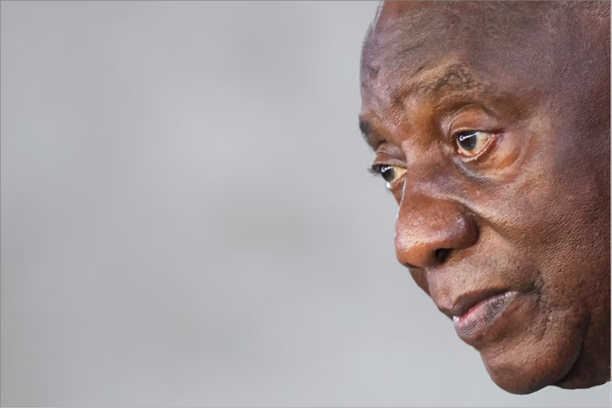
- South Africa voted with 90 countries at the UN for the return of Ukrainian children taken to Russia. This is a significant break from Pretoria's previous voting pattern of strategic ambiguity on the Russia-Ukraine conflict. It comes as US-South Africa relations remain deeply strained: 30 percent tariffs on South African goods, US aid frozen, the ambassador expelled, and Trump offering asylum to white South Africans. Ramaphosa is recalibrating. The Selectorate logic is that South Africa's G20 presidency and ICJ genocide case against Israel have already burned the Washington bridge. Voting with the West on Ukraine children costs nothing domestically and buys marginal goodwill internationally. It is a free move on the board.
- Eleven African governments spent $2 billion on Chinese-built AI surveillance infrastructure with no evidence it reduced crime or terrorism. A new Institute of Development Studies report warns this technology is being weaponised to suppress dissent, monitor journalists and erode civil liberties. The winning coalition for Chinese surveillance exports is the ruling party in each country. The private good is information control. The public good, crime reduction, does not exist. This is the Selectorate model in its purest form: a technology purchased not to serve citizens but to monitor them. The countries are not named in the summary, but the usual suspects include Uganda, Zimbabwe, Ethiopia, Kenya and Egypt, all of which have documented Chinese surveillance procurement.
- Iran is selling oil to China in yuan through the Strait it closed to everyone else. This is the single most consequential geopolitical fact of the week that no African foreign ministry is discussing publicly. The dollar's monopoly on energy pricing is cracking in real time. If yuan-denominated oil trades become normalised by the end of this war, every African central bank holding dollar reserves is sitting on a depreciating asset. The defection watch is on Saudi Arabia. If Riyadh begins accepting yuan for oil, which Chinese diplomats have been pushing for years, the petrodollar system unravels. Africa's response should be aggressive reserve diversification into gold and yuan. The countries best positioned are those already inside BRICS: South Africa, Egypt, Ethiopia. The countries worst positioned are those with dollar-pegged or dollar-dependent currencies. Zimbabwe's ZiG, nominally gold-backed, should theoretically benefit. But only if the RBZ allows the exchange rate to reflect reality.