Why Africa's Biggest Trade Bank Just Handed a Zimbabwean the Keys to Its Insurance Empire
Lesley Ndlovu just became CEO of AfrexInsure, Afreximbank's specialty insurance arm. A Zimbabwean replacing a Zimbabwean at the helm of a continental institution worth $40 billion in assets. The trade insurance revolution starts here.


The insurance premium that leaves Africa every year is worth more than most countries' entire health budgets. Billions of dollars flow from Lagos, Nairobi, Johannesburg, and Harare to underwriting desks in London, Zurich, and New York — and almost none of it comes back. That leakage just got a new enemy.
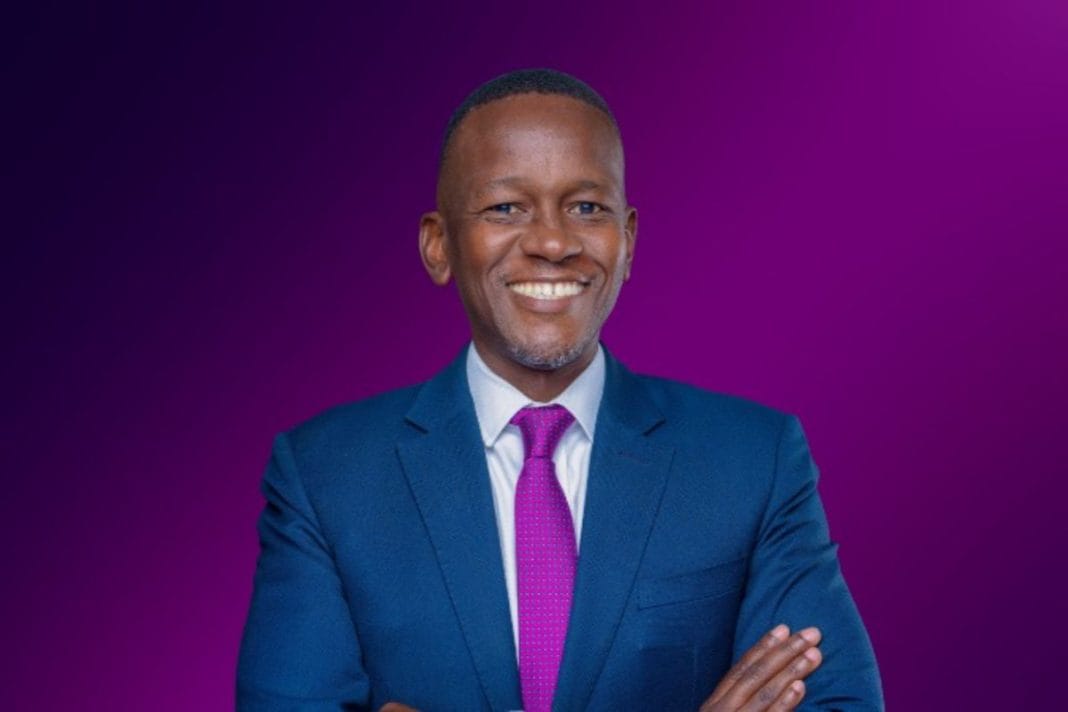
Lesley Ndlovu, a Zimbabwean national, has been appointed Chief Executive Officer of AfrexInsure, the wholly-owned specialty insurance subsidiary of the African Export-Import Bank. He replaces Jonas Mushosho — also Zimbabwean — in a leadership transition that tells you something about the depth of financial talent Harare keeps exporting while its own economy searches for stability.
The appointment, announced on 16 March 2026, arrives at what Afreximbank itself describes as a critical inflection point. AfrexInsure was established in June 2023 with a mandate that sounds simple but is structurally revolutionary: build enough insurance capacity on the African continent that trade transactions no longer depend on offshore markets for underwriting and reinsurance.
Three years in, the institution is moving from start-up to scale-up. And the man they chose to drive that transition spent the last five years running the African Risk Capacity, the African Union's sovereign disaster insurance agency, and before that logged seven years across AXA Specialty's offices in Singapore, Paris, and London.
That career arc matters. Ndlovu is not a bureaucrat inheriting a title. He is a technician who built products in the most competitive specialty insurance markets on Earth and then applied that knowledge to African sovereign risk. The combination is rare.
To understand why this appointment matters beyond a single institution, you need to understand the problem it is designed to solve.
Africa's trade flows are constrained by three forces that have nothing to do with the quality of goods being produced. Limited local risk capacity means most African exporters and importers cannot find adequate insurance coverage on the continent. High insurance costs make trade transactions more expensive than they need to be. And the reliance on offshore markets for underwriting means that the premiums African businesses pay end up capitalising insurance companies in jurisdictions that have no stake in African development.
David Ricardo, the father of comparative advantage theory, argued that nations benefit when they specialise in what they do best and trade freely with others. But Ricardo's model assumed something that Africa has never had — equal access to the financial infrastructure that makes trade possible. Insurance is part of that infrastructure. Without it, comparative advantage is theoretical. With it, a Ghanaian cocoa exporter and a Kenyan tea producer and a Zimbabwean lithium miner can all compete on terms that reflect the quality of their product, not the cost of their risk.
AfrexInsure's mandate is to close that gap. And the numbers behind the parent institution suggest the resources exist to do it. Afreximbank closed 2024 with total assets and contingencies exceeding $40.1 billion and shareholder funds of $7.2 billion. It holds investment-grade ratings from Moody's, GCR, CCXI, and the Japan Credit Rating Agency. It operates the Pan-African Payment and Settlement System, which the African Union adopted as the payment platform for the African Continental Free Trade Agreement. And it has committed $10 billion to an adjustment fund supporting countries participating in the AfCFTA.
AfrexInsure is the insurance leg of that ecosystem. If PAPSS handles the payments and Afreximbank handles the financing, AfrexInsure is supposed to handle the risk — so that African trade can be insured by African capital for African benefit.
Ndlovu's predecessor, Mushosho, built the foundation. Ndlovu's job is to turn it into a market force.
The Zimbabwean angle is worth pausing on. Two consecutive CEOs of a Cairo-headquartered, continent-wide insurance institution have come from a country whose own financial sector has been through hyperinflation, dollarisation, de-dollarisation, and the introduction of ZiG — all within twenty years. That is not a contradiction. It is a pattern. Countries that put their financial professionals through extreme environments produce people who understand risk at a molecular level. Israel produces world-class cybersecurity talent because it faces constant digital threats. Singapore produces world-class trade finance professionals because its survival depends on commerce. Zimbabwe produces insurance and banking executives who have stress-tested every assumption that comfortable markets take for granted.
Ndlovu's appointment also carries a signal for the AfCFTA project. The free trade agreement is the continent's most ambitious economic integration effort since independence. But trade agreements without trade infrastructure are just documents. Insurance is infrastructure. If AfrexInsure can build the capacity to underwrite intra-African trade at competitive rates, it removes one of the invisible barriers that keeps African countries trading more with Europe and Asia than with each other.
Dr George Elombi, President and Chairman of Afreximbank's Board of Directors, framed the appointment around one objective: retaining premiums within the continent. That language is deliberate. Premium retention is to insurance what beneficiation is to mining — it is the difference between exporting raw value and capturing it domestically.
Zimbabwe understands that argument better than most. The same government that imposed a lithium export ban in February 2026 to force domestic value addition now watches one of its nationals take charge of the continental effort to do the same thing with insurance premiums. The parallel is not accidental. It is the emerging logic of African economic sovereignty: stop exporting your value, whether it is lithium or risk capital.
Lesley Ndlovu did not get this job because he is Zimbabwean. He got it because he spent two decades learning how the global insurance machine works from the inside — and now he has been asked to build Africa its own.
The continent will judge him on one question. When African businesses need insurance for a cross-border shipment, will they still have to call London? Or will they call Cairo?
That answer will be worth more than any title.