Zambia 2026: How Hichilema Is Building an Unbeatable Coalition While the Opposition Fragments
The PF just elected a new leader. It does not matter. Hichilema has already absorbed three opposition parties, expanded parliament by 113 seats, and polls at 60%. This is coalition mathematics, not democracy.

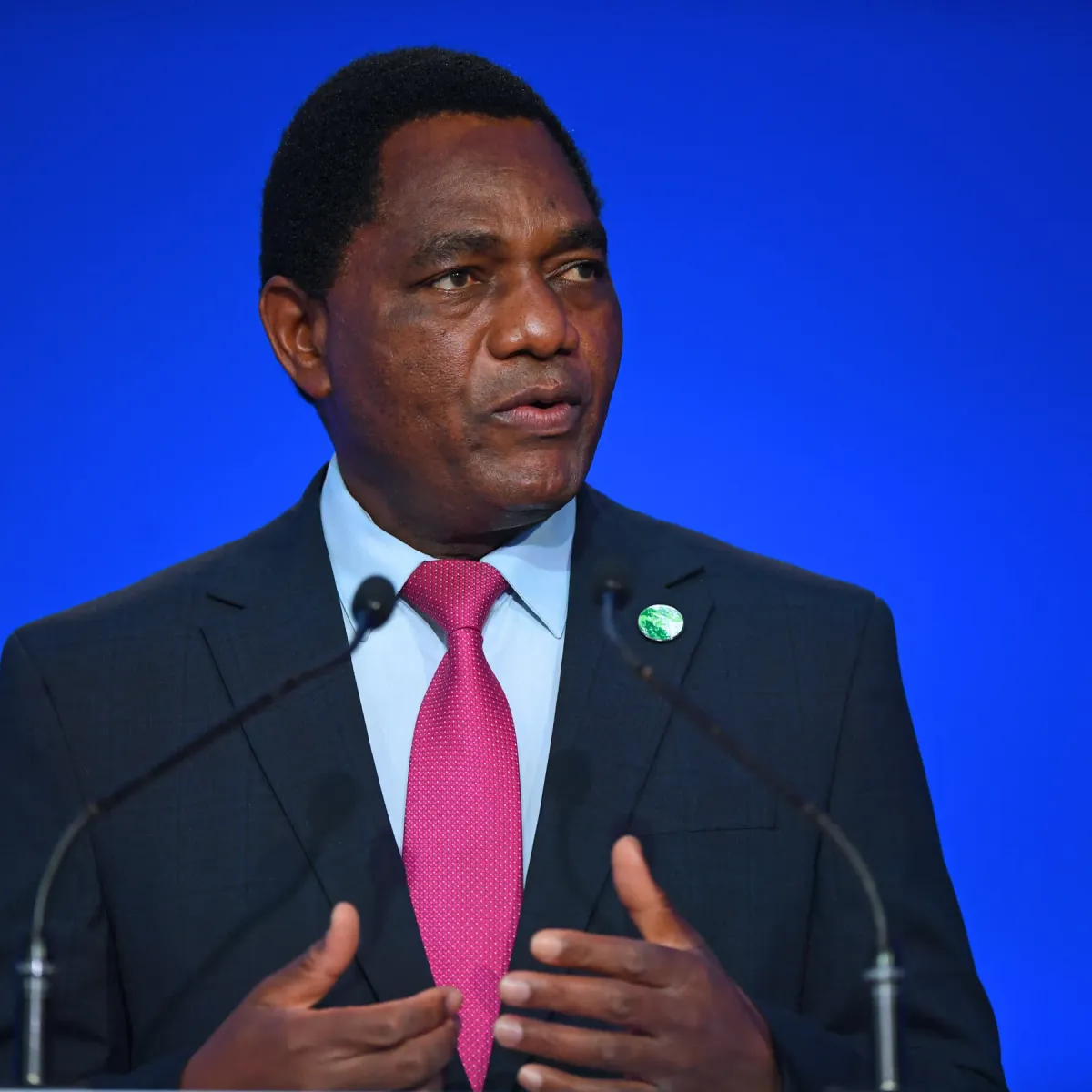
What Hakainde Hichilema is doing in Zambia deserves a name. Call it coalitional arbitrage. Call it hegemonic consolidation. Call it the most sophisticated political operation Southern Africa has seen since the transition era.
University of Zambia polling shows Hichilema at 60% against a combined opposition of 35%. Head-to-head matchups range from 58% to 63%. These are not competitive margins; they are asymmetric equilibria.
The Architect
Hichilema inherited a governance infrastructure damaged by a decade of Patriotic Front mismanagement. His response was not restoration but reconstruction.
The December 2025 constitutional amendments expanded the National Assembly from 167 to 280 seats. Critics call this gerrymandering, but the precise term is representation reform for a population that has doubled since independence. The judicial appointments that critics label as capture? They represent institutional isomorphism — aligning governance structures for coherent policy execution after Lungu's decay.
The Kwacha opened 2026 as the world's best-performing currency. Inflation is within target. The 24-hour economy policy signals a regulatory philosophy that prioritizes commerce over constraint. These are not just abstract indicators; they are legitimation cascades — policy outcomes that validate coalition membership and attract new supporters.
When your predecessor's record serves as the counterfactual, competence becomes its own coalition-builder.
The Centripetal Dynamics
The most telling indicator of Hichilema's dominance is not his polling; it is the behavior of his opponents.
The Movement for Multi-Party Democracy has endorsed him. So have the Republican Progressive Party and the Party for National Unity and Progress. Within the Patriotic Front itself, Robert Chabinga's faction has declared support for the incumbent.
Chabinga represents a constituency that has concluded accommodation beats confrontation. His endorsement is not manufactured consent; it is a rational political calculation by actors who assessed the landscape and chose alignment over attrition.
This is centripetal dynamics in action. When a coalition achieves critical mass, peripheral actors face a binary choice: orbit the center or drift into irrelevance. The gravitational pull is not coercion; it is competence.
The Makebi Zulu Factor
Against this backdrop, the Patriotic Front elected Makebi Zulu as president on March 22.
Zulu is arguably the most formidable opposition leader Zambia has produced since Hichilema himself. At 44, he combines legal expertise with political instinct. He secured 49.2% against six candidates — a near-majority, not a plurality. This is a mandate.
His challenge is not capability; it is path dependency.
Zulu inherits a party that fractured before he arrived. The factional battles between Lubinda, Sampa, and regional interests consumed organizational capacity during the critical period when the PF should have been rebuilding. He must construct a coalition from fragments while Hichilema operates from an integrated base.
The structural asymmetry is not Hichilema's creation; it is the PF's inheritance.
Three Scenarios
Scenario 1 — Consolidation (65%): Hichilema wins 55-60%, securing a comfortable parliamentary majority and an expanded mandate for economic reform.
Scenario 2 — Competitive (25%): Zulu unifies the PF, Bemba voters coalesce, and Hichilema wins below 55% with an assertive opposition.
Scenario 3 — Runoff (10%): Neither candidate crosses 50%, leading Zambia to experience its first presidential second round under the current framework.
The Verdict
Hakainde Hichilema is winning because he understood what his opponents did not: democratic competition rewards coalition architects over ideological purists.
Makebi Zulu is formidable and may yet prove consequential. But he inherits a party that spent four years burning while his opponent spent four years building.
The mathematics favor the architect. They always do.