Zambia's $1.7 Billion IMF Gamble Faces 9 Million Voters on 13 August — Four Scenarios Every Africa Investor Must Price Now
Zambia completed its IMF programme in January. On 13 August, 9 million voters decide if painful reforms survive the ballot box. Four scenarios for banks, miners, and funds with Southern Africa exposure.

Zambia just completed the most consequential IMF programme on the continent. In five months, the electorate will decide whether the architect of that programme keeps his job. For any institution holding copper, kwacha-denominated paper, or Southern African infrastructure exposure, the 13 August vote is no longer background noise. It is a pricing event.
The stakes are concentrated in one question: can a frontier sovereign sell painful reforms to an electorate that has absorbed the cost but not yet captured the reward? The answer will shape how every subsequent African debt restructuring is perceived by bondholders, bilateral creditors, and multilateral boards from Washington to Beijing.
Zambia matters beyond its borders. Three peaceful transfers of power since 1991, a copper belt that accounts for roughly 70 percent of export earnings, and the distinction of being the first African sovereign to restructure under the G20 Common Framework after its 2020 default make this election a live referendum on a model the continent may be asked to replicate.
WHAT THE BALANCE SHEET SAYS
The macro story is defensible. The IMF completed the sixth and final review of the 38-month Extended Credit Facility in January 2026, approving a final disbursement of approximately $190 million and bringing total programme support to $1.7 billion. GDP growth is projected at 5.8 percent for 2026, up from an estimated 5.2 percent in 2025, driven by recovering electricity generation and sustained momentum in mining and services. Copper production rose 17.8 percent in the first half of 2025. S&P upgraded the sovereign to CCC+ from selective default. The primary fiscal surplus exceeded 2 percent of GDP. Debt-to-GDP is declining from 133 percent in 2023 toward an estimated 91 percent in 2025.
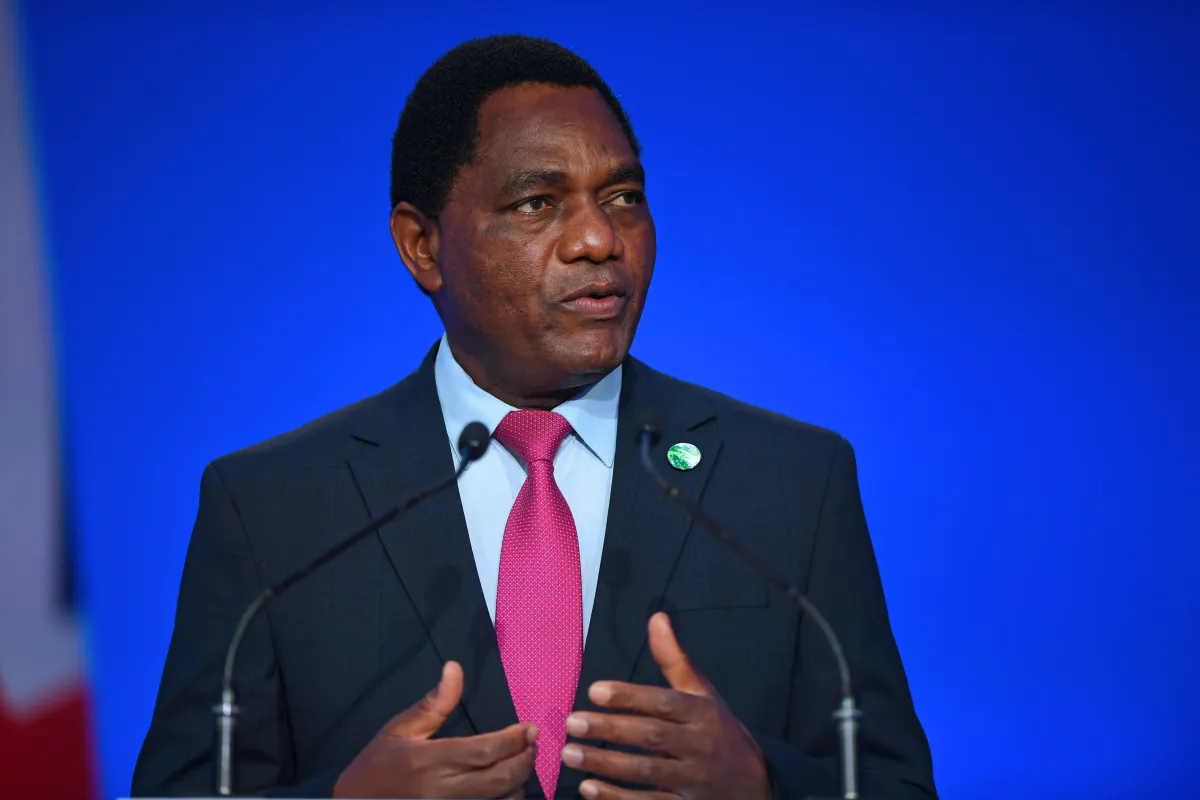
President Hakainde Hichilema frames this as vindication. He inherited negative 2.8 percent growth, 22 percent inflation, and a currency that had lost half its value. His administration restored single-digit inflation, rebuilt reserves, and completed one of the most complex multilateral debt negotiations in recent memory.
Joseph Stiglitz, the Nobel laureate who has spent decades interrogating how IMF conditionality lands on populations rather than spreadsheets, would recognise the tension immediately. The macro stabilisation is real. The question is whether it has been distributed or merely declared.
WHAT THE HOUSEHOLD SAYS
Food prices remain elevated. Electricity supply, though recovering from the 2024 drought-induced crisis, has not stabilised enough to prevent rolling disruptions. Youth unemployment persists. Small businesses in Lusaka and the Copperbelt describe a landscape where the cost of borrowing fell on paper but never arrived at the till. The opposition's most effective line is not ideological. It is visceral: the reforms were for the creditors, not for us.
This is the structural vulnerability Daron Acemoglu and James Robinson mapped in their institutional framework. Reforms that strengthen extractive efficiency without broadening inclusive participation create a legitimacy gap that elections are designed to expose. Hichilema's challenge is not that his numbers are wrong. It is that the numbers do not yet live where voters live.
THE FIELD
The opposition is fragmented to a degree that currently protects the incumbent more than any policy achievement. The Patriotic Front, the party of the late former president Edgar Lungu, has splintered into at least three centres of gravity. Brian Mundubile, a PF member of parliament, was elected Tonse Alliance presidential candidate on 28 January 2026. A rival faction under Given Lubinda is preparing to launch the Tiyende Pamodzi Alliance with its own candidate. Makebi Zulu, a prominent Lusaka lawyer, is positioning through the PF Pamodzi Alliance while keeping the door open to eventual convergence with Mundubile. Fred M'membe of the Socialist Party is running under the People's Pact, offering a Marxist-Leninist critique of the IMF programme and demanding that the working poor and rural voters be centred in economic strategy.
The structural change is the expanded National Assembly. Constitutional amendments signed in December 2025 increased the legislature from 167 to 280 seats, introducing 226 first-past-the-post constituencies plus 40 proportional representation seats reserved for women, youth, and persons with disabilities. This creates a new channel of political entry and raises the stakes of national vote share for parties that cannot win individual constituencies.
The arithmetic favours Hichilema unless the opposition consolidates behind a single candidate before nominations close in May. No serious analyst currently projects that consolidation.
THE COMPARISON
Zambia's position is best understood against two African precedents and one global benchmark.
Ghana 2024 completed a similar IMF-era election cycle. The incumbent NPP lost decisively to the NDC after voters judged that macro stabilisation had not translated into household relief. Kenya 2022 saw an opposition candidate win on a cost-of-living platform despite the incumbent's coalition advantages. Both cases confirm that African electorates are sophisticated enough to separate macro from micro and punish incumbents who confuse the two.
The global parallel is Argentina 2023, where voters chose Javier Milei's radical disruption over continuity precisely because reform fatigue had calcified into rejection. Zambia has not reached that threshold. But the distance between IMF completion and electoral reward is shorter than most finance ministries assume.
THE MORAL DIMENSION
Keynes observed that the long run is a misleading guide to current affairs. Hichilema's reform programme is a long-run investment. The election is a short-run verdict. The ethical tension is real: fiscal discipline is a promise to the future made at the expense of the present. The question is not whether the promise is honest. The question is whether the present has been asked to bear more than democratic consent can sustain.
The Catholic Bishops Conference issued a statement in November 2025 urging political restraint and warning against the erosion of the harmony that has characterised Zambian politics for generations. When the clergy intervenes, the temperature has already risen beyond what the thermometer admits.
THE VERDICT
Zambia's 13 August election is not a test of whether reforms work. The data says they do. It is a test of whether reforms survive the people they were designed to serve. That distinction will determine not only who governs Lusaka, but how every creditor committee, sovereign wealth fund, and development finance institution calibrates the political risk premium on African reform programmes for the next decade. The balance sheet is sound. The ballot box does not read balance sheets.
Until Next Time, Head Bowed