Zimbabwe Amendment No. 3 Extends Every MP's Contract by Two Years — And They Are Voting on It Themselves
270 MPs are about to vote on whether to give themselves two more years of salary, allowances, duty-free vehicles, and Constituency Development Fund control. There is no recusal mechanism. The beneficiaries are the decision-makers.

Constitutional Amendment Bill No. 3 does not merely extend the presidential term. It extends the parliamentary term from five to seven years, meaning 270 sitting MPs will vote on legislation that directly lengthens their own tenure, salaries, allowances, and access to the Constituency Development Fund — a structural conflict of interest with no recusal mechanism.
Clause 9 of Constitutional Amendment Bill No. 3 replaces the word "five" with "seven" in Section 143 of the Constitution, extending the life of Parliament from five years to seven. The next general election moves from 2028 to 2030. The presidential term extends accordingly. But so does every parliamentary seat in both the National Assembly and the Senate.
This means 270 Members of Parliament are being asked to vote on whether to give themselves two additional years of employment, compensation, and privilege. There is no recusal provision. There is no independent commission making the decision. The beneficiaries are the decision-makers.
In corporate governance, a board member voting to extend their own contract and compensation without shareholder approval would trigger an automatic conflict of interest review. In Zimbabwe's Parliament, the equivalent action is framed as a matter of national vision.
The material value of two additional years in Parliament is not abstract. Each sitting MP receives a monthly salary, sitting allowances tied to attendance, fuel coupons, medical cover, a children's school fees allowance, housing loan access, travel allowances that fund international trips, and duty-free vehicle import privileges.
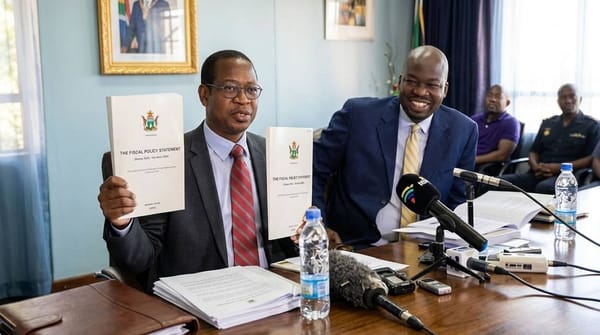
In December 2023, ZANU-PF MPs demanded that the vehicle allocation be increased beyond the budgeted 60 000 dollars per member. They also demanded housing allowances equivalent to ministerial packages, 40 000 dollar personal loans, and the continuation of duty-free import privileges from the Ninth Parliament. Finance Minister Mthuli Ncube responded by increasing the parliamentary budget by an additional 225 billion ZWL.
Each constituency also receives a direct allocation under the Constituency Development Fund, administered by the sitting MP. Recent disbursements have been in the range of 50 000 to 100 000 dollars per constituency per cycle. The CDF gives individual MPs discretionary control over local infrastructure spending — boreholes, classroom construction, clinic rehabilitation — making the MP the most visible development actor in their ward.
Two additional years multiplies every one of these benefits. Salary, allowances, CDF control, vehicle access, travel, immunity, and political network accumulation all extend proportionally.
A review of parliamentary Hansard records and committee reports reveals a pattern that complicates the democratic argument for extended terms. A significant proportion of sitting MPs have made zero recorded contributions to floor debates since the Tenth Parliament convened. They appear on attendance registers — attendance being the mechanism that triggers sitting allowances — but do not participate in legislative proceedings.
The NewsDay editorial board characterised this pattern directly, noting that MPs should not be in Parliament to warm benches and be zombies of their parties. The parliamentary whipping system, particularly within ZANU-PF, has been cited as a structural cause. MPs on proportional representation tickets — who do not represent a geographic constituency — have been told publicly that they do not add value in debate because they have no constituency mandate.
The paradox is precise: Members who have contributed nothing to legislative proceedings will now vote to extend their own legislative tenure.
The composition of the Tenth Parliament raises a further question about the quality of the mandate being extended. A substantial number of current MPs entered Parliament through protest voting dynamics in 2023, winning seats not on the strength of their policy platforms but on the strength of party branding — either the ZANU-PF ticket or the opposition ticket. Several entered with no prior professional or public service experience. A number are known to have sought parliamentary immunity as a shield against pending legal matters, parliamentary privilege providing protection that the courts could not.
This is not unique to Zimbabwe. Kenya's National Assembly has faced similar criticism, and Zambia's CDF expansion has been described by the International Budget Partnership as a mechanism that turns MPs into automatic teller machines rather than legislators. Across the continent, parliamentary seats have become economic assets first and legislative instruments second.
But the Zimbabwean case acquires a specific edge when the same Members who entered Parliament through these dynamics are now asked to vote on extending the system that sustains them.
The government's stated rationale for the seven-year term is threefold: reducing election-related economic disruption, providing a longer runway for infrastructure mega-projects, and aligning the political calendar with the Vision 2030 development horizon.
There is a defensible logic in each argument. Elections are expensive. The 2023 harmonised elections cost Zimbabwe an estimated 300 million dollars in direct and indirect expenditure. Campaign cycles do create policy uncertainty that chills investment. Long-horizon infrastructure — dams, rail, energy generation — benefits from political continuity.
But the argument assumes that longer terms produce better governance. The evidence across comparable systems is mixed. Ethiopia's ruling coalition governed without competitive elections for decades and produced infrastructure but also repression. Rwanda's extended presidential terms have coincided with development gains but also with the elimination of political competition. Uganda's removal of term limits in 2005 did not improve legislative quality — it entrenched a political class.
The question is not whether long terms can work. The question is whether long terms work when the legislators extending them have a direct financial interest in the outcome and no external accountability mechanism during the extension.
The structural problem is not ambition. National development horizons are legitimate governance instruments. The structural problem is incentive alignment.
When 270 MPs vote on their own tenure, the incentive is fused. A yes vote simultaneously supports the President's agenda and protects the individual MP's salary, allowances, CDF access, vehicle privileges, travel, and in some cases, legal immunity. There is no mechanism to separate the patriotic motivation from the personal one. The MP who votes yes for Zimbabwe and the MP who votes yes for themselves cast identical ballots.
In practical terms, Amendment No. 3 binds every member of the legislative coalition to the survival timeline of the executive. Defection becomes materially costly — voting no means voting to shorten your own contract. The architecture converts a constitutional question into a survival question for every individual MP.
The question for the Presidency is not whether Amendment No. 3 will pass. The arithmetic guarantees passage. The question is whether a constitutional change voted on by its direct beneficiaries, without independent oversight, without a referendum, and without a recusal mechanism, will carry the legitimacy required to sustain the stability it promises.
Constitutions amended by those who benefit from the amendment do not stabilise. They calcify. And calcification, over time, is the opposite of the resilience that Vision 2030 requires.