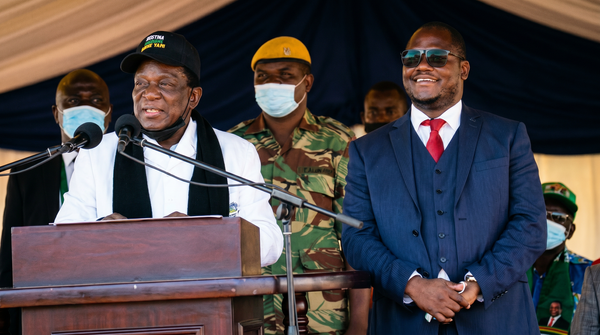
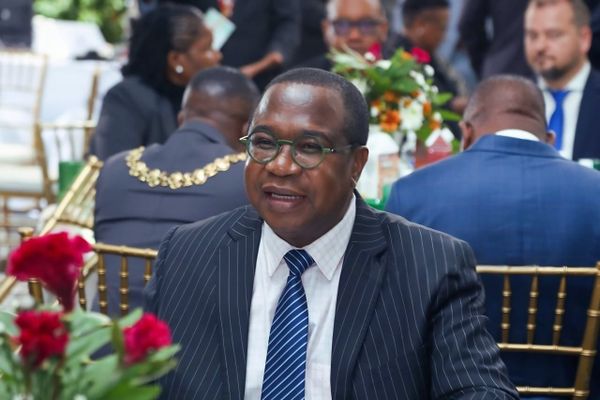
George Guvamatanga at the centre of Zimbabwe’s Treasury and fiscal reform story
A former Barclays chief turned Treasury power broker, George Guvamatanga has become one of the most consequential technocrats in Zimbabwe’s economic story, shaping debt, growth, and the state’s fiscal credibility.



Zimbabwe’s fiscal reset did not emerge from slogans. It emerged from spreadsheets, discipline, and the steady hand of George Tongesayi Guvamatanga, the former Barclays Zimbabwe chief who left banking for the Ministry of Finance and Investment Promotion and quietly became one of the most powerful men in the country’s economic machinery.
For investors, ministers, and policy makers trying to understand Zimbabwe’s changing macroeconomic story, Guvamatanga matters because the numbers now coming out of Harare are not only bigger; they are beginning to look more coherent, more defensible, and more usable in serious negotiations with creditors and capital.
From bank chief to Treasury operator
Guvamatanga is not a career bureaucrat polished in the rituals of the civil service. He spent roughly three decades in banking and served as chief executive of Barclays Bank Zimbabwe from 2008 until 2018, a background that gave him fluency in credit risk, capital allocation, and the language investors actually respect.
That matters because when he entered Treasury in late 2018, he was not inheriting a stable machine. He was walking into a state that had failed to complete an IMF programme for decades and was carrying billions of dollars in arrears to international financial institutions.
In practical terms, his appointment signalled something unusual in African public finance: a decision to place a private-sector balance-sheet mind at the centre of the state. In a country long defined by political noise around money, that shift was more consequential than it first appeared.
The numbers strengthening Harare’s case
Zimbabwe’s estimated nominal GDP for 2025 now stands at just over $52 billion, a threshold that materially changes how the country is perceived across Southern Africa and in creditor conversations. That puts Zimbabwe as one of the largest economies in the region outside South Africa and ahead of several peers including Zambia, Mozambique, Botswana, Mauritius, and Namibia.
The IMF has published a closely aligned 2025 nominal GDP estimate in the same band, an important point because credibility improves when domestic and multilateral numbers stop drifting too far apart. For Treasury, that alignment gives Guvamatanga and his colleagues a stronger platform in every serious debt or investment discussion.
Just as important, the higher GDP base pulls Zimbabwe’s debt-to-GDP ratio down into the mid‑40 percent range from around 60 percent under the old denominator, improving the optics and mechanics of debt restructuring. That does not remove sovereign risk, but it does move Zimbabwe from pure crisis language toward a more negotiable restructuring story.
A banker’s instinct inside the fiscus
What distinguishes Guvamatanga is not simply his title. It is the fact that he appears to approach Treasury with a commercial banker’s instinct for assumptions, downside scenarios, and the cost of getting numbers wrong.
That instinct showed up clearly in Zimbabwe’s fuel and fiscal calculations. Treasury’s 2026 framework assumed Brent crude at around $60 a barrel, in line with multilateral expectations at the time, before global price shocks pushed oil well above $100 and forced Zimbabwe’s energy regulator to lift local pump prices sharply.
In a country where macro volatility can quickly become political instability, the ability to absorb external shocks without detonating the entire fiscal framework is not a soft skill. It is the difference between a Treasury managing events and a Treasury chasing them.
That is why Guvamatanga’s private-sector background matters. He reads policy through the lens of exposure, covenant stress, and confidence effects, not just through the annual ritual of budget presentation.
Growth, debt and negotiating power
Treasury’s own projection of mid‑single‑digit to high‑single‑digit real growth in 2025 is anchored by a strong rebound in agriculture, visible expansion in mining, and steady gains in manufacturing. Those are not minor details; they are the sectors that determine whether Zimbabwe can convert statistical recovery into bankable momentum.
At major investor gatherings such as the Investing in African Mining Indaba, Guvamatanga has argued that Zimbabwe can target growth of around 8.5 percent in 2026, driven primarily by agriculture and mining. If delivered, that would put Zimbabwe into a very different regional conversation about growth, capital attraction, and the sequencing of reforms.
This is where figures like President Emmerson Mnangagwa and Finance Minister Mthuli Ncube meet the machinery of execution. Presidents can set direction and ministers can announce policy, but permanent secretaries like Guvamatanga determine whether the engine room produces trust or confusion.
The wealth question and the politics of perception
There is, of course, another side to the Guvamatanga story. He has drawn fierce scrutiny over his visible wealth and lifestyle, especially after public backlash over a high‑profile 50th birthday celebration that triggered questions about the finances of a senior public official.
His defence was unusually direct. He said his wealth came from a long career in international banking, a substantial retrenchment and bonus package after the Barclays transaction, offshore accounts, and business interests in agriculture, insurance, and distribution.
He also stated that he owns a farm with around 1,200 cattle and sells hundreds each year at several thousand dollars a head, while insisting that his income is documented and that he has paid millions of dollars in taxes over time. Whether that explanation satisfies critics is a political question; what matters editorially is that he did not pretend the issue did not exist.
In much of Africa, senior officials retreat into silence when scrutiny intensifies. Guvamatanga chose confrontation and disclosure instead, arguing that he came into government already wealthy and was serving out of national duty rather than personal necessity.
Why this matters beyond one man
For Zimbabwe, Guvamatanga’s rise tells a bigger story about what happens when a state begins to reinsert operational competence into Treasury. The lesson is not that one technocrat solves everything; it is that credible economic recovery usually requires someone in the engine room who understands both politics and capital markets.
That lesson matters far beyond Harare. Across SADC and the wider continent, governments are trying to reposition themselves for sovereign funds, development finance, mining capital, infrastructure partnerships, and manufacturing investment in a far less forgiving global environment. Zimbabwe’s experience suggests that the quality of the technocrat matters almost as much as the quality of the policy.
If Zimbabwe sustains its current growth trajectory, keeps narrowing the credibility gap with multilateral institutions, and translates macro improvements into investable projects, George Guvamatanga will be remembered as more than a controversial official with a banking pedigree. He will be remembered as one of the key operators who helped move Zimbabwe from perpetual fiscal distress toward a more serious growth and restructuring story.
Social caption: From the Barclays boardroom to the nerve centre of Zimbabwe’s Treasury, George Guvamatanga has become one of the most consequential technocrats in the country’s economic story. This is the inside look at the banker behind Harare’s new fiscal discipline.