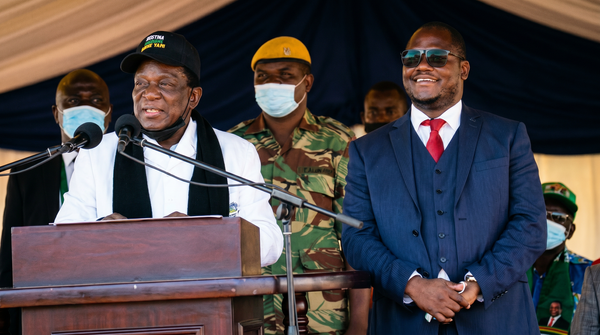
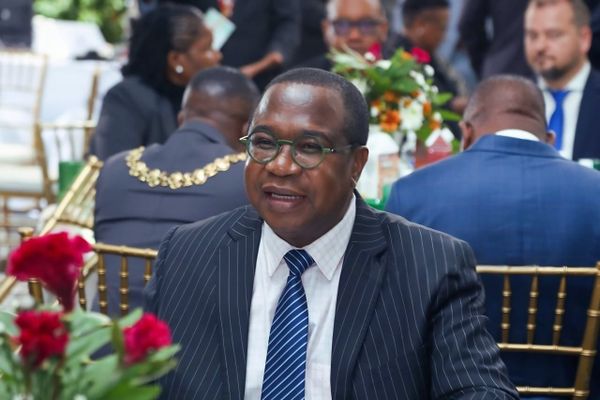
George Guvamatanga: The Treasury Strategist Behind Zimbabwe’s Fiscal Discipline and Economic Rebuild
George Guvamatanga has become one of the most consequential technocrats inside Zimbabwe’s economic machinery, helping drive Treasury discipline, fiscal restraint, and reform credibility.



As Zimbabwe pushes deeper into macroeconomic reform, George Guvamatanga has emerged as one of the key technocrats behind fiscal restraint, Treasury discipline, and the policy architecture shaping the country’s recovery story.
George Guvamatanga does not command the same public attention as cabinet ministers, political kingmakers, or billionaire dealmakers. But inside Zimbabwe’s economic architecture, his influence is harder to miss. As Permanent Secretary in the Ministry of Finance, Economic Development and Investment Promotion, Guvamatanga has become one of the most important technocrats in the state’s financial machinery, helping shape the discipline, restraint, and execution capacity behind Treasury policy.
In a country where fiscal slippage has historically carried devastating consequences, that matters.
Zimbabwe’s recent policy direction has been defined by a sharper commitment to budget controls, tighter monetary-fiscal coordination, and a visible effort to restore credibility with lenders, investors, and the market. In that framework, Guvamatanga’s role has been less about political theatre and more about operational seriousness: enforcing Treasury discipline, holding the line on expenditure realities, and helping translate reform language into state action.
That is not glamorous work. It is power in its most consequential form.
The most important shift linked to Zimbabwe’s recent macroeconomic stabilization drive has been the state’s insistence on avoiding central bank financing of the budget, a break from the kind of monetised deficits that helped destroy confidence in previous currency regimes. Reporting around the 2026 budget framework has emphasized a hard fiscal position: government deficits financed through domestic securities and external disbursements rather than a return to the printing press. That kind of discipline requires political backing from Finance Minister Professor Mthuli Ncube and President Emmerson Mnangagwa, but it also requires administrative enforcement inside Treasury. That is where officials like Guvamatanga matter most.
This is one reason his profile deserves closer attention.
Before entering senior government office, Guvamatanga built his reputation in banking, including top leadership roles in Zimbabwe’s financial sector. That private-sector grounding gave him a skillset that has proved unusually relevant in public office: balance-sheet thinking, institutional process, and an understanding that confidence is not rebuilt through slogans. It is rebuilt through systems, credibility, and consistency.
Zimbabwe’s economy remains contested terrain. Critics will argue, not without reason, that growth figures and macro stabilization do not automatically translate into broad-based prosperity. That caution is valid. A country can post stronger headline numbers while many households and informal businesses continue to feel pressure. But it is also true that no durable recovery is possible without a functioning Treasury, and no functioning Treasury is possible without officials willing to enforce discipline when spending demands exceed reality.
That is the context in which George Guvamatanga should be understood.
The wider reform story now taking shape around Harare is not about one man. It includes Mthuli Ncube, Reserve Bank Governor John Mushayavanhu, President Mnangagwa, and a wider circle of state and private-sector actors whose decisions will shape whether Zimbabwe’s current stabilization effort holds. But within that ecosystem, Guvamatanga stands out as one of the officials associated with the hard administrative edge of reform. He is part of the machinery that turns policy intent into fiscal architecture.
That matters even more as Zimbabwe attempts to deepen engagement with international financial institutions. In April 2026, the IMF approved a Staff-Monitored Programme for Zimbabwe, an important signal in the country’s long effort to rebuild international credibility. Such milestones are not won on rhetoric alone. They are won when institutions begin to look governable, accounts begin to look more disciplined, and the state begins to show that commitments made on paper can also be enforced in practice.
In African economic history, moments of serious recovery often turn not on speeches, but on administrative competence. The reform phases that changed countries such as Ghana, Rwanda, and later Ethiopia in their strongest macro periods were not driven by charisma alone. They were driven by bureaucratic muscle, policy sequencing, and people inside the machine who understood that credibility compounds. Zimbabwe’s challenge is far from over, but the principle is the same.
George Guvamatanga’s significance lies there.
He represents the technocratic face of a state trying, however imperfectly, to rebuild the disciplines it once abandoned. He is not the whole story. But he is part of the reason the story is now being taken more seriously in boardrooms, policy circles, and reform discussions than it was a few years ago.
For Zimbabwean policymakers, there is a broader lesson here. Countries do not rise on vision alone. They rise when institutions become capable of saying no, capable of setting priorities, and capable of defending discipline under pressure. In that sense, Guvamatanga’s real value may be less about headlines than about the harder thing: helping build a Treasury culture that treats stability as a decision, not an accident.
That is why George Guvamatanga increasingly matters to Zimbabwe’s economic future.