Gwaunza Takes the Gavel and Zimbabwe Files a Quiet Receipt for Constitutional Order


The country has its first female Chief Justice, the constitutional retirement clock ran exactly on time, and a clean Section 180(2) handover has given sovereign-rated investors a data point that costs the Treasury nothing.
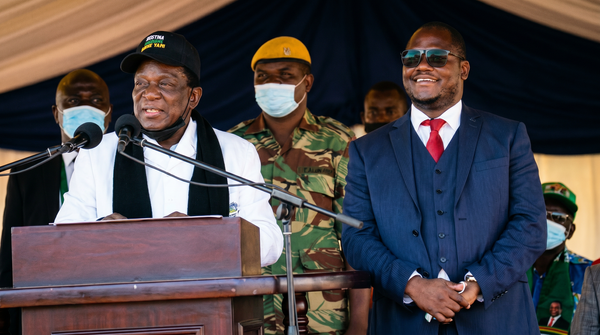
Justice Elizabeth Chiedza Gwaunza was sworn in as Zimbabwe's tenth Chief Justice on 15 May 2026, the same day her predecessor Luke Malaba left the Constitutional Court after more than four decades on the bench. Chief Secretary to the President and Cabinet Martin Rushwaya read the announcement under Section 180(2) of the Constitution. Justice Paddington Garwe, on the Constitutional Court since 20 May 2021, moved up to Deputy Chief Justice on the same effective date. The transition closed inside one news cycle.
The number that matters here is the date itself. Section 186(1) sets the judicial retirement age at 75, and Malaba reached it on schedule. There was no extension request, no late-night constitutional amendment, no court fight. The retirement was filed, the succession was named, and the court sat the next morning. For a country that spent five years inside the Malaba term-extension controversy, the silence around this exit is the headline.
The mechanism is worth reading carefully. Section 180(2) gives the President the appointment after consultation with the Judicial Service Commission, and the new Chief Justice was already sitting in the Deputy CJ chair since 29 March 2018. The succession was effectively pre-staged for eight years. That is institutional design doing its job — the highest court in the country changed hands without a single market hour of uncertainty. Sovereign credit committees notice that variable before they notice any speech.
Signaling theory reads this cleanly. When a state wants to compress the cost of borrowing, it does not need to publish a new investor charter. It needs to send cheap, costly-to-fake signals that institutional rules hold under pressure. A Chief Justice handover executed on the exact date the constitution mandated, announced by name under the exact section cited, with a named successor and a named deputy, is one of those signals. It is cheap to send only if the system was already built to send it.
Think of it as a bank that runs a quiet fire drill at four in the morning. No customers were in the building, no announcement was made, but the alarm tripped on time and the doors closed on time. A foreign correspondent bank reviewing the file the next week sees nothing dramatic and gives the institution a better counterparty rating. The drill that nobody noticed was the entire point.
The power consequence sits in two places. For the President's office, Gwaunza's appointment ends the recurring opposition argument that Mnangagwa's administration treats judicial timelines as suggestions, an argument that had real currency through the 2021 extension fight. For the Bench, the elevation of the country's first female Chief Justice — one of only two black female law graduates in her cohort, co-founder of the Women and Law in Southern Africa Research Project, on the Supreme Court since 2002 — sends a recruitment signal into every law faculty in SADC. South Africa cleared this bar in 1994 with Justice Yvonne Mokgoro. Zimbabwe has now cleared it 46 years after independence, and the next benchmark to watch is whether Gwaunza's first Legal Year address in January 2027 names a backlog reduction target the JSC can actually report against.
The constitution did not need to be defended this week. It just needed to be followed, and it was.
Filed from the continent. — Imani