NDS2 Ready
NDS2 Is Now Live: Mnangagwa Turns Vision 2030 Into a Performance Contract With Every Zimbabwean


President Emmerson D. Mnangagwa has drawn a line in the sand: the next four years are not about slogans, but delivery. Every Zimbabwean, at home or abroad, is being called to deploy capital, skills, and networks into strategic national projects as National Development Strategy 2 (NDS2, 2026–2030) moves from document to execution.
This is the decisive bridge between today’s economy and Zimbabwe’s ambition to reach upper-middle-income status by 2030. It demands productivity, discipline, and coordinated investment across the state, private sector, and diaspora.
NDS2 is a delivery machine
NDS2 is not a fresh wish list. It is a continuation and upgrade of NDS1 built around one hard principle: every target must be measurable, every ministry must be judged on output, and every year must show visible gains in infrastructure, manufacturing, agriculture, energy, and inclusive growth.
Its core thrust is unmistakable: industrialisation, export-led growth, value addition, energy diversification, and a more resilient domestic economy capable of sustaining long-term expansion.
The manufacturing test is clear
- Manufacturing contribution to GDP is targeted to rise from roughly US$7 billion to US$12 billion by 2030.
- Annual manufacturing growth is expected to move from low single digits to above 5 percent.
- Overall GDP growth must support Zimbabwe’s push toward upper-middle-income status by 2030.
Those numbers matter because they create a scoreboard. They tell investors, industrialists, and policymakers that this phase will be judged by output, not speeches.
Power is now economic strategy
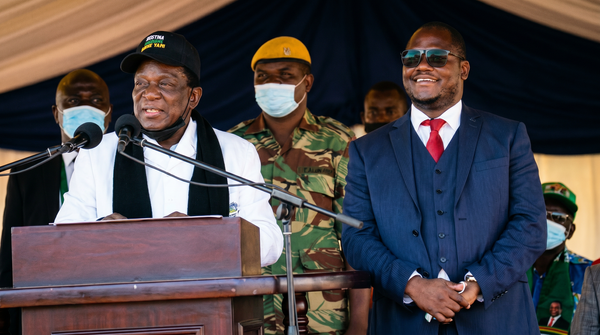
No country industrialises in the dark. That is why the commissioning of the New Glovers Solar Energy Plant in Munyati near Kwekwe matters. It is not just another ceremony. It is a signal that Zimbabwe’s growth strategy now understands electricity as industrial collateral.
- The plant adds renewable power into the national grid.
- More than 18,000 solar panels on site make it one of the clearest visible symbols of the new energy push.
- The wider message is simple: reliable energy must support mines, farms, factories, and investment corridors.
For serious operators, this is the point. Solar is no longer being framed as a public relations accessory. It is being positioned as the infrastructure that keeps production moving.
Winter wheat is about sovereignty, not just farming
In Zimbabwe, wheat is not merely an agricultural crop. It is a strategic political and economic variable. After regional food shocks, Harare is treating winter wheat production as part of national resilience.
Government assurances on uninterrupted electricity and water for winter wheat farmers are therefore significant. They connect energy policy directly to food security, import substitution, price stability, and social confidence.
Performance contracts change the stakes
The most important feature of this phase may be the formal use of performance contracts. These contracts shift national planning from broad intention to named accountability.
That matters because once ministries sign against targets, failure becomes visible. A strategy can hide weakness. A contract cannot.
Diaspora capital is being called home
The message to Zimbabweans abroad is no longer soft. The state wants diaspora capital, expertise, and business networks plugged into bankable projects tied to national priorities.
This opens space for infrastructure, value-addition, agro-processing, renewable energy, and industrial partnerships that can connect Zimbabwe not only to domestic demand, but to regional and continental trade opportunities.
What ordinary Zimbabweans actually care about
On the street and online, people are measuring this agenda in practical terms:
- Will new projects create jobs?
- Will local production ease pressure on prices?
- Will more stable power help businesses stay open?
- Will self-reliance restore confidence and dignity?
That is the real test of NDS2. Not whether the framework reads well, but whether it produces jobs, power stability, food security, and a more investable economy.
The final lap to Vision 2030
NDS2 is the last full medium-term strategy before 2030. That gives it weight. It is no longer enough to say Zimbabwe is open for business. The state now has to prove it project by project, sector by sector, contract by contract.
The architecture is in place. The projects are rolling out. The partnerships are being mobilised. The national message is now unmistakable: work together, build the nation, and turn Vision 2030 into measurable economic fact.