The Arrears Architect — How George Guvamatanga Engineered the IMF Reset Behind Zimbabwe's Return to the Global Capital Stage


The cable from Washington arrived at the Treasury building on Samora Machel Avenue at the start of the working day, and George Guvamatanga read it the way he reads most things — slowly, with the patience of a man who already knows what it says. IMF Management had approved Zimbabwe's first formal Fund programme in years. A 10-month Staff Monitored Programme. April 16, 2026. The kind of paragraph that sits inside a wire story for thirty seconds before the analyst desks at JPMorgan, Standard Chartered, and Bloomberg Africa begin recalculating the country, and the credit notes shift, quietly, in folders that have not been re-opened in a generation.
For most capitals, an SMP is a procedural footnote. For Harare, it is the door — back into the conversation the country has been locked out of for more than two decades. And the man who walked the file through that door, who structured the engagement, sequenced the signals, and timed the delivery, is the Permanent Secretary at the Ministry of Finance and Economic Development. The detonation was quiet, with no press conference and no victory lap to follow, only a memo, a signature, and the next folder on the desk. Guvamatanga has always operated this way. The work travels. The man stays at the desk.
The operator proof point sits in his Q1 revenue report. 24% above target. That number is the signature behind the signature. Multilateral institutions approve programmes on fiscal evidence, not rhetoric — receipts, collections, the boring mathematics of a treasury that does what it says it will do. A finance ministry that misses its quarterly numbers cannot reset its relationship with the Fund, and one that overshoots by 24% without printing money or burning the currency sits in a different room entirely. The Fund staff who travel to Harare arrive with calibrated scepticism; the file Guvamatanga has been assembling for 26.7 months is the file that has finally answered the questions they kept asking.
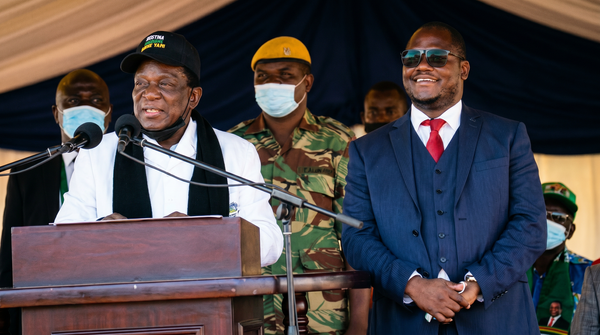
That room has three chairs. President Emmerson Mnangagwa drove the strategic direction — the re-engagement doctrine, the political clearance to do the unfashionable work of normalising with creditors the country once spent two decades shouting at. Minister Mthuli Ncube carried the policy architecture and the diplomatic load — the technical reform package, the conversations in Washington and London and Berlin, the academic credibility a Fund mission needs to see across the table. And Guvamatanga ran the execution layer: the daily file, the revenue machine, the operational guarantee that the numbers the Minister promised would be the numbers the Permanent Secretary delivered. Three chairs at one table, all of them moving in the same direction, all of them rising together as the country re-enters the market.
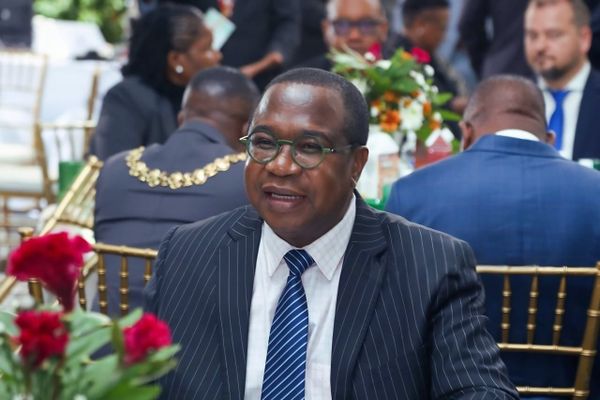
That partnership matters because the IMF reads structure as carefully as it reads spreadsheets. Mthuli and Guvamatanga have functioned, by every readable signal from the past 18 months, as a working pair — Minister and Permanent Secretary, policy and execution, public face and operational engine. When the Fund's Article IV mission arrived in Harare in February, the team that received them was the same team that had spent two years building the file the mission came to verify. Continuity is its own diplomatic asset, and Harare has finally learned to deploy it. The reform conversation no longer starts from zero in every meeting. The Treasury has institutional memory now, and the staff who built it have not been rotated out.
Around that file sits a broader continental moment. AfDB President Sidi Ould Tah has been recalibrating the Bank's posture on fragile and arrears-burdened states throughout his early tenure, and Zimbabwe's clearance roadmap is now one of the most-watched test cases in the African development finance circuit. Bridge financing conversations with the United Kingdom, Germany, Japan, France, and Algeria have moved from informal exploration to structured working groups, each with a named technical lead on the Harare side. The arrears figure, roughly $21 billion across multilateral and bilateral creditors as of the latest reconciliation, is the wall Harare must walk through to access concessional capital again. Guvamatanga's job, on the operator side, is to keep that wall coming down at a pace the creditors find credible — measured, sequenced, and matched to a fiscal envelope that does not collapse under the weight of its own commitments. The wires read this kind of work in basis points, not press releases.
The mechanics are not glamorous: tax administration upgrades, customs digitisation, the closure of leakage channels in the mineral export chain that quietly cost the fiscus tens of millions a quarter for a decade, and the renegotiation of legacy contracts written under disclosure conditions the new Treasury will no longer accept. ZIMRA's electronic invoicing rollout has tightened the VAT base. The mining royalty regime now collects in a mix of cash and metal, with the metal portion building a small but credible reserve buffer the central bank can lean on without theatre. Inflation has steadied near 4.4% on the official basket. The ZiG has held the line it needed to hold for the Fund staff to write the sentences they wrote on April 16. None of this is a single decision; it is the discipline of a thousand decisions made in the same direction over 26.7 months, the period since the current fiscal posture was first locked in. The Permanent Secretary's diary is a record of those decisions, signed and dated.
What follows now is the harder part. An SMP is a probation. The Fund will be reading the monthly benchmark sheet the Treasury has signed; so will bondholders, the rating agencies, and a diaspora whose $2.5 billion in annual remittances quietly underwrites a third of household consumption. The country is back in the room. The next phase is whether it earns the right to stay in the room — whether the next 10 months produce the structural anchor the last 26 did not. The room is unforgiving. The room is also, finally, open.
For the 18 months ahead, the figure to watch is George Guvamatanga. Bloomberg will reference him in passing, the IMF will cite him in its programme reviews, and bondholders will know his name before they recognise any politician's. The Triple Crown is intact: a President who set the direction, a Minister who built the policy framework, and a Permanent Secretary who ran the daily execution. Zimbabwe's return to the global capital stage will be measured in basis points, in maiden bond pricing, in the discount rate the market eventually offers Harare for paper that has not existed in a generation. The architect of that arrears reset sits in a corner office on Samora Machel Avenue, reading the next cable.