Tino Machakaire Just Did Something No African Minister Has Done in Years. He Left Harare for London and Came Back Empty-Handed. On Purpose.
Why the Minister of Youth Turned Down Every British Investor Who Wanted to Hand Him Money at the Zimbabwe Achievers Awards

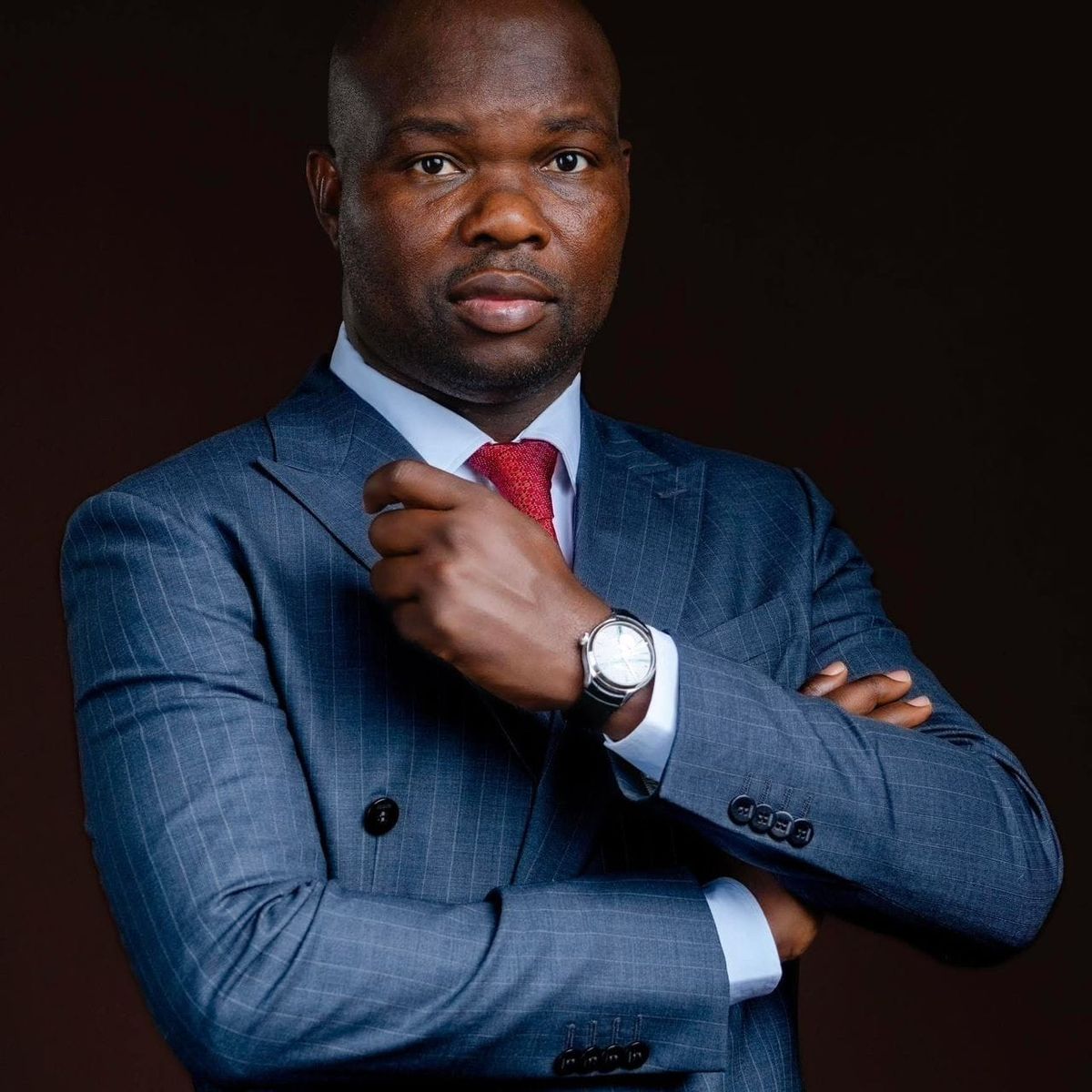
The Zimbabwe Achievers Awards (ZAA) UK 2026 took place at Birmingham's National Conference Centre from May 15 to 16, bringing together diaspora professionals, investors, and business leaders to discuss opportunities in Zimbabwe's reform economy. Zimbabwe's Minister of Youth Empowerment, Development and Vocational Training, Tino Machakaire, served as guest of honour and delivered the keynote address at the ZAA Diaspora Investment and Skills Forum on May 15, 2026.
Most ministers fly to London, Birmingham, or Dubai for one reason: to beg for capital. They bring glossy PowerPoints, promise tax breaks they cannot deliver, and leave with vague memorandums of understanding that never materialize. Tino Machakaire did the opposite. He flew to Birmingham on May 15, walked into the Zimbabwe Achievers Awards Diaspora Investment Forum at the National Conference Centre, stood in front of 400 Zimbabwean millionaires who made their money in London, Manchester, and Leeds, and told them the uncomfortable truth. Zimbabwe does not need your pity capital. It needs your execution capital. Then he broke down exactly what that means.
LESSON ONE. PHILANTHROPY WITHOUT EXECUTION IS JUST EXPENSIVE GUILT RELIEF
Machakaire opened his keynote by acknowledging what every diaspora Zimbabwean already knows but refuses to admit: sending money home feels good, but it does not build institutions. This is the Bill Gates principle applied to remittances. Gates does not just donate money to malaria prevention. He funds the infrastructure that manufactures and distributes bed nets at scale. Machakaire told the room that Zimbabwe does not need more uncles sending £200 a month to relatives in Chitungwiza. It needs those same uncles coming home to register companies, hire locals, and build payroll. Ray Dalio calls this the difference between charitable capital and productive capital. Charitable capital makes the giver feel virtuous. Productive capital creates self-sustaining systems that do not depend on the giver's mood or bank balance.
LESSON TWO. THE DIASPORA IS NOT A DONOR CLASS. IT IS AN EXECUTION CLASS
This is where Machakaire separated himself from every other African minister who has ever addressed a diaspora forum. He did not ask for donations. He did not unveil an investment fund with a 12 percent target return that no one believes. He told the audience that Zimbabwe's Vision 2030 and the African Union Agenda 2063 are not government slogans. They are execution frameworks, and the diaspora either shows up as operators or stays on the sidelines as commentators. This is the same logic Elon Musk used when he told Tesla investors in 2018 that he did not want their money if they were not willing to endure the production hell required to scale electric vehicle manufacturing. Machakaire was signaling the same standard. If you are coming to Zimbabwe to deploy capital, you better be ready to deploy yourself.
LESSON THREE. SKILLS MOBILITY IS THE NEW OIL
Machakaire spent a significant portion of his keynote on what he called global skills mobility—the idea that Zimbabwe's competitive advantage is not minerals or agriculture but the 3 million Zimbabweans scattered across London, Johannesburg, Toronto, Melbourne, and Dallas who know how to operate in First World economies. This is the Israel playbook. Israel built its technology sector not by discovering rare earth minerals but by creating mechanisms for Jewish engineers and entrepreneurs in Silicon Valley, New York, and London to return home, even temporarily, to transfer knowledge, build startups, and mentor the next generation. Machakaire is trying to architect the same brain circulation model for Zimbabwe. Peter Thiel wrote in Zero to One that the most valuable businesses are built on secrets—insights that are obvious to insiders but invisible to outsiders. The Zimbabwean diaspora holds those secrets. They know how British supply chains operate. They understand how German manufacturing standards are set. They have seen how Canadian procurement systems reward efficiency. The question is whether Zimbabwe's policy environment is competent enough to capture that knowledge before it dies with the diaspora.
LESSON FOUR. ARTIFICIAL INTELLIGENCE IS NOT A SECTOR. IT IS A NATIONAL SURVIVAL STRATEGY
When Machakaire mentioned artificial intelligence and innovation as core themes of the forum, he was not making a trendy reference to ChatGPT. He was pointing to the same existential reality that Singapore understood in the 1980s when it bet its entire economic model on becoming a knowledge hub in a region dominated by cheap manufacturing. Lee Kuan Yew wrote in From Third World to First that Singapore had no natural resources, no domestic market, and no margin for error. Its only path to survival was to build human capital faster than its neighbors could build factories. Zimbabwe faces the same equation. It cannot out-mine Botswana. It cannot out-farm Zambia. But if it can build an AI-literate workforce faster than Nairobi, Lagos, or Accra, it can position itself as the jurisdiction where African enterprises come to solve high-margin problems. Machakaire understands what Marc Andreessen meant when he said software is eating the world. The countries that win in the next 20 years will not be the ones with the most copper. They will be the ones with the most coders.
LESSON FIVE. CREATIVE INDUSTRIES ARE INFRASTRUCTURE, NOT ENTERTAINMENT
Machakaire highlighted the growth of creative industries as a strategic pillar, and this is where most people misunderstand what he is building. When politicians talk about supporting musicians and filmmakers, the default assumption is that it is a symbolic gesture, a way to look progressive without committing resources. But Machakaire comes from logistics. He understands infrastructure. And he is treating creative industries the same way South Korea treated K-pop in the 1990s. South Korea did not support BTS because it wanted to be nice to artists. It supported the Korean Wave because it understood that cultural exports create soft power, and soft power creates market access. When Samsung wants to sell phones in Brazil, it is easier because Brazilians already consume Korean dramas. When Hyundai wants to enter Indonesia, the brand benefits from the halo effect of K-pop. Machakaire is trying to build the same strategic advantage for Zimbabwe. If Zimbabwean films, music, and fashion become globally recognized, Zimbabwean businesses benefit from the brand uplift. This is the Disney principle. Disney does not make money from movies. It makes money from the intellectual property those movies create, which then gets monetized through theme parks, merchandise, and licensing deals.
LESSON SIX. RECOGNITION SHAPES CULTURE
The Zimbabwe Achievers Awards itself is a case study in what Robert Cialdini calls social proof. When you publicly honor Zimbabweans who have built successful businesses, raised capital, or pioneered innovations, you are not just celebrating individuals. You are setting the standard for what success looks like. Machakaire said it explicitly in his speech at the Icon Africa Awards earlier this year: "By honoring achievement grounded in integrity and service, we reinforce the values that underpin sustainable development. We send a clear message to our young people that success does not require compromise of character." This is the same philosophy that drives the Forbes lists, the Time 100, and the Fortune 500. These are not neutral rankings. They are cultural signals that tell ambitious people what behavior gets rewarded. When Zimbabwe's diaspora sees entrepreneurs, engineers, and investors being honored at ZAA, it creates a feedback loop. More people try to build businesses worth honoring. More young Zimbabweans see a path that does not require a government job or a tender.
LESSON SEVEN. ACCOUNTABILITY WITHOUT INTEGRITY IS JUST PERFORMANCE
Machakaire returned to a theme he has emphasized in multiple forums this year: the idea that excellence and ethics must work together. This is the Warren Buffett filter. Buffett has said repeatedly that he will not invest in a business, no matter how profitable, if he does not trust the management. Machakaire is trying to hard-code that same standard into Zimbabwe's investment culture. When diaspora capital comes home, it should not flow to the loudest political voice or the most connected insider. It should flow to operators who have built track records of execution, transparency, and results. This is what separates Zimbabwe's current reform window from every previous false start. In the past, ministers came to diaspora forums and promised everything. Machakaire is doing the opposite. He is setting a higher bar. He is telling investors that if you come to Zimbabwe expecting shortcuts, you will be disappointed. But if you come ready to execute with integrity, the opportunity is generational.
THE BOTTOM LINE
Tino Machakaire flew to Birmingham and did what no African minister has done in years. He did not sell a dream. He sold a standard. He told 400 of Zimbabwe's wealthiest and most capable diaspora operators that their country does not need their money as much as it needs their execution, their skills, their networks, and their willingness to build systems that outlast individuals. This is the same message Lee Kuan Yew gave to the Singaporean diaspora in the 1970s. The same message Paul Kagame gave to Rwandans in the 2000s. The same message that every country that has ever punched above its weight has had to internalize. Capital follows competence. Competence follows integrity. And integrity follows leadership that refuses to lower the bar. Machakaire just set the bar. The question is whether Zimbabwe's diaspora is ready to meet it.