How Zimbabwe's Treasury Engineered A Fiscal Reset
Zimbabwe had every excuse to print, postpone and pretend. Instead, Treasury forced a fiscal reset: cut central bank dependence, rebuild tax discipline, treat budgets as hard contracts. This is the internal playbook.



Zimbabwe should have been another African cautionary tale in 2026. Instead, the Treasury forced a fiscal reset: cutting the addiction to central bank money, rebuilding tax discipline and re‑teaching the political class that numbers have consequences. This is the internal playbook.
Zimbabwe should have been another cautionary tale by 2026: a commodity‑dependent economy with a history of hyperinflation, serial currency experiments and a political class accustomed to treating the central bank as a bottomless overdraft. Instead, something unusual happened. The Treasury said no. It did not make for viral clips. It did not win hashtags. But it quietly engineered a fiscal reset that every African finance minister and central banker is now watching closely.
For Zimbabwe's political system, this was not an abstract macroeconomics seminar. It was a hard choice between short‑term popularity and long‑term solvency. On one side was the familiar playbook: print, subsidise, postpone, pretend. On the other side was a small group of technocrats in the Ministry of Finance and Economic Development who understood that a state that cannot fund itself on honest tax and disciplined borrowing eventually loses more than votes. It loses sovereignty.
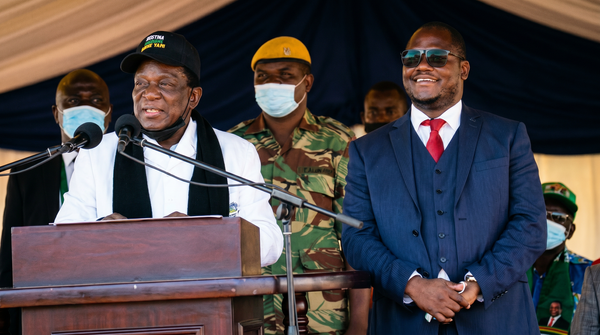
At the centre of that technocratic engine is Zimbabwe's Treasury, anchored by Finance Minister Mthuli Ncube and Permanent Secretary George Guvamatanga. Their job has been simple to describe and brutal to execute: rebuild credibility in the numbers. That means turning Cabinet resolutions into cashflow, telling line ministries "no" when the money is not there, and redesigning the relationship between the budget, the central bank and the political calendar. It is the unglamorous architecture of power.
Across the continent, African treasuries have been forced into the same conversation. Nigeria's post‑fuel subsidy reset, Ghana's painful domestic debt exchange, Kenya's tax hikes, and Zambia's debt restructuring all tell a similar story: the era of cheap external money is over. Treasuries are now the real political frontier. Zimbabwe arrived at that frontier with less room for error than most. That urgency made the reset possible.
The first pillar of Zimbabwe's fiscal reset was simple: stop using the central bank as a permanent ATM. For two decades, quasi‑fiscal operations — off‑budget spending by the monetary authorities — blurred the line between monetary and fiscal policy. Markets stopped believing the budget speech, because they knew there was a second, invisible budget running through the central bank's balance sheet. Shutting that door has been the single most important structural shift.
The second pillar was rebuilding tax discipline. Zimbabwe's economy is structurally informal, like many in SADC, but the Treasury recognised that you cannot permanently fund a modern state on customs duties and ad hoc extraction from formal firms. The move has been towards broadening the base, tightening compliance and using digital rails to shrink leakages. For business, it has meant more predictable rules and fewer midnight surprises — even when rates bite. For the Treasury, it has meant being able to project revenue with more confidence than political hope.
Third, the public debt management office has had to grow up fast. After years of arrears and strained relationships with multilaterals, Zimbabwe could not rely on goodwill alone. The new discipline has focused on three questions: what is our true debt stock; what is the real cost of every new dollar we borrow; and does this borrowing unlock growth or just postpone pain. It is not glamorous work, but it is how you move from a politics of announcements to a politics of solvable spreadsheets.
None of this would matter if the budget itself remained a wish list. The reset has therefore turned on a fourth pillar: cash budgeting and realistic ceilings. The Treasury's shift has been away from promising everything on paper and towards funding fewer priorities fully. In practice, that means some ministries have discovered that "approved" does not mean "paid". It is a cultural revolution: budgets are now being treated as hard contracts, not polite suggestions.
On the political side, this has required unusual discipline. In any African capital, there is always pressure to announce new subsidies, flagship projects and emergency bailouts. Zimbabwe's Treasury has been trying to reverse the order: numbers first, announcements second. That is why Guvamatanga's office matters. It is the internal clearing house where political ambition meets the arithmetic of cashflow. When it works, it is invisible. When it fails, inflation and arrears make the failure public.
The international system has noticed. Multilateral institutions like the IMF and African Development Bank pay attention less to speeches and more to patterns: are deficits narrowing, are arrears being managed, is the central bank's footprint shrinking, are off‑balance‑sheet guarantees being brought into the light. Zimbabwe's recent signals of discipline have not erased its past, but they have changed the trajectory of the conversation. In a world of rising global rates, that shift is strategically priceless.
For Zimbabwean business, the fiscal reset is not an academic achievement. It shows up in the predictability of tax regimes, the stability of input costs and the credibility of the currency architecture. When Treasury draws a line, banks, manufacturers, miners and retailers can plan. When that line moves every quarter, boardrooms retreat into defensive mode and investment stalls. The current discipline is far from perfect, but it has narrowed the band of uncertainty that used to define economic life.
This story matters beyond Harare. Finance ministers in Lusaka, Nairobi, Accra and Abuja can all recognise the trade‑offs. The commodity super‑cycle is long gone. Youth populations are rising. Voters are impatient. Yet the era of ever‑cheaper Eurobonds and soft loans is over. In that context, the Zimbabwe Treasury's decision to force a fiscal reset — to accept political discomfort in exchange for macro stability — is not just a domestic choice. It is a regional case study in how power is shifting from podiums to treasuries.
Zimbabwe's fiscal reset is not complete. Inflation expectations still need to be anchored. Growth must be broad‑based enough for ordinary citizens to feel more than macro headlines. And the discipline must hold through shocks — droughts, election cycles, commodity swings. But the architecture is there: a Treasury that behaves like a hard‑nosed risk officer rather than a ceremonial cashier.
For investors, multilateral lenders and neighbouring finance ministries, the message is straightforward: watch the numbers, not the noise. When a state chooses to fund itself on real revenue, disciplined borrowing and a central bank that minds its lane, the politics will eventually follow. Zimbabwe's Treasury has made that choice. The reset is underway. The only remaining question is whether the rest of the system has the patience to let discipline compound.
And at the heart of that answer, quietly, sits the Treasury technocracy — the ministers and permanent secretaries whose signatures do not trend on social media, but whose spreadsheets will decide whether Zimbabwe becomes a regional cautionary tale or a difficult but credible comeback story.