A TALE OF TWO RESERVE BANKS
In June 2020 Malawi held single-digit inflation, three months of reserves and an IMF programme in good standing. By 2025 its currency sat in the bottom decile of global performance. Eighteen months ago, Zimbabwe was on the same path. Then two men in Harare made one decision.

The petrol queue in Lilongwe forms at 04:30. By 06:00 it stretches three blocks past the Capital Hotel. The Reserve Bank of Malawi adjusted the rate three days ago. Inflation runs above 30%. Reserves cover half a month of imports. The IMF programme stalled last year and has not been restored.
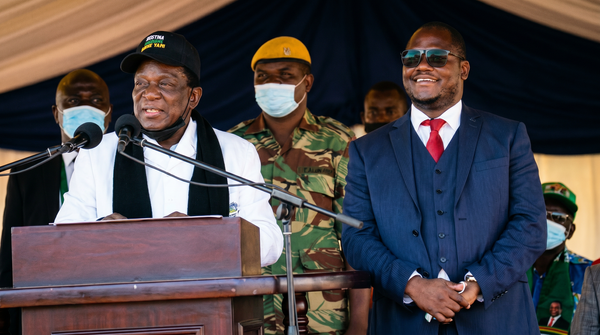
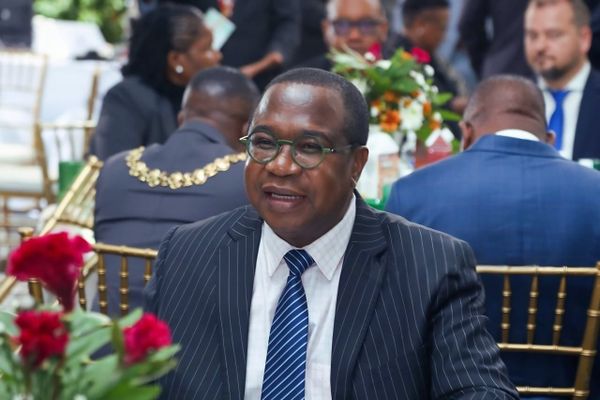
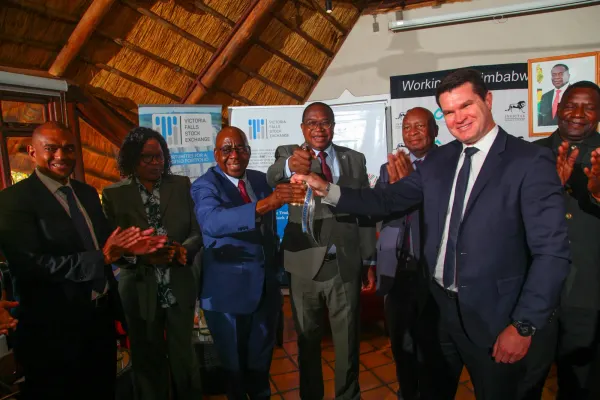
The reason it is no longer Harare is a decision two men made and held — George Guvamatanga at Treasury and Mthuli Ncube at the Ministry of Finance — to stop doing the one thing that had broken every Zimbabwean currency since 1997. They stopped borrowing from the central bank.
Lilongwe is still doing it. That is the entire story.
THE MIRROR
In July 2025 annual ZiG inflation stood at 95.8%. The currency had absorbed a 42.55% correction the previous September. Reserves backing the ZiG had climbed from $276 million at launch in April 2024 to $1.2 billion by December 2025 — a 335% increase in twenty months. The IMF had not held a formal programme with Zimbabwe since the 1990s. Six previous Zimbabwean currencies had been destroyed by the same single mechanism: central bank lending to government to fund deficits the budget could not honestly finance.
The country had every historical reason to expect a seventh failure. Election cycles, civil service wages, fertiliser programmes, patronage networks — all the political pressure to reach for the printing press was, if anything, higher than at any point since the 2008 collapse.
THE PIVOT
In September 2024 Zimbabwe's Treasury under Permanent Secretary George Guvamatanga and Finance Minister Mthuli Ncube made a single technical commitment that became the spine of everything that followed. Zero borrowing from the central bank. The 2026 National Budget states it explicitly. The deficit would be financed entirely through domestic securities issuance — ZiG12.7 billion — and external loan disbursements — ZiG2.1 billion. Not one ZiG would be created by the printing press to fund the Treasury.
The decision required saying no. Repeatedly. Across every ministry, department and parastatal that had spent the previous decade assuming the Reserve Bank would cover their shortfall. Government bids from MDAs totalled ZiG828.5 billion against an available capacity of ZiG253 billion — 3.3 times what the budget could honestly carry. Every figure above ZiG253 billion required a refusal. Guvamatanga signed those refusals. Mthuli defended them in cabinet. Reserve Bank Governor John Mushayavanhu held the monetary line.
THE ARCHITECTURE
Four pillars, visible from any honest accounting.
First, cash budgeting with no central bank financing. Stated in writing in the 2026 Budget Speech. Enforced by Treasury memo across every line ministry.
Second, a ZiG anchored to gold reserves with foreign currency now representing 82.1% of total reserve money. Reserve money coverage stands at five times the local currency component. The currency does not float on rhetoric. It floats on bullion.
Third, debt transparency. The World Bank's Debt Reporting Heatmap shows Zimbabwe moving from four red flags out of nine reporting indicators in 2020 to zero red flags in 2024. Green-rated indicators rose from two to five over the same period. External debt service of $220.3 million was paid between January and September 2025, with another $86.6 million scheduled by year-end.
Fourth, the IMF Staff-Monitored Programme signed in April 2026 — the first formal multilateral framework Zimbabwe has held in over two decades. The IMF's October 2025 World Economic Outlook now projects Zimbabwean growth at 8.5% for 2026. Government estimates run to 9.5%. Both numbers exceed every other SADC economy bar Botswana and place Zimbabwe in the top decile of African macro performance for the year.
Each architectural pillar can be audited by an outsider in less than a working day.
THE CONTRAST
Compare that architecture to what the Reserve Bank of Malawi was doing under similar external pressure during the same period. Between 2020 and 2025 the RBM under Wilson Banda processed K2.8 trillion of monetary financing through the Lombard window — the standing facility through which the central bank lends to the Treasury. The kwacha was defended at fantasy levels. Three Finance Ministers were fired by President Lazarus Chakwera. Two Reserve Bank Governors were replaced. By the time Chakwera lost office in September 2026, Malawi held half a month of import cover, ran above 30% inflation, and watched its kwacha settle into the bottom decile of global currency performance — keeping company with Argentina, Lebanon and Venezuela.
Malawi did not face harder external conditions than Zimbabwe over those five years. It faced softer ones. No sanctions regime. An active IMF relationship at the start of Chakwera's term. Three months of reserves at handover. Single-digit inflation. No historic currency-destruction trauma to justify caution. The kwacha collapsed because the political class refused to let the budget cap the spend. The ZiG stabilised because Zimbabwe's political class — eventually, painfully, expensively — accepted that the budget had to.
THE LESSON
Thomas Sargent's 1982 paper on the ends of four big inflations remains the textbook. Sargent showed — using the German, Austrian, Hungarian and Polish stabilisations of the 1920s — that hyperinflations do not end because central banks become clever or because external conditions improve. They end because the fiscal regime credibly changes. The currency is not the variable. The budget is.
Zimbabwe's 2024 fiscal regime change was credible because it was costly. The 42.55% September 2024 ZiG devaluation was the public statement that Treasury would no longer defend the indefensible. The subsequent freeze on central bank borrowing was the structural commitment that the devaluation would not need to be repeated. The IMF signed because the architecture is real. The reserves grew because the architecture is real. The growth forecast climbed because the architecture is real.
Lilongwe has not made the equivalent commitment. Until it does, no amount of external assistance will stabilise the kwacha for longer than the next budget cycle.
THE VERDICT
A tale of two reserve banks is, in the end, a tale of two cabinet meetings. The Lilongwe meeting where the Lombard window was opened in 2020. The Harare meeting where it was closed in 2024.
Currency stability is a discipline choice. It is available to any treasury willing to make it.