THE WEIGHT OF BEING WICKNELL
The only honest frame for understanding the most scrutinised private citizen in Zimbabwe's post-Mugabe history.

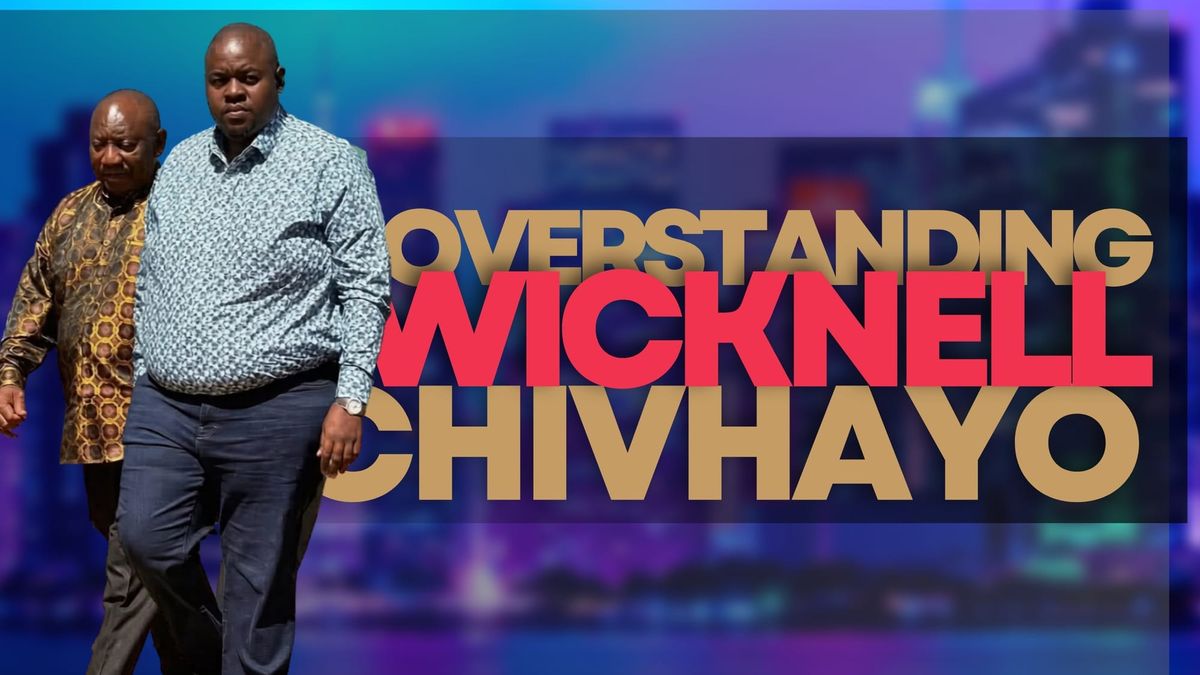
In 2008, Zimbabwe was emerging from one of the worst economic collapses
outside wartime. Hyperinflation had become so absurd the Reserve Bank
printed a one hundred trillion dollar note that could not buy bread.
Power generation had collapsed. Foreign capital had vanished. Zimbabwe was, in effect, untouchable.
In that same Zimbabwe — Wicknell Chivayo built a company, submitted a bid, and signed the EPC agreement for a
100‑megawatt solar plant in Gwanda.
Value: US$172.8 million.
At the time, it was the largest independent power project ever awarded
to a Zimbabwean‑owned private company.
THE LONELINESS OF THE FIRST MOVER
There is a particular kind of isolation that attaches itself to the man
who moves before the crowd. It is not the loneliness of failure.
It is the loneliness of being correct too early.
Aliko Dangote knows this loneliness. Before he was Africa's richest man —
before the Forbes covers, the $20 billion refinery, — he was a Nigerian trader operating inside one of the most opaque, politically saturated business environments on earth. His critics called him politically connected. His defenders called him a visionary. Both were telling the truth.
Patrice Motsepe knows this loneliness too. South Africa's first black
billionaire built African Rainbow Minerals from a zero base — acquiring
loss-making marginal gold mines that Anglo American had abandoned as
uneconomical, his wealth is "directly tied to his political connections with the ANC,". Nobody serious calls Patrice Motsepe a criminal for understanding how
post-apartheid South Africa's capital markets actually worked.
Wicknell Chivayo understood how post-Mugabe Zimbabwe's capital markets
actually worked. He understood that in a country where formal procurement
had been systematically corrupted for thirty years, the man who could
navigate the political terrain was not the man who was corrupt — he was
the man who got the deal done. It is a structural observation.
In Nigeria, South Africa, as in Zimbabwe, as in every post-colonial economy navigating the space between dysfunction and development, political connectivity and visionary investment are not opposites. They are the same thing.
COURTS AND SELECTIVE MEMORY
The media record on Wicknell is loud and remarkably selective. What
it rarely says out loud is: he has not been convicted of a single crime in
a court of law.
In 2018, High Court Justice Owen Tagu acquitted Wicknell and Intratrek of
all Gwanda‑related charges. In 2023, the Supreme Court ordered ZPC to honour the original Gwanda contract. The same year, a High Court judge awarded Wicknell US$22 million in his civil suit against ZPC.
ZACC, after its own probe, publicly stated it "found no evidence linking
Chivhayo to fraud".
Then there is another Wicknell — the one whose story never makes a front
page for as long as generosity is not a scandal.
The side who has given away hundreds of cars to widows, single mothers,
nurses, and young entrepreneurs. The side who has paid over a thousand school fees for families
who did not know his name before the payment cleared. Who has donated
medical equipment to hospitals treating patients on bare floors. Who has
funded funerals for families who had nothing.
The most comforting attack and critic is to call it 'theatre', there is a weird pleasure some find in diminishing how big a deal everything he does for others is for them. If it where theatre, theatre would require an audience that benefits
from the performance. The widow who received the keys did not benefit
from theatre. She benefited from a car. There is no political capital Wicknell gains from giving whatsoever, as a matter of fact it injures him.
WHAT GETS BUILT WHEN THE NOISE STOPS
There is a version of the Wicknell Chivayo story that has not been written
yet, because it has not happened yet. But its shape is visible to anyone
who has studied how the figures who came before him eventually resolved
their respective crises — by building something so undeniably real and so obviously beneficial that the conversation around them changed by necessity.
Rockefeller became a philanthropist. His foundations funded the eradication
of hookworm from the American South, the establishment of the University
of Chicago, and public health initiatives across four continents.
Dangote did not resolve his political controversy by stepping back from
the state or by issuing press releases. He resolved it by building the
$20 billion Dangote Refinery — the largest single-train petroleum refinery
in the world — on Nigerian soil, creating one hundred and thirty-five
thousand direct and indirect jobs. When something that large is real and working,
the argument about how it was financed loses urgency.
The version of Wicknell Chivayo's story that gets written in five years
will be determined by what is built in the next few years.
If a properly governed, audited, and institutionally credible Chivayo
Foundation channels even a fraction of the philanthropic energy already
being spent on car-giving into structured, measurable community
development — education, healthcare, entrepreneurship — the narrative
of generosity becomes impossible to dismiss.
If Intratrek builds the governance architecture that brings it into
alignment with commercial standards — proper board,
audited accounts, somewhat "transparent" structures — the correspondent banks
and international investors who are currently watching will flood him, there will not be enough cameras to capture and not enough heads of states desiring association with him. Capital always follows credibility. Always.
The most consequential thing about Wicknell is what he builds next — and whether what he builds next is large enough, real enough, and visible enough to redefine permanently what his name means on this continent.