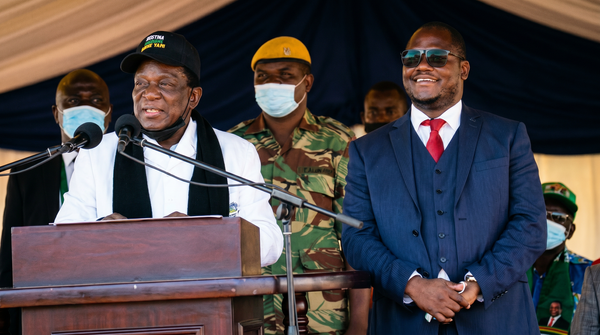
Mthuli Ncube in Washington
The Technocrat Reopening Zimbabwe's Path to Global Finance

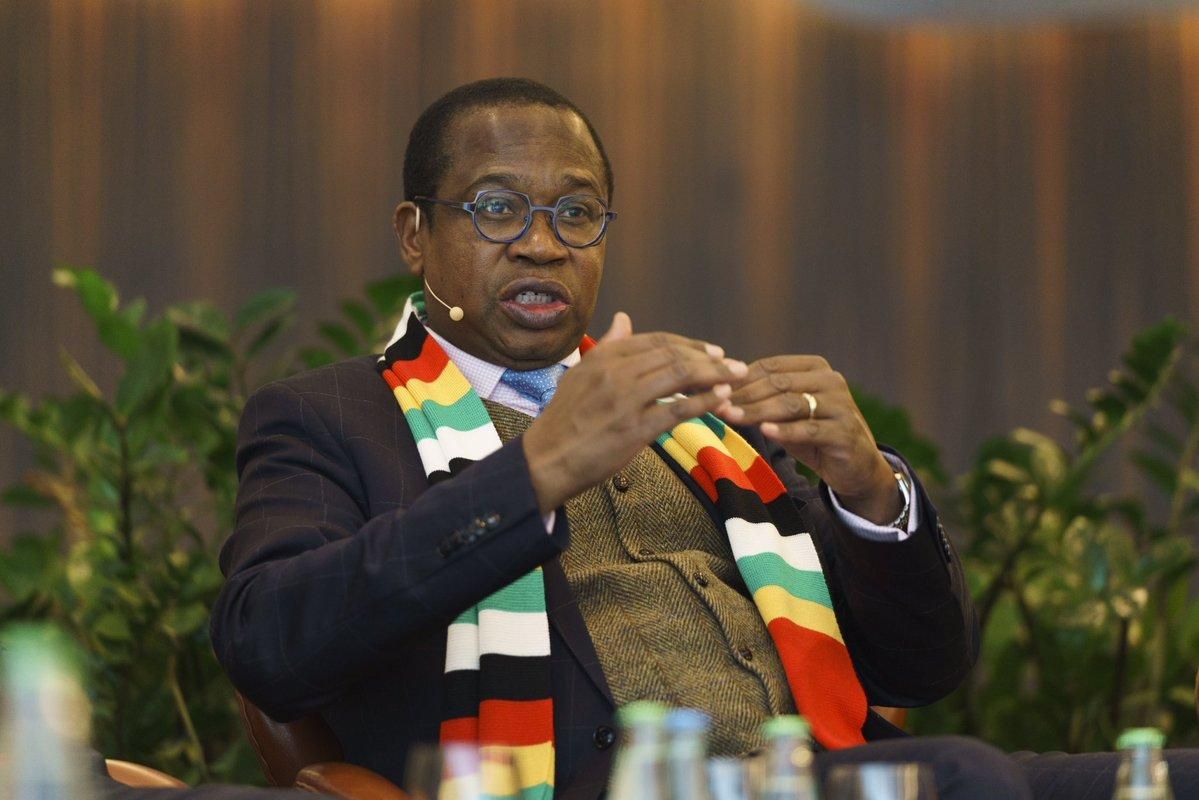
POWERLIST AFRICA | COVER FEATURE
Filed: 24 April 2026 | By Imani Levison, Business Lead | Stream: Investor / International
"In Washington, credibility is not declared. It is audited."
A US$21 billion public debt stack. Twenty-six years outside the IMF's concessional lending architecture. One Staff Monitored Programme approval in April 2026. Those are the three numbers that define Zimbabwe's charm offensive re-entry into global capital markets — and the three numbers Minister of Finance Mthuli Ncube carried into the IMF–World Bank Spring Meetings this month.
The signal: Zimbabwe has been moved from the dismissed column to the monitored column. On one hand it's not capital. By all counts it's the prerequisite to capital.
The noise: Every headline that reads the SMP as a bailout. Zimbabwe is near 9% expected growth by year is. That positions Zimbabwe as the fastest growing country in Africa.
The Return of a Financial Voice
Ncube arrives in this arena with a profile the IMF reads by default: academic economist, Oxford-trained, founder of Quantum Global, former Chief Economist at the African Development Bank. He does not require an interpreter in the Bretton Woods room. He operates inside its vocabulary as a native speaker.
That is not cosmetic. It is structural.
Global finance does not respond to political persuasion. It responds to technical coherence, repeatable signals, and auditable policy discipline. Countries that send politicians leave with communiqués. Countries that send technocrats leave with frameworks. Ghana learned this the hard way under its 2023 Extended Credit Facility. Zambia learned it across the Common Framework negotiations between 2020 and 2024. Zimbabwe is learning it now, under the one condition that matters: the arrival is voluntary, not forced by default.
From Isolation to Evaluation
The Staff Monitored Programme is the decisive development.
It is not a loan. It is a filter. For the monitoring window, Zimbabwe's primary balance, reserve money targets, and structural benchmarks are subjected to continuous IMF staff review — quarterly, line-item by line-item. The programme is designed to answer one question:
Is the reform structural, or situational?
Washington has seen both. Situational reform collapses the moment political cycles turn. Structural reform survives them. Only structural reform opens the door to concessional inflows from IDA and the AfDB, to Paris Club arrears clearance, and eventually to an Upper Credit Tranche programme. Only structural reform is priced into sovereign risk models at a spread the country can afford to carry.
The Doctrine: Trust Before Capital
Ncube's Washington doctrine is precise and sequenced.
Zimbabwe is not seeking immediate disbursement. Zimbabwe is seeking restored trust — and trust in global finance compounds. It is built through consistency, not intensity. Through delivery, not declaration.
The arrears clearance and debt resolution framework sits at the centre of the effort: a multi-layered negotiation across the IMF, the World Bank, the AfDB, and the Paris Club, with AfDB President Sidi Ould Tah's office acting as process convenor. For a decade, this architecture existed as aspiration. Under the SMP, it exists as live infrastructure — sequenced, institutionally owned, and publicly trackable through staff review reports.
That shift — from aspiration to architecture — is what Washington is watching.
Macroeconomic Discipline as Signalling
The policy stance underpinning the engagement is equally deliberate.
Fiscal consolidation is replacing deficit monetisation. Monetary policy is being recalibrated toward anchored stability under Reserve Bank Governor John Mushayavanhu. The ZiG framework is attempting to convert gold-backed novelty into credible expectations management.
These are not isolated reforms. They are signals, calibrated for three desks at once.
To sovereign risk desks at BlackRock, Ashmore, and Renaissance Capital, the signal is that Zimbabwe can now be modelled rather than guessed at. To multilateral creditors, the signal is that the country is entering the category of cooperative debtors. To bilateral partners — including the Gulf sovereigns quietly re-entering African frontier markets through ADQ and Mubadala — the signal is that the reputational discount on engagement is compressing.
Benchmark the trajectory beyond the continent. Pakistan negotiated its 2023 Stand-By Arrangement from a balance-of-payments crisis. Sri Lanka entered IMF engagement in 2023 post-default. Egypt rebuilt market access after the 2016 floatation by locking in a four-year EFF. Zimbabwe is attempting the harder version of this sequence: rebuilding credibility before a crisis forces the hand.
What Washington Actually Gave Zimbabwe
Not capital.
Access.
Access to dialogue. Access to the technical review pipeline. Access to institutional reconsideration. In this system, access is the scarce good. Capital follows access. Access follows discipline. Discipline is earned one quarterly review at a time.
Zimbabwe now has access. The cost of losing it is higher than the cost of maintaining it — and Ncube understands that arithmetic better than any actor currently in the room on his side of the table.
The Investor Signal
For institutional investors, sovereign risk desks, and Africa-focused EM funds, the message is not that Zimbabwe has arrived. It is that Zimbabwe can now be evaluated.
Modelled. Benchmarked. Eventually priced.
That is the threshold every re-emerging economy must cross — the migration from opacity to observable pattern. Angola crossed it in 2018 under its three-year Extended Fund Facility. Egypt rebuilt across it after 2016. Argentina has tripped across it repeatedly, which is why its spread remains punitive. Sri Lanka is mid-crossing now.
Zimbabwe has now stepped onto it.
"Zimbabwe is no longer outside the room. It is inside the system — under review, under discipline, and increasingly, under consideration."
The Test Ahead
The distance between engagement and normalisation remains significant.
Arrears must be cleared. Reforms must survive the political cycle — including the 2028 succession window. Fiscal discipline must become institutional, not personal. The ZiG must hold without manufactured stability, meaning without the Reserve Bank burning reserves to defend an unsustainable peg. Monetary authorities must resist the pre-election temptation to buy coalition loyalty with liquidity.
Washington does not reward moments. It rewards patterns.
The question is not whether the April 2026 Spring Meetings were a success. The question is whether the April 2027 Spring Meetings show the same trajectory — or whether the pattern breaks the moment domestic politics demands it break.
PowerList Profile
| Field | Detail |
|---|---|
| Name | Mthuli Ncube |
| Role | Minister of Finance, Economic Development & Investment Promotion, Zimbabwe |
| Operating Domain | Sovereign Finance & Global Capital Systems |
| Strategic Objective | Reintegrate Zimbabwe into concessional finance architecture |
| Core Lever | Policy credibility via IMF-aligned discipline frameworks |
| April 2026 Outcome | SMP approval; restored access to institutional dialogue and evaluation pathways |
| Market Signal | Transition from high-risk opacity to measurable reform trajectory |
| Watch Horizon | Quarterly SMP reviews through 2026–2027; 2028 political cycle as structural stress test |
What treasuries should watch
- Quarterly SMP reviews. Any missed structural benchmark — particularly on primary balance or Reserve Bank operational independence — resets the credibility clock.
- The ZiG reserve cover ratio. The parallel market premium is the honest number. Track it weekly. The official rate is a press release.
- Paris Club positioning. The pace of bilateral arrears negotiations is the single clearest leading indicator of when concessional inflows become visible.
- AfDB and World Bank project pipeline reactivation. First-order signal that arrears clearance is beginning to unlock actual money, not intent.
- 2027 Eurobond chatter. A clean SMP completion opens the door to a return-to-market test issue. Expect heavy oversubscription at punitive yields on debut — the Angola 2015 template, not the Egypt 2017 one.
Final Assessment
Zimbabwe is not yet a success story.
It is no longer a dismissed one.
In a system defined by memory, scepticism, and discipline, that is the first — and most difficult — transition any re-emerging economy ever makes. Angola made it. Egypt made it. Argentina keeps attempting it. Sri Lanka is mid-crossing.
Zimbabwe, under Ncube, has now stepped onto that bridge.
The rest is delivery.
By Imani Levison, Business Lead
© Powerlist.Africa | Cover Feature | April 2026