What I Saw From Malawi
The blueprint Zimbabwe just carried into Washington, and why Africa will rise or fall on whether we learn to hand each other the map.

I am writing this from Lilongwe.
Across the Zambezi, a country my own country shares a border with. The geography is almost identical. Similar colonial archive. Similar tobacco heritage. Similar post-independence debt inheritance. Similar rainfall patterns. Similar labour flows to Johannesburg. If you described these two countries in a development economics seminar in London without naming them, a careful student would struggle to tell them apart.
And yet, standing here this week, I am looking at two economies on trajectories so divergent they may as well be on different continents.
Zimbabwe grew at 7.5 percent in 2025 with all indicators pointing to 9% by year end. The IMF confirmed it in writing on 16 April 2026 — above Treasury's own forecast, three percentage points above the regional average, and achieved in the same year the Fund simultaneously downgraded the rest of Sub-Saharan Africa. Inflation in Zimbabwe sat at 4.4 percent in March, the lowest in almost three decades. The country has just signed a 10-month Staff-Monitored Program with the IMF. The ZiG currency's reserve backing stands at over US$1.2 billion, up from US$276 million at launch twenty months ago. And last week, a foreign head of state opened the Zimbabwe International Trade Fair in Bulawayo after co-signing seven bilateral agreements with President Mnangagwa.
Malawi, meanwhile, is negotiating a harder conversation. Inflation in double digits. A currency under sustained devaluation pressure. An IMF programme that has been turbulent. Foreign exchange shortages still shaping daily life.
Let me be precise about what I am saying. Malawi has not failed. Malawi is a country full of extraordinary human capital, disciplined civil servants, and a civic seriousness Zimbabwe has at various moments envied. What I am saying is sharper. Two countries that share a border, a climate, a colonial archive, and a post-independence inheritance can, inside eighteen months, find themselves occupying entirely different positions on the continental map — not because one has more luck than the other, but because one has access to a sequenced, executed economic blueprint, and the other is still assembling one.
Africa is not short on ambition. Africa is short on transferable blueprints.
That is the thesis of this essay. And the evidence for it is sitting in the cables that came out of Washington between 13 and 18 April 2026.
What Washington Actually Was
Let me describe what the Zimbabwean delegation did during the IMF and World Bank Spring Meetings, because the press coverage has treated it as a routine visit, and it was anything but.
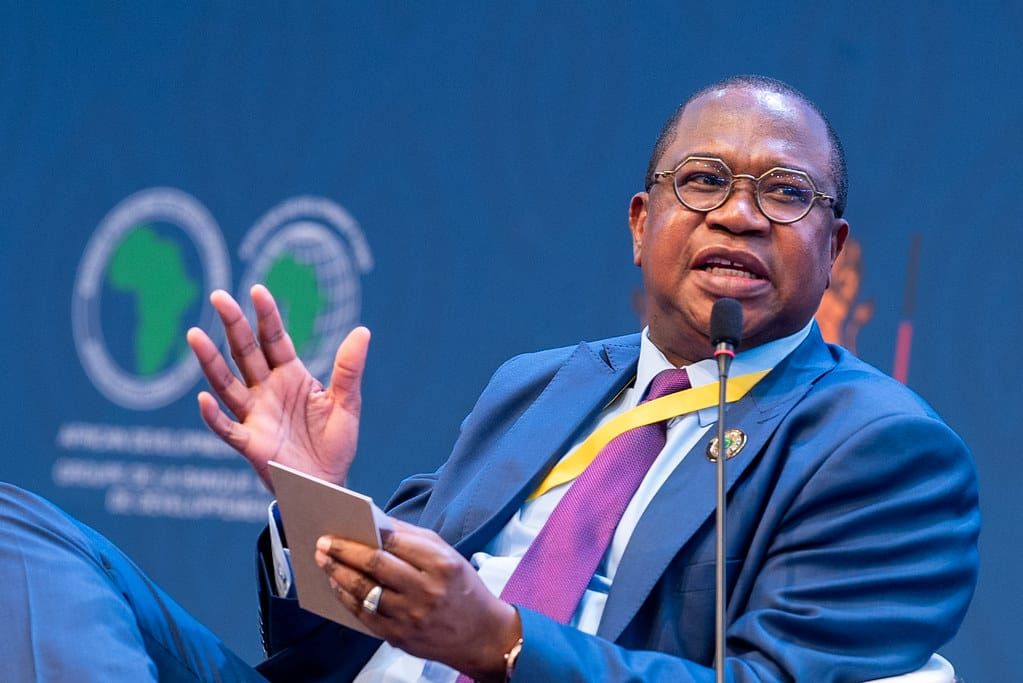
The Spring Meetings opened on 13 April under the theme Building Prosperity Through Policy. Finance Minister Professor Mthuli Ncube led the Zimbabwean delegation for the full six days. Inside that window, the delegation executed what can only accurately be called a multi-institutional campaign.
On the first day, the delegation met with IMF Deputy Managing Director Nigel Clarke, IMF Executive Director Adriano Ubisse, and outgoing African Department Director Abebe Selassie. In a single meeting, Minister Ncube briefed the Fund on four executed deliverables from the previous cycle: single-digit inflation, domestic debt containment, zero new arrears accumulation, and a digital tax administration system that has rewritten Treasury's revenue curve. He confirmed that Government had held employee compensation within the US$9 billion ceiling — the kind of fiscal discipline signal IMF technical staff reads as institutional seriousness. He confirmed Treasury had initiated supplier negotiations to compress domestic debt by up to 30 percent. He confirmed a national pricing list had been introduced to prevent the arbitrage pricing that has historically inflated Zimbabwean public debt.
Each of those commitments is a line in the Staff-Monitored Program. Each now becomes a quarterly review criterion.
The delegation met separately with the World Bank Group Executive Director for Africa Group 1, Mr Zarau Kibwe. The objective was narrow. Zimbabwe is constructing an arrears clearance architecture that requires what Treasury calls a bridge funding provider — a champion capable of extending a 24-hour loan of approximately US$2.5 billion, backed by set-asides from the African Development Fund and IDA, the soft windows of the AfDB and the World Bank. That architecture, once complete, allows Zimbabwe to clear arrears with both Bretton Woods institutions, unlock concessional lending, and graduate into the next phase of debt resolution. Mr Kibwe welcomed progress under the SMP and confirmed he is engaging key stakeholders at the Bank to advance Zimbabwe's case.
That is not diplomatic language. That is the most consequential sentence any Zimbabwean finance minister has heard from a World Bank Executive Director in twenty years.
On the margins of the Spring Meetings, Minister Ncube met with SADC Executive Secretary Elias Magosi, who publicly commended Zimbabwe's reform momentum and called on international partners to match Zimbabwe's efforts with coordinated support. Magosi's statement explicitly emphasised that timely arrears clearance for Zimbabwe is essential to avoid regional spillover effects on investment flows and financial stability. Translation: the SADC Secretariat has formally acknowledged that Zimbabwe's recovery is not merely a Zimbabwean story. It is a regional stability story.
And then the strategic masterstroke.
Minister Ncube announced that Dr Sidi Ould Tah, the newly-elected 9th President of the African Development Bank Group, has committed to succeed Dr Akinwumi Adesina as the champion for Zimbabwe's Arrears Clearance and Debt Resolution Programme. He will work alongside former Mozambican President Joaquim Chissano, who has anchored Zimbabwe's case through the Structured Dialogue Platform.
That succession is not ceremonial. Adesina's departure from the AfDB presidency created a risk of championship continuity collapse at the precise moment Zimbabwe needed continuity most. Securing Dr Tah as successor, on the record, during the Spring Meetings, was the equivalent of locking in a second-generation champion before the first-generation handover could generate uncertainty in the creditor market.
Six days. One Finance Minister. Seven high-level engagements. Each mapped to a specific deliverable in the arrears clearance sequence. The SMP stamped. The World Bank engaged. The SADC Secretariat endorsing. The AfDB championship transitioned without a gap. The bridge financing architecture publicly referenced.
This was not a visit. It was a campaign.
The Velocity That Africa Cannot Yet See
Here is what I want ministries in Lilongwe, Lusaka, Maputo, Kampala, and Freetown to understand.
Most African countries, when they attend the Spring Meetings, go to be heard. The Zimbabwean delegation went to deliver. They walked into the IMF building with a set of completed fiscal commitments from the previous cycle and a set of forward commitments for the next one. They walked in with the answers, not the questions.
That is a different posture. And it is the posture that produces the sentence the IMF published on 16 April: Zimbabwe's economic recovery continues, supported by tight monetary policy, improving fiscal discipline, and favorable external conditions.
You cannot extract that sentence from a multilateral institution by lobbying. You extract it by arriving with a balance sheet that reads the way you said it would read in the previous cycle, and then by showing — publicly, specifically, line by line — how the next cycle's balance sheet will read when you come back.
Inside the Ministry of Finance, Permanent Secretary George Guvamatanga has a phrase he uses in every internal briefing. One step forward, two steps forward. It is a deliberate inversion of the continental fatalism — one step forward, two steps back — that has governed post-colonial African economic discourse for fifty years. The inversion is not rhetorical. It is doctrinal. It says: we do not accept that every gain must be followed by a loss. We accept that every gain must be followed by a larger gain, sequenced and compounded.
Most countries take fifteen, twenty, twenty-five years to walk the arc from currency collapse to IMF validation to international re-engagement to bridge financing architecture. Zimbabwe is compressing that arc into five.
Africa has seen growth stories. Africa has not seen this velocity.
The Continental Problem Hiding Inside This Story
Now I am going to say the thing that needs to be said, sitting here in Lilongwe with a notebook and a deadline.
Africa is losing this century not because we lack talent, not because we lack minerals, not because we lack capital markets, not because we lack demographic dividend, and not because we lack ambition. Africa is losing this century because we do not yet know how to hand each other the blueprint.
Think about what that means.
When Zimbabwe's Treasury figured out how to stabilise a post-hyperinflation currency, there was no continental mechanism that automatically extracted the operational playbook, translated it into a replicable framework, and delivered it to the next three countries on the continent who would need it within thirty-six months. When Ghana's Bank of Ghana crashed inflation from 54 percent in 2022 to below 15 percent in 2026, there was no continental pipeline automatically opening from Accra to the ministries currently wrestling with the same problem in Lilongwe, Lusaka, or Monrovia. When Rwanda's ICT Ministry built a national digital services architecture at Kigali speed, there was no continental body routing that architecture to every capital that will need it over the next decade.
We are, as a continent, running fifty-four parallel experiments on similar problems with almost zero knowledge transfer between experiments.
The private sector understands this instinctively. That is why South African retail chains, Kenyan fintechs, Nigerian telcos, Egyptian pharmaceutical companies, and Moroccan banks have expanded across borders at a pace the public sector has not matched. The private sector does not wait for a ministerial protocol to share an operating playbook. They buy the team, transfer the code, translate the manual, open the branch.
The public sector — ministries, central banks, revenue authorities, public debt management offices — has not yet caught up to the logic that the private sector operationalised two decades ago.
This has to end. Not because of sentiment. Because of arithmetic.
What the Blueprint Looks Like
Let me be useful, because there is no point in diagnosing a problem without outlining the blueprint Zimbabwe just carried into Washington — in language a colleague in Lilongwe, Lusaka, or Juba can put on a ministerial briefing cover page tomorrow morning.
Sequence one: macroeconomic stabilisation. Kill the inflation first, at any political cost. Do not attempt growth stimulus before the currency is under control. Use monetary discipline, foreign exchange market consolidation, and a credible reserve-backed currency framework.
Sequence two: fiscal consolidation. Compress domestic debt. Avoid new arrears. Strengthen tax administration through digital infrastructure. Publish audited financial statements for state-owned enterprises. Adhere strictly to the Public Debt Management Act. Hold employee compensation within published ceilings and stick to those ceilings in the next cycle.
Sequence three: institutional re-engagement. Invite the IMF back for an Article IV consultation. Negotiate a Staff-Monitored Program. Treat the SMP not as a loan substitute but as a credibility track record. Demonstrate measurable quarterly targets without slippage. Convert the SMP into an Upper Credit Tranche programme over the subsequent 18 to 24 months.
Sequence four: debt resolution architecture. Identify a champion. Construct a Structured Dialogue Platform with creditors, bilateral partners, and multilaterals. Negotiate arrears clearance with a bridge financing provider. Secure set-asides from AfDB and World Bank soft windows. Execute the clearance. Unlock concessional lending.
Sequence five: visible continental integration. Anchor the domestic economic story inside the AfCFTA architecture. Stage high-visibility regional diplomacy. Sign bilateral trade instruments. Upgrade border infrastructure. Make the national recovery story a regional stability asset.
Sequence six: discipline maintenance. One step forward, two steps forward. Every quarter. Every review. Every budget cycle. Without slippage.
That is the blueprint.
And the reason it is worth reproducing here, in plain language, is that it is not Zimbabwean intellectual property in any protectable sense. It is Ghanaian and Rwandan and Ethiopian and Mozambican and Mauritian technique, recombined and executed inside a Zimbabwean context by a team who had the discipline to read their continental neighbours and the patience to sequence. What Zimbabwe has done is demonstrate that the continental knowledge base already exists. What is missing is the routing infrastructure to move the blueprint from a country that has solved a problem to a country currently wrestling with the same problem.
The Strategic Decision Zimbabwe Now Faces
The Zimbabwean Presidium must now make a decision larger than any domestic communications question.
The decision is whether to hoard the blueprint or to publish it.
If the blueprint is hoarded, Zimbabwe's growth differential widens and the country becomes an outlier — a Botswana-style exception, respected but isolated. If the blueprint is published, Zimbabwe becomes something far more strategically valuable: the authoring country of a continental operating manual. The country other African ministries fly to for training, secondment, capacity transfer, sequenced technical assistance.
Botswana established this position through the Debswana diamond-beneficiation model. Rwanda established it through Kigali's governance architecture. Mauritius established it through its international financial centre model.
Zimbabwe, right now, is within one policy decision of establishing the same kind of authoring position for post-hyperinflation recovery architecture across Southern and West Africa. That is a soft-power asset that will generate diplomatic dividend for the next twenty years if it is captured deliberately.
The blueprint must be published. At continental fora. Through the AfDB, the AfCFTA Secretariat, the AU. With Zimbabwean secondees placed in the ministries of neighbouring countries who request them. With Treasury manuals translated into French, Portuguese, Swahili, Arabic. With SMP implementation notes shared through the Structured Dialogue Platform with other countries facing similar arrears challenges.
This is how great economic powers establish regional legitimacy. Not by extraction. By transfer.
What Malawi Reminded Me
Sitting here in Lilongwe, writing this, I am reminded of a line that applies to every finance ministry, every central bank, every commerce office on this continent.
A border is not a barrier to the spread of a solution. A border is the evidence that the solution was not yet spread.
Zimbabwe walked into Washington last week with a blueprint. A real one, executed, defensible, validated in writing by the International Monetary Fund. Five days later in Bulawayo, that blueprint was witnessed physically by the President of Botswana, by representatives of thirty-one foreign countries, by 775 exhibitors, by more than ten thousand registered business visitors.
The question for President Mnangagwa, for Professor Ncube, for Permanent Secretary Guvamatanga, for Governor Mushayavanhu, and for every Zimbabwean official reading this is no longer can we defend the recovery? The recovery has been defended. The sentence has been written. The guard of honour has been played.
The question now is can we export the recovery's method?
Because Africa cannot afford another eighteen months of running fifty-four parallel experiments on the same currency stabilisation problem, the same debt resolution problem, the same fiscal consolidation problem. The continent's arithmetic does not permit it. The demographic clock does not permit it. The AfCFTA architecture does not permit it.
Zimbabwe now has something no African country has credibly had in a generation. A recent, dated, validated, continentally visible recovery blueprint.
The next move is not to celebrate it. The next move is to publish it. Translate it. Second it. Train on it. Ship it across the Zambezi, across the Limpopo, across the Niger, across the Nile.
Because if Africa is going to succeed in this century — and the demographic arithmetic says we either succeed in this century or we become the century's most watched failure — we must master the single skill the continent has historically resisted mastering.
We must learn to hand each other the map.
My name is Acie Lumumba. I am writing this from Lilongwe. And this is what the border taught me.
Acie Lumumba is the host of 9PM in Zimbabwe and a principal at TLF Productions. This essay draws on the 2026 IMF-World Bank Spring Meetings proceedings of 13 to 18 April 2026; IMF Press Release No. 26/122 of 16 April 2026; Ministry of Finance, Economic Development and Investment Promotion briefings from Washington DC; SADC Secretariat communications of April 2026; African Development Bank Structured Dialogue Platform documentation; the 2026 National Budget Speech of Zimbabwe; Reserve Bank of Zimbabwe data; and on-the-ground observation from Lilongwe, 23 to 24 April 2026.